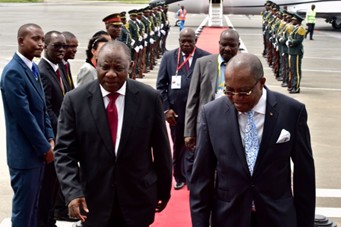

President Cyril Ramaphosa has called for equality in global trade. Speaking at the African Union-European Union (AU-EU) Summit in Luanda, Angola, on Tuesday, the president informed his follow leaders and delegates that ensuring international trade becomes a powerful instrument for inclusive, sustainable, and balanced growth. Ramaphosa stated that when global trade systems are stable and predictable, it gives confidence to governments, assurance to exporters and offers security to workers around the world. “Such reform should be development-centred and address persisting development gaps in the global economy. Crucially, it must allow developing economies to adopt legitimate public policy measures that support value addition, industrialisation and diversification,” the president explained to the attendants.

Ramaphosa was speaking during the seventh African Union-European Union Summit, held in Angola, where he pointed out that inequality in global trade affected the world’s most vulnerable, including countries that were already burdened by mounting sovereign debt, a sharp decline in exports, and cuts in overseas development assistance. He acknowledged that the multilateral system was under great pressure, and that geopolitical rivalry continued to cause turbulence in the rules-based international order. He noted the need for significant reforms to transform the UN, global financial architecture, and the international trade system to enhance sustainability, efficiency, inclusiveness and the voice of developing economy countries.
He said South Africa remained convinced that global challenges were best resolved through multilateralism anchored on the principles of the UN Charter, as he noted that more than two-thirds of UN General Assembly Member States still did not enjoy permanent representation on the UN Security Council. “To ensure the Security Council’s credibility and legitimacy, we need to advance Africa‘s position as per the Ezulwini Consensus and Sirte Declaration.

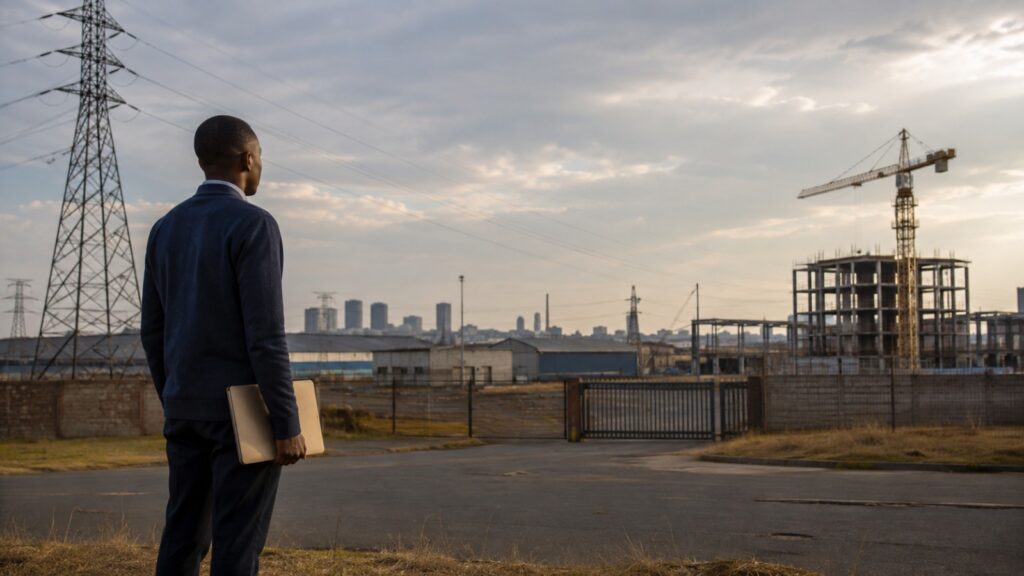
The short comings in the present system of global trade are deeply significant. There needs to be a focus on the right form of infrastructure and integration of technology between developing nations and wealthy nations to advance to the next level of economic progress. Interest needs to be given to the hopes of improving tertiary education and opportunity in entrepreneurial skills. The increased hikes in sovereign debts can be attributed to the imposition of trade tariffs (taxes imposed on exports) by the United States as well as the decline in exports. For the EU this has created an economic vacuum of opportunities that it can full.
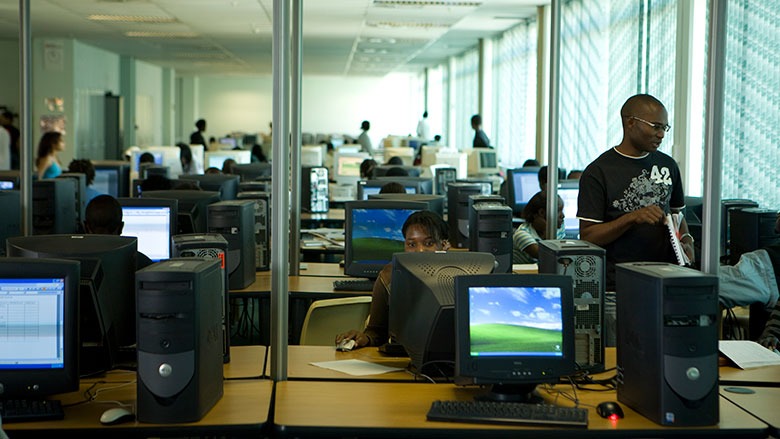
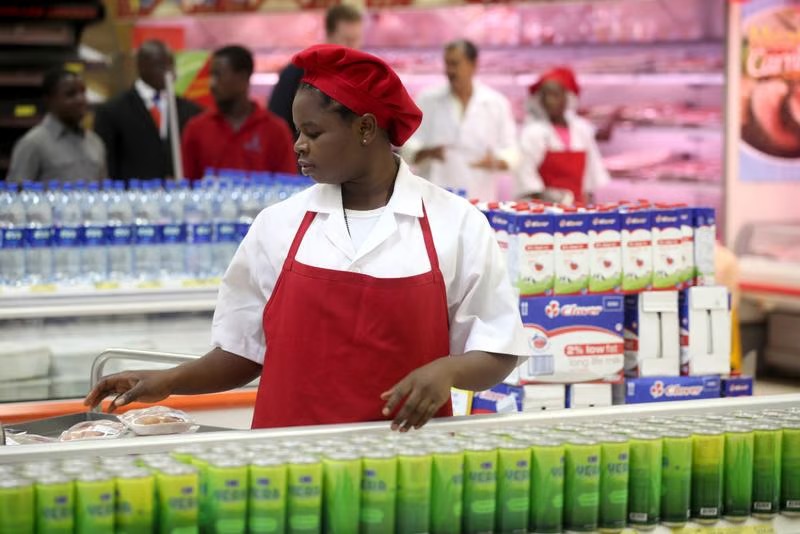
Africa and the AU as well as the continent’s regional economic communities (RECs) need investment in manufacturing capabilities as well as infrastructure development. Modernization through free trade of the private sector should take place. The point of attention at the summit should be on expanding the private sector through decreasing interference by state control mechanisms. The EU could help in encouraging African nations to diversify their economies and manufacturing sector.
Africa has emerged as a battleground for its critical minerals and energy potential, with China, the United States and Russia also seeking to foster stronger ties. The EU is the leading supplier of foreign direct investment to the continent and its top commercial counterpart. Trade in goods and services hit 467 billion euros ($538 billion) in 2023, according to Brussels. The Gulf states and Turkey have also made significant inroads, granting African nations bargaining power with the EU, said Geert Laporte of ECDPM, a European think tank. “We don’t have that situation anymore where Europe was the only partner,” he said. Observers say Europe needs to invest in infrastructure, energy and job-creating industrial projects in Africa, and a move away from lofty statements of support.
“Africa is looking not for new declarations but for credible, implementable commitments,” said AU spokesman Nuur Mohamud Sheekh. Summit host Angola is home to one of the EU’s signature undertakings: the Lobito corridor, a railway project funded in partnership with the United States to connect mineral-rich areas of the Democratic Republic of Congo and Zambia to the Atlantic coast.
African nations must be weary of the approach enforced by outside powers be it the economic giants of Asia, the EU or the United States. The AU Commission as well as South Africa and other member states must be weary of who they open their doors too. African economies such as Nigeria, Kenya, Ethiopia, the Democratic Republic of Congo (DRC), Algeria, Morocco and Egypt need to be weary of the interest shown to its raw minerals by the economic power houses from other parts of the world. The best solution is to strike a balanced agreement that ensures a fair bargain where value for the development of manufacturing goods needs to be a counter to the exports of raw minerals and rare earths to major developed or developing economies outside the continent.
Ramaphosa and his colleagues must press for an equal partnership based on mutual respect with their EU counterparts. The EU for its part is far from being a perfect regional bloc. Brussels and its associates need to realize a stable and prosperous Africa is in their best interest, especially to stem the tide of economic migrants flooding their borders. Only when Europe has Africa on an equal level in regards to trade, security and diplomatic relations will they be able to accomplish their goals. Trade may not be completely equal but it has to be fair.
Article written by:
Yacoob Cassim
Journalist at Radio Al Ansaar