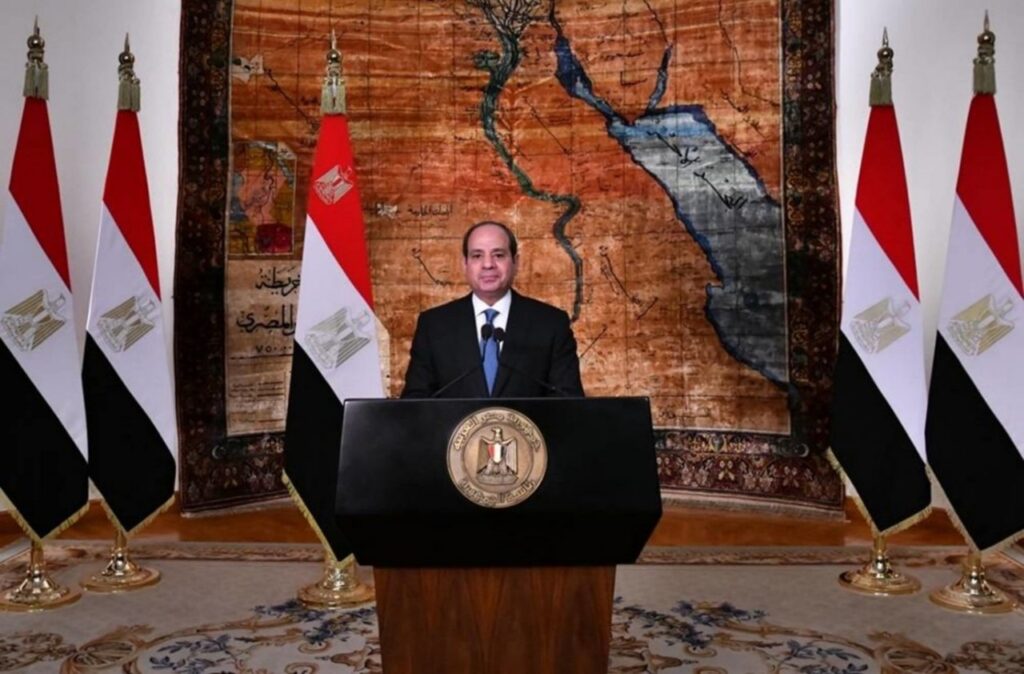

Amid sluggish economic growth linked to tensions between the United States, Israel, and Iran, Egypt has raised approximately $6 billion through 19 full and partial state exit deals. This achievement represents 48% of the government’s $12.2 billion target under President Abdel Fattah El-Sisi’s offering programme, set to run until June 2025. Prime Minister Mostafa Madbouly informed parliament of the progress on Wednesday.

The Prime Minister cited international warnings to illustrate the global strain, noting the UN World Food Programme described global food supply disruptions as the most severe since the COVID-19 pandemic and the Ukraine war, while the FAO food price index rose 2.4% in February. The regional tourism sector is losing an estimated $600 m daily due to flight cancellations, according to the World Travel and Tourism Council. Furthermore, the IMF cut its April 2026 global growth forecast from 3.3% to 3.1%, predicting a drop to 2% if the war persists, while global inflation is expected to accelerate to 4.4%. The World Bank lowered its Middle East and North Africa growth forecast for 2026 to 1.8%.

A significant factor behind Egypt’s economic woes can be traced to the war being waged by Israel and the United States against Iran, as well as Russia’s ongoing war in Ukraine. Both Russia and the United States are major allies of Egypt, while Israel remains an uneasy – and at times brutal – neighbour. Rising food prices and declining revenue from the vital tourism sector threaten to trigger a severe crisis in agricultural sustainability and employment prospects. In a world where war is producing dire consequences, the need for sustainability, self-sufficiency, and diversification must be central to economic renewal.
It is not in the interests of Cairo, nor of its Middle Eastern and North African allies, that Washington and Tel Aviv persist in the conflict with Iran. For this reason, Egypt has engaged in mediation efforts between the United States and Iran in pursuit of lasting peace. However, the Foundation for Défense of Democracies (FDD) – a leading U.S. think tank supportive of President Donald Trump’s agenda – has sought to undermine those talks.

On the sidelines of the Antalya Diplomatic Forum, Egyptian officials discussed with counterparts from Turkey and Pakistan, lasting solutions to end Trump’s war against Iran. Meanwhile, the think-tank suggests Egyptian mediation counteracts its self-projected image as an “antidote to political Islam.” Explaining the institute’s position, FDD research analyst Mariam Wahba underlined what she described as:
Wahba argues that despite Cairo’s ‘deep backchannels’ with Washington and Tehran — dating back to Camp David — it’s alleged susceptibility towards Islamist actors (who she does not name) casts into doubt the durability of Egyptian president Sisi’s posture. Furthermore, the true fear, it seems, is the emergence of a unified front in the Middle East. This front may be capable of standing firm against US imperialism.
The United States fears the emergence of an alliance of Muslim-majority, Islamic-oriented nations across the Middle East and North Africa, potentially including Pakistan. Following a thaw in relations with Egypt and the Gulf monarchies, Türkiye could assume a leading role. Egypt, for its part, is cooperating with all sides involved in the current conflict in an effort to restore stability. War, when it occurs in one’s own region, is rarely conducive to business or prosperity. FDD has taken a biased stance against President El-Sisi, despite his loyalty to Trump and the United States. El-Sisi’s primary ideology is survival. Having come to power through a coup that promised security and prosperity, he has yet to deliver either. His professional background lies in the military, where he served as a soldier.
El-Sisi’s foremost goal and instinct are to ensure Egypt’s survival and security. However, he has consistently lacked the political experience necessary to make decisive choices. How he manages the current situation remains uncertain.
Article written by:
Yacoob Cassim
Journalist at Radio Al Ansaar