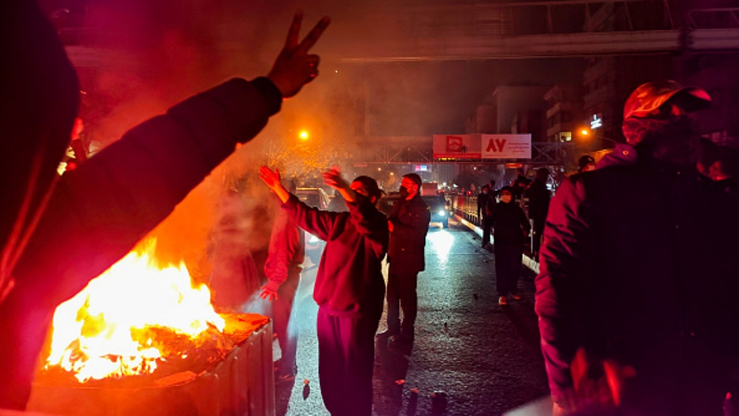

Iran will not be the same again following the mass demonstrations over the last two weeks and the subsequent crackdown that has taken place. Building on a recent history of similar mass protests, this latest unrest has transcended all sections of Iranian society. The regime of the so-called Islamic Republic may not yet fall, but the trajectory of the nation’s future has been altered in more ways than one.
The cause of the latest mass demonstration in the Shia-majority Muslim nation stems from frustration over Western imposed sanctions, United States led air strikes on key nuclear industrial sites and the resulting inflation that has severely weakened the Iranian rial.
As of late last year, the currency depreciated significantly against the American dollar: the rial was trading was trading at approximately 1.4 to 1.5 million rials per dollar. The sharp decline reflects a historic low of 1.4 million rials per dollar, marking a critical turning point for Iran’s economy due to high inflation and other economic challenges. The rial has lost 95 % of its value since 2018, largely due to the sanctions and inflationary pressures mentioned previously in the article. This was reported by Gulf News.
Iran is home to a vast variety of ethnic groups. The majority of the population are Iranian Persians, who make up fifty percent of the population. The rest are minorities such as Iranian Kurds, Azeris, Arabs, Baluch, Turkmen and others scattered across the country.
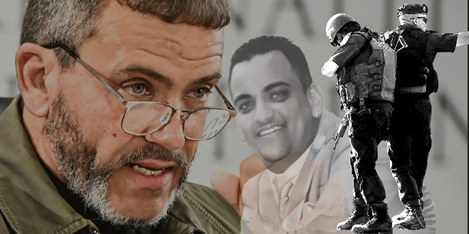
The grassroots demonstrations have provoked the Regime’s security forces, chief among them the Iranian Revolutionary Guards Corpse (IRGC), to retaliate in the most brutal way.

That said, it is essential to remember that the government still controls weapons and has repeatedly demonstrated its willingness to use them. Protesters, by contrast, remain largely unarmed, creating a very dangerous and asymmetric situation. Reliable, detailed, real-time information from inside Iran remains limited, making precise assessments difficult. A true turning point would likely require internal fractures within the ruling system, such as disagreements among senior power centers or defections by elements of the Revolutionary Guard or the regular army. If such actors were to decide they could no longer continue repressing the population, the situation could change rapidly. At this point, however, I do not believe Iran has reached that stage.
What we can say with certainty is that the situation is extremely serious. Demonstrators are showing remarkable courage by confronting police forces, paramilitary units, and the Revolutionary Guard while remaining unarmed.

The Iranian people are expressing their fury without fear against a government that has failed to uphold its promises of freedom and prosperity for all. The country is wealthy due to its oil exports. However, not only are the country’s oil reserves in decline, but the government must allow diversity in the economy. This a task that Tehran, led by conservative religious scholars does not have the skills or experience to accomplish.
The use of repressive force by the security forces have embolden the masses, to fortifying their resolve to resist. The weapon of the Iranian people is anger, and they no longer feel fear. Fear of an authoritarian regime whose main weapon is lethal force has finally met its match.
The regime, led by conservative religious scholars, is at the end of its tether. Supreme Leader Ayatollah Ali Khamenei rules according to a constitution that grants him near-absolute power in determining Iran’s destiny.
“We are facing an accumulation of crises at the same time…a financial crisis resulting from more than 15 years of sanctions, a system of governance that has ignored national interests and public welfare, and a government that has effectively lost control over the economy,” he (Mahdi Ghodsi, a senior economist at the Vienna Institute for International Studies) told The New Arab. According to Ghodsi, the income of large segments of the population has fallen to one-third or even one-quarter of pre-sanctions levels. Inflation has reached such heights that the government’s responses are limited to short-term improvised fixes. He also notes that the participation of bazaar merchants in the protests is “a particularly significant signal,” as it shows both the depth of the economic crisis and the widening rift between the state and its traditionally conservative social base.
Ghodsi argues that an “evolutionary revolutionary process” has been underway for years. Over roughly the past 17 years, gradual defections among political, economic, and intellectual elites have steadily weakened the foundations of the system.
Iran’s destiny since the 2011 “Arab Spring” uprisings, has been on a trajectory of uncertainty, as the Islamic Republic engaged in a diplomatic and militant struggle with Saudi Arabia, to win the hearts and minds of the region’s peoples. Tehran enjoyed some major victories in Yemen, Syria and Iraq. The emergence of the militant group, the Islamic State of Iraq and Syria (ISIS), saw the Tehran regime cooperate closely with these nations and with Russia to force the group and its leader Abu Bakr Al-Baghdadi to yield. There was even temporary support for U.S. troops.
However, following the fall of the Syrian regime of President Bashar Al-Assad –Tehran’s most loyal ally among the Arabs – as well as the assassinations of leaders of the Hamas and Hezbollah militant groups, Iran found itself increasingly isolated. This left it vulnerable to its enemies in the US and Israel.
Iran has now suffered further setbacks with the state of its economy. The Iranian leadership may eventually yield to more extensive political and economic reforms demanded by the protesters. Yet the matter comes down to a separation of powers within the country’s leadership. This is a question of when, not if.
Article written by:
Yacoob Cassim
Journalist at Radio Al Ansaar