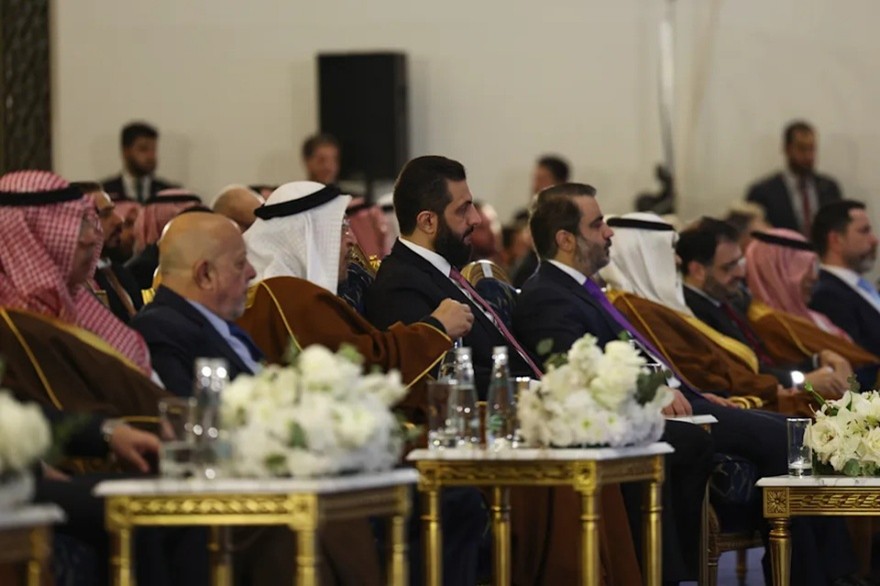

One year and three months after the end of the Syrian civil war and the fall of President Bashir al-Assad, Damascus and Riyadh signed a series of agreements described as laying the foundation for a long-term strategic partnership between the two countries. This new era of collaboration between Syria and Saudi Arabia began on February 7, 2026. The agreements include plans to establish a joint airline, develop telecommunications infrastructure, build a new airport in northern Syria, and upgrade Aleppo’s existing airport to raise its capacity to 12 million passengers per year. For Syrian interim President Ahmed al-Sharaa, this represents an opportunity to rebuild much-needed infrastructure in his country, while for the Saudi monarchy it provides a foothold in the region’s security landscape.

Questions remain about the safety of Syria’s investment environment, as the country continues to face internal tensions and Israeli incursions. Still, political considerations extend beyond those risks. Saudi academic Khaled Batterfee said Syria “represents an arena for restoring Arab balance,” noting that during the war years the country remained open to competition among non-Arab regional powers. “Today, the kingdom seeks to reintegrate Syria into the Arab system so that Arab presence becomes the primary guarantor of its unity and sovereignty, rather than leaving a vacuum exploited by competing regional powers,” he told Alhurra. Neighboring countries have long complained about the spillover of security crises and crime from Syria, including militant activity, arms and drug smuggling, and organized crime.
For that reason, Batterfee said Saudi investment in Syria is “an investment in Saudi Arabia’s regional security,” adding that from a Saudi national security perspective Syria “is not a distant arena.” Syria historically played a major role in regional affairs because of its political, military, economic and geographic weight before becoming a theater of international conflict after the 2011 uprising.

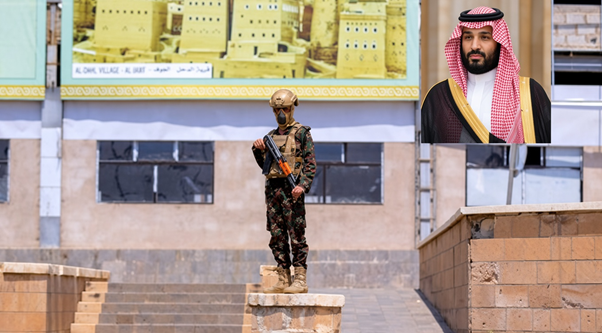
The Saudis are seeking to become a key influencer in Syrian foreign policy because Syria is their northeastern neighbor. Under Crown Prince Muhammad bin Salman (popularly known as MBS), Saudi Arabia aims to position itself as the determining power and senior ally among its neighbors—particularly Lebanon, Syria, Iraq, Yemen, and the Gulf Cooperation Council (GCC) members—all of whom lie within Riyadh’s sphere of influence. For its part, Damascus, now free from sanctions, is eager to restore the frayed friendships abandoned during the Assad era and the years of civil war. Syria urgently needs the funds and investments that the Saudi Kingdom is channeling its way to support reconstruction. MBS and his advisors hope that a stable Syria with secure borders will help end the instability and crime spilling into Saudi territory.
Syria, as a neighbor to Saudi Arabia, possesses one of the richest oil territories in the region. From a lucrative perspective, the country is a fruit ripe for harvest after the brutal civil war. This is why al-Sharaa is willing to partner with Riyadh: he must rebuild the nation from the ground up, essentially from scratch. The Saudis and their Western allies hope that the new Syria can serve as a post–Arab Spring model for the rest of the Middle East to follow.

Abdulsalam Haykal, Syria’s minister of communications and information technology, said his country will see nearly $1bn in investment in the telecommunications sector, with plans to lay thousands of kilometres of cable to boost connectivity between Asia and Europe. Saudi budget carrier Flynas and the Syrian Civil Aviation Authority announced they signed an agreement to establish a new airline called “Flynas Syria”, which would be 51 percent owned by the Syrian side and is slated to start operations in the fourth quarter of 2026. Syria’s Ministry of Energy also signed a water agreement with Saudi Arabia’s ACWA Power, which is known for running projects in power generation and desalinated water production plants in the Middle East and beyond.
Al-Hilali said the agreements targeted “vital sectors that impact people’s lives and form essential pillars for rebuilding the Syrian economy”.
Syria is now seeking to improve its standing among the world’s major tourism hubs through the reconstruction of its aviation industry and infrastructure. Saudi Arabia, for its part, wants to ensure its security and partnership practices. The key for both Syrians and Saudis is to recognize the importance of interdependence between themselves and their neighbors. The Syrian transitional government under Al-Sharaa aims to secure the country’s borders and enhance infrastructure such as roads and cable connections. Riyadh, meanwhile, wants a stable neighbor that can serve as a strong ally. Syria still needs to hold elections and draft a constitution. Water, within this alliance, is a cornerstone for survival: the Saudis must secure a reliable source, and Syria, being a cooler country, has it in abundance.
This partnership between Riyadh and Damascus is a vehicle for securing prosperity and stability in the volatile and unpredictable Middle East. It remains to be seen how al-Sharaa and his government will utilize this opportunity.
Article written by:
Yacoob Cassim
Journalist at Radio Al Ansaar