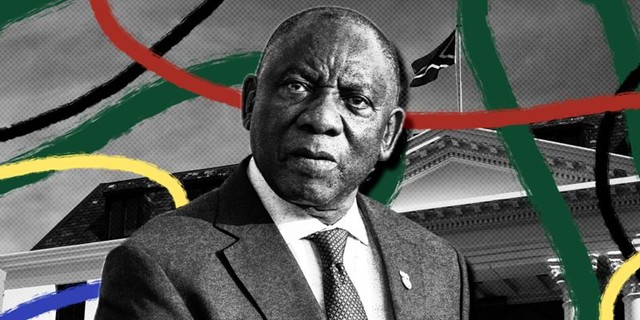

President Cyril Ramaphosa delivered his State of the Nation Address (SONA) on Thursday, 12 February 2026, at Cape Town City Hall. The aftermath received a mixed reception. At the forefront of concerns was the ongoing water crisis, linked to the destruction of water infrastructure, alongside issues surrounding economic growth and the challenges that accompany it.

The SAHRC (South African Human Rights Commission) has in various reports highlighted several drivers of water challenges in the country. These include, among others: insufficient attention and allocation of budget for the maintenance of water infrastructure; insufficient planning for population growth; high levels of water losses beyond the acceptable norms; the lack of skilled personnel in water units; and the scourge of water infrastructure vandalism and the emergence of water mafias. The SAHRC has noted that these challenges are more pronounced at the municipal level, yet it is the sphere charged with delivering water to households and communities in the country.
The SAHRC is concerned by the ongoing downward spiral regarding water management and distribution. The water challenges are widespread and significantly disrupt the lives of communities. Furthermore, the proper functioning of essential services such as schooling, healthcare among others, have been significantly compromised due to water challenges.

The SAHRC has struck at the heart of the issue. The brewing water crisis is having a profound impact on South African society, exacerbated by the breakdown of law and order. The police have become increasingly lax in addressing crime, whether organized or otherwise. As a result, the so‑called “water mafia” has flourished without fear, exploiting the severe shortage of fresh water to profit from the illegal market. A harsher stance by the state is desired, though it must be balanced with a pragmatic approach. Governance at the municipal level should be at the centre of this strategy. However, its success depends on whether the local regions concerned have the right leadership to address the crisis effectively.
The crisis in water management and distribution could lead to severe shortages if the resource is not utilized correctly. To tackle the issue of water mismanagement, the state must prioritize educating the public. There is a real risk of contracting cholera from consuming contaminated drinking water. Therefore, water should be treated with one tablespoon of chlorine and then boiled before use.
There should be immediate operationalization of the promised Water Resource Agency and stronger policing of water mafias. Investment by the national and provincial governments must be made a priority.
- Lanseria Smart City – Planned urban hub with housing and commercial infrastructure remains just an idea.
- National Dialogue / Social Compact – Intended to unite government, business, labour, and civil society; dialogue has collapsed
- Bullet Trains / High-Speed Rail – Promised high-speed rail network has seen no construction or clear funding.
- University in Ekurhuleni – Proposed institution to expand higher education access has not been built, but the department says there are no current plans to build university.
- Eskom Full Unbundling – Only the transmission entity exists; generation and distribution remain consolidated.
- Port Investment Partnerships – Private-sector deals to upgrade Durban and Ngqura ports have collapsed.
- Digital Television Migration – Deadlines for full migration have been repeatedly postponed.
- New Water Resource Agency – Announced to coordinate water infrastructure; agency remains non-operational.
- Additional Sexual Offence Courts – Less than half of the promised 16 courts are operational.
- Crime Reduction Initiatives – National crime rates remain alarmingly high despite repeated promises.
- Reducing Bureaucratic Red Tape – Streamlining government processes and approvals has not been fully achieved.
- Major Job Creation Programs – Employment targets, particularly for youth, remain unmet.

The Government of National Unity (GNU) still faces a major task ahead, as noted above. President Ramaphosa must end his aloofness and engage with civil society, the opposition, and private enterprises while utilizing the resources at his and the GNU’s disposal. The presidency and the GNU must put their priorities in order. The GNU should coordinate national policy in line with the interests and concerns of the South African people. Emphasis must be placed on wealth regeneration and job creation by streamlining bureaucratic restrictions. Private-sector partnerships should be incentivized, and youth employment programs should be prioritized. Decentralization of power between the national and provincial governments, along with bilateral cooperation, should take centre stage in South Africa’s national discourse. The president and the GNU must shift from grand promises (bullet trains, smart cities) to achievable reforms that directly improve daily life.
If President Ramaphosa and the African National Congress (ANC) are not focused—or even willing—to pursue the task, then it may be time for a changing of the guard. After all, with empty promises such as participation in the Fourth Industrial Revolution (FIR) and the construction of smart cities, the focus should instead be on issues of real substance. Courts dedicated to addressing gender-based violence should be established with immediate effect. While all of this cannot be achieved overnight, Ramaphosa—if he wishes to leave a worthy legacy—must tackle some of these issues head-on. Whether it is the water crisis or jobs and employment, these are issues of actual substance, as opposed to symbolic mega-projects. Constructing anything worthwhile is never easy, but it is always worth the effort.
Article written by:
Yacoob Cassim
Journalist at Radio Al Ansaar