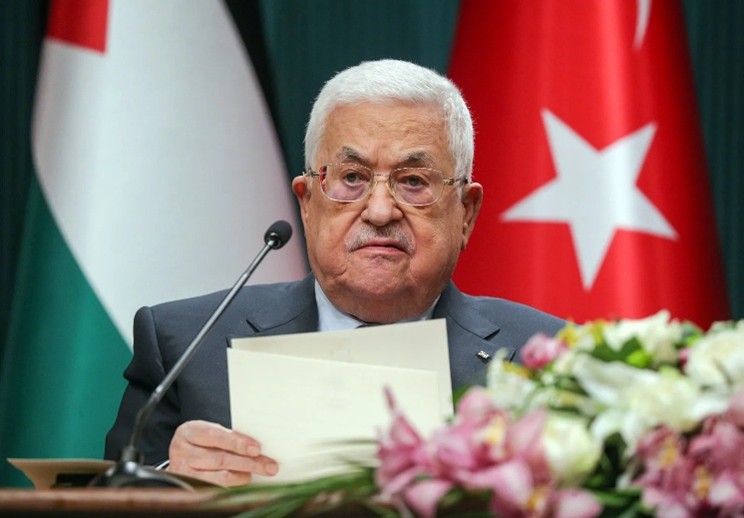

Palestine remains in a state of perpetual flux regarding the leadership of the Palestinian Authority (PA). PA President Mahmoud Abbas and his entourage of aides and advisors have introduced a new “temporary” constitution amid mass arrests and allegations of abuse by security forces. Within two months, there have been 235 reported cases of violence by PA security forces, with the largest concentration of political arrests occurring in Nablus and Jenin. These arrests were politically motivated and targeted journalists, students, and former prisoners previously detained by the Israelis. The legitimacy of the temporary constitution initiative has been questioned by the Gaza Human Rights Centre, while other rights groups argue that ongoing political divisions and wartime conditions undermine the constitutional process.

A Palestinian prisoners’ families committee documented 235 alleged violations carried out by Palestinian Authority (PA) security forces across the occupied West Bank during the past two months, according to local monitoring groups. The violations included political arrests, interrogations, home raids and restrictions on public freedoms. The committee reported 111 cases classified as political detention, 26 cases involving torture or stress positions during interrogation, and 34 raids on homes and workplaces. Additional incidents included 27 restrictions on freedoms, 20 arbitrary trials, seven health deteriorations linked to detention conditions, and five hunger strikes by detainees. The report also recorded seven cases of security coordination with Israeli forces and multiple dispersals of demonstrations.
Nablus recorded the highest number of cases at 75 violations, followed by Jenin with 49 and Hebron with 34. Political arrests constituted the largest category. Nablus again led with 32 arrests, followed by Jenin with 19 and Hebron with 14.

The Palestinian Authority (PA) is exerting an increasingly authoritarian grip over neighbourhoods under its jurisdiction. The Gaza Strip, under Hamas, lies in ruins, while the occupied West Bank—controlled by Fatah and the Palestinian Liberation Organization (PLO) through the PA—is steadily eroding due to illegal Israeli settlement expansion. PA President Mahmoud Abbas, meanwhile, clings to power despite lacking legitimacy. The violations and restrictions imposed on Palestinian citizens do nothing to advance the cause of a Palestinian state. Israel, and even the United States government, show little concern for the erosion of the Palestinian cause or the restrictions enforced by the PA on its people.
At ninety years old, Abbas is in urgent need of a successor. Yet any potential successor remains languishing in Israeli administrative detention. Ordinary people who care about the Palestinian cause must raise awareness of the plight of all detainees and call for their release.
In the United Kingdom, however, the Palestinian civil society group Palestine Action has been banned by the Home Office, despite the ban being ruled unlawful by the courts

The high court said the then home secretary Yvette Cooper had not followed her own policies when bringing in the controversial ban last summer. When asked about her decision making, Cooper told Sky News:
Well, I followed the clear advice and recommendations, going through a serious process that the Home Office goes through, involving different agencies and police advice as well, which was very clear about the recommendation for proscription of this group.
And the court has also concluded that this is not a normal protest group, that it has found that this group has committed acts of terrorism, that this group is not simply in line with democratic values, and has promoted violence.
Cooper was pressed to reveal the advice she was given that informed her decision to pursue the ban, but did not, instead saying: “So I was given significant evidence and advice around risks of violence and risks from public safety, and that is what you take seriously.” The foreign secretary added: “If you ignore advice that you are given about risks to public safety then you’re really not taking seriously the responsibilities of home secretary.”
In terms of transparency and accountability, former Secretary Cooper—who would be referred to as a Minister in South Africa—should have explained on whose advice, and based on what evidence, she decided to ban Palestine Action. The group is seeking to have the ban lifted, despite current Home Secretary Shabana Mahmoud’s attempts to appeal it. Around 2,500 activists associated with Palestine Action have been arrested on terrorism charges. If Cooper, during her tenure at the Home Office, had followed “serious advice” in banning Palestine Action, why did she choose not to disclose who had advised her to impose the ban? What evidence did the UK Home Office have at the time of Cooper’s administration concerning the activities of Palestine Action?
Whatever motive the then Home Secretary Cooper had in imposing the ban, it is likely to be lifted. However, regarding the actions of Abbas and his entourage mentioned previously, those who care about the Palestinian cause must unite and call for decisive action. The cause of a Palestinian state is in jeopardy. Amid the shifting power dynamics of the Middle East, Israel will continue to use its global networks of influence and power to tip the balance in its favour. All who care about the future of Palestine must remain vigilant.
Article written by:
Yacoob Cassim
Journalist at Radio Al Ansaar