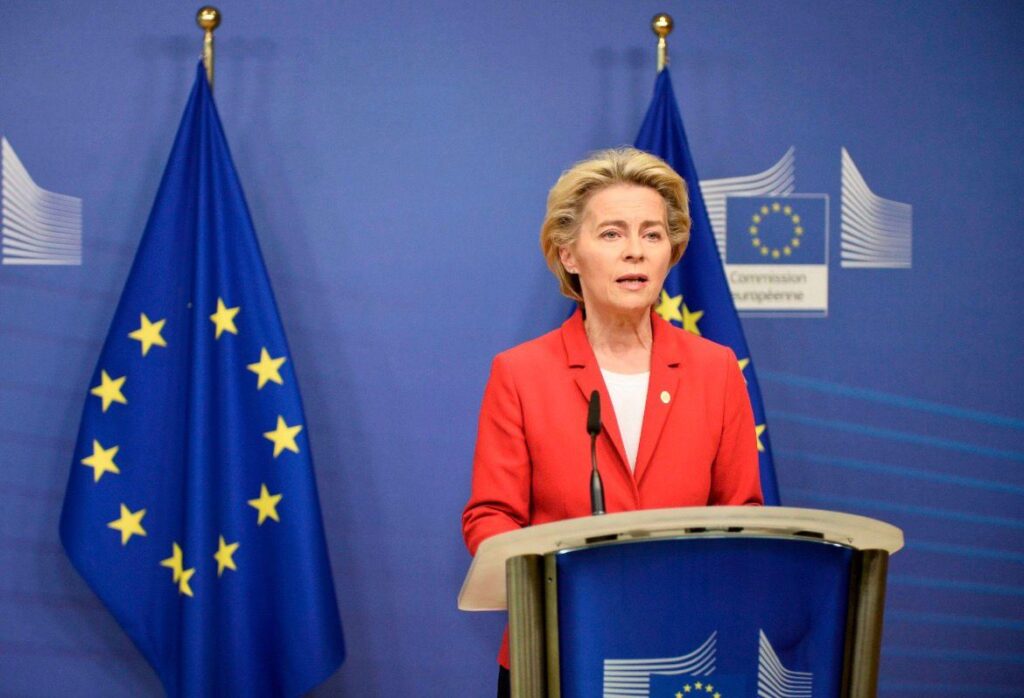

A growing disagreement within the European Union leadership has exposed deep divisions over how the bloc should respond to the rapidly escalating crisis in the Middle East. Reports indicate that European Commission President Ursula von der Leyen and the EU’s foreign policy chief Kaja Kallas hold differing views on the appropriate diplomatic approach toward Iran as tensions in the region intensify.
The disagreement comes at a time when geopolitical pressure is rising sharply following renewed confrontation involving Iran and Israel, alongside increasing involvement from the United States. Military activity and political rhetoric in the region have placed global powers on high alert, with fears that the situation could spiral into a wider regional conflict.
Against this backdrop, the European Union is struggling to present a unified diplomatic position. While some European leaders advocate a firm stance against Iran, others appear to favour a more cautious and diplomatic response. The lack of consensus highlights broader divisions within the bloc over how aggressively Europe should position itself in a conflict that carries significant global implications.
The strategic impact of these divisions could be substantial. Disagreements within the EU may influence decisions on sanctions against Iran, the scope of diplomatic engagement, and Europe’s broader security and military posture in relation to the Middle East. A fragmented response risks weakening Europe’s influence at a time when coordinated international pressure is often viewed as essential to managing regional crises.
As tensions continue to mount, the situation is increasingly testing the unity of Western alliances. With the Middle East once again at the centre of global geopolitical friction, the ability of European leaders to present a coherent strategy may prove critical in shaping the international response to the unfolding crisis.
Article written by:
Hudaa Ahmed
Journalist at Radio Al Ansaar