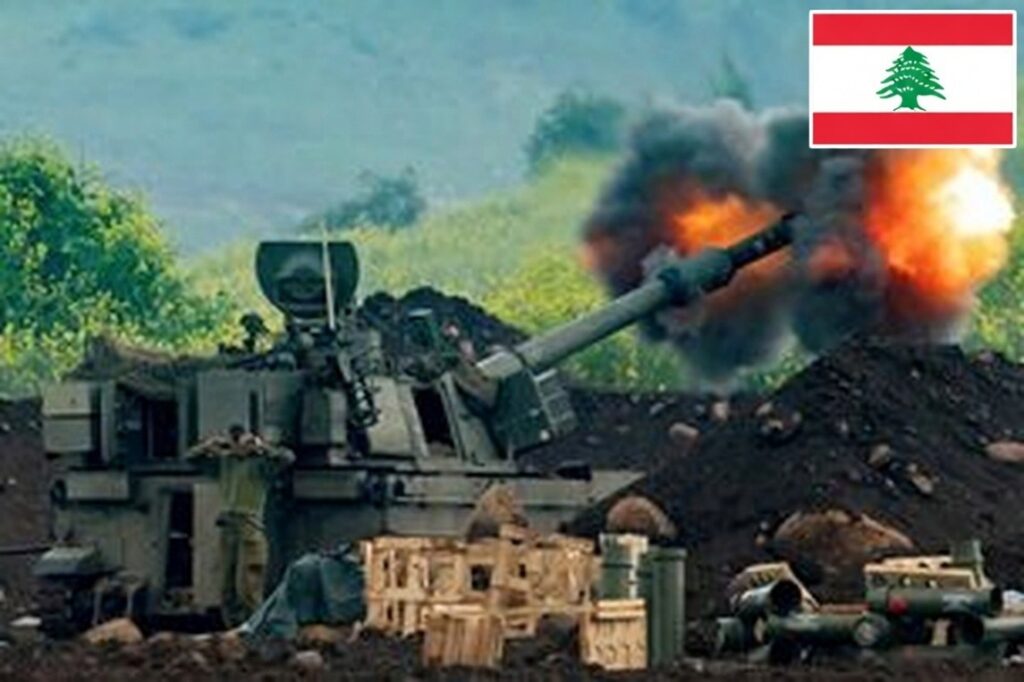

Tel Aviv has launched air strikes on three neighbourhoods in Beirut, the capital of Lebanon, Israel’s northern neighbour. Two southern suburbs of the city were hit by large air strikes. The Israelis targeted Dahiyeh, which is under a forced evacuation order. The suburb was home to over a million people, who have now been displaced.
About an hour before that, there was a strike in Aaramoun, which is an area just south of the capital. It wasn’t subject to an evacuation order. This appears to be another attempted targeted assassination strike. It took out just one floor of a residential building. We don’t know who the target was but we’ve got an update from the Health Ministry that one Ethiopian woman was wounded in that attack. There is a large community of migrant domestic workers here in Lebanon – many from Ethiopia – who have also been displaced along with the families they work for. Presumably that woman was not the target of the strike, but it gives you some indication of the impact these so-called precision strikes are having on many, many other people.

The attacks around the Lebanese capital are meant to compel the Lebanese government to disarm the Shi’ite Militant organization and network Hezbollah. The group operates as a state within a state and holds great sway over Lebanese politics and society. Lebanon is a complex Levantine nation home to Sunni, Shi’ite Muslim and Christian Arab groups and Israel is looking for an opportunity to fragment the state. It is an open, unspoken secret that Israel has expansionist ambitions beyond its current borders and the occupied Palestinian territories. The Israelis’ first major goal is to weaken Hezbollah’s internal structure as well as destroy their infrastructure installations. Hence, the air strikes on the suburbs. The civilians who have been forced to flee their homes, both citizens and expatriates have borne the brunt of this latest war.
It remains to be seen what the public opinion on the streets of Lebanese cities is in regard to both Hezbollah and Israel.
Meanwhile the Israeli administration of Prime Minister Benyamin Netanyahu is proceeding with deepening its “limited ground incursions” against Hezbollah in south Lebanon. The Israel Defence Force (IDF) are deploying troops within Lebanese territory.

Lebanon was drawn into the Middle East war on 2 March when Iran-backed Hezbollah launched missiles into Israel in response to the killing of Iranian Supreme Leader Ali Khamenei in US-Israeli strikes. Israel has since expanded its air raids primarily on Shia-majority regions, killing at least 850 people and wounding more than 2,000 others. There are fears in Beirut that an Israeli ground invasion could reach the Litani River, with Tel Aviv reoccupying the southern region. Clashes have already been reported in several border areas between Hezbollah fighters and Israeli troops, especially in the strategic town of Khiam, which Israeli forces have already reportedly entered. “In recent days, IDF troops from the 91st division have begun limited and targeted ground operations against key Hezbollah strongholds in southern Lebanon, aimed at enhancing the forward defence area,” the Israeli military said in a statement.
It claimed that the operation was part of “broader defensive efforts to establish and strengthen a forward defensive posture”, which includes dismantling Hezbollah infrastructure and eliminating fighters operating in the area.

Hezbollah, it must be noted, pledged its loyalty to the leadership of the Iranian Islamic Republic. The group regarded the killing of Supreme Leader Khamenei as an affront to its allegiance. In that regard, Hezbollah entered the war on Iran’s side against Israel to exact retribution. How this retribution unfolds, as Israel seeks to disable the group by targeting its infrastructure, remains to be seen. Ordinary civilians in Lebanon have become the victims and casualties of this horrific conflict. The fact that Hezbollah first launched air strikes against Israel on March 2 may not endear the group to the Shi’ites in the south, whom they claim to represent. The deployment of IDF military units to southern Lebanon indicates that Israel is seeking to weaken Hezbollah, possibly by eliminating some of the group’s new leaders.
With the blessing of U.S. President Donald Trump, the IDF is compelled to disarm Hezbollah through this “limited ground force.” How the conflict in Lebanon manifests itself within the wider war between Israel and the U.S.-led campaign against Iran will depend on how Hezbollah and the Lebanese state respond to Israeli incursions.
Article written by:
Yacoob Cassim
Journalist at Radio Al Ansaar