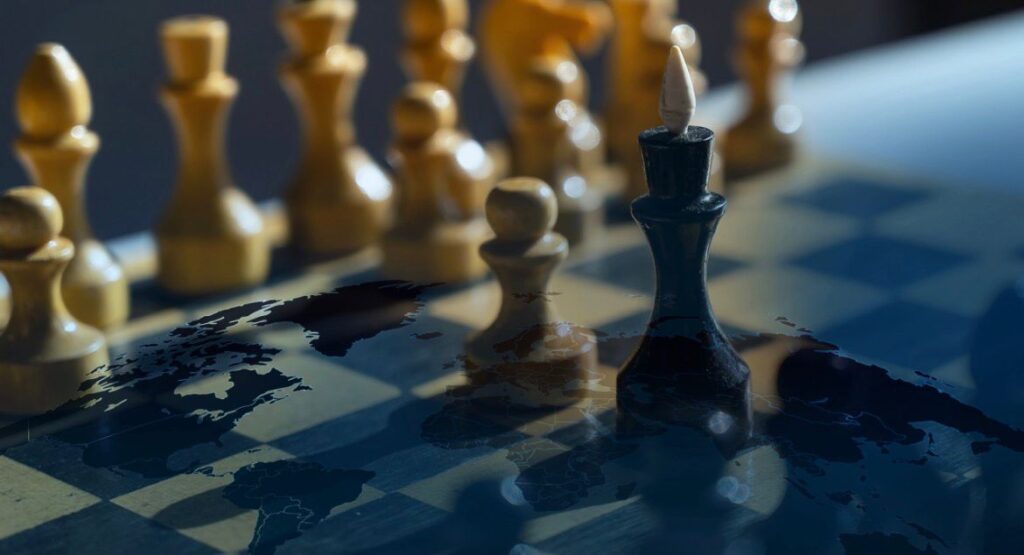

A ceasefire is being discussed – but it may have less to do with ending the war, and more to do with controlling how it is perceived.
Overnight, reports emerging through Israeli media and echoed across international outlets signalled that a ceasefire proposal is now part of the conversation. On the surface, it suggests a possible pause in escalating tensions between Israel, Iran and their wider network of allies. But the way this proposal surfaced – and the timing behind it – points to something far more calculated than a simple attempt at de-escalation.
According to ongoing coverage , diplomatic channels are active, yet there is no clear indication of agreement, structure, or enforcement. That absence is not a minor detail – it is the story. It suggests that what is unfolding is not a coordinated move toward peace, but a strategic move in a parallel battle: the fight to control the narrative.
In modern conflict, perception is power. The first side to introduce the language of “ceasefire” often claims the moral high ground, positioning itself as reasonable, measured, and open to diplomacy. That alone can reshape how global audiences, allies, and even markets respond. In this context, the proposal begins to look less like a resolution and more like a message – one designed to influence how the next phase of the conflict is judged.
The timing reinforces this. After days of heightened military activity, rising international concern, and increasing pressure from global powers, the sudden emergence of a ceasefire narrative provides a strategic reset without requiring immediate concessions. It allows space to regroup, reassess, and recalibrate – all while appearing to step back.
Data and reporting trends suggest the impact of the conflict is already extending beyond the battlefield. Oil markets remain sensitive, shipping routes are under pressure, and global risk calculations are shifting. Yet despite these pressures, there is no concrete framework emerging from the reported discussions. That gap between headline and reality is critical. It highlights that the word “ceasefire” may be doing more work politically than practically.
Analysts cited by institutions such as the Atlantic Council have long noted that ceasefire proposals in high-stakes conflicts often function as strategic tools rather than endpoints. They can freeze momentum, test reactions, and reposition actors without resolving the underlying drivers of conflict. In this case, both Israel and Iran have incentives to manage escalation carefully – but neither has clear incentive to concede.
This creates a subtle but powerful dynamic: a proposal that no side can easily accept without appearing weak, and no side can outright reject without appearing responsible for continued escalation. In effect, the ceasefire becomes a pressure mechanism – not just a peace offering.
The ripple effects are already forming. Regional actors are recalculating their positions. Global powers are attempting to contain the situation without direct involvement. Markets are reacting not to certainty, but to signals – and right now, those signals are deliberately ambiguous.
History shows that moments like this are rarely turning points. More often, they are transitions. Ceasefires emerge at peaks of tension, offering temporary pauses while deeper strategic objectives remain unchanged. They create the appearance of control in situations where control is, in reality, limited.
The global implications are therefore significant. If a ceasefire holds, even briefly, it may stabilise markets and reduce immediate risk. But if it collapses – or was never intended to hold – it could pave the way for a more calculated and potentially more intense phase of escalation.
What is unfolding is not simply a move toward peace, but a contest over perception, timing, and advantage. The word “ceasefire” may dominate headlines, but it may also be one of the most strategic tools currently in play.
Because in this phase of the conflict, the battle is no longer just about territory or military capability.
It is about who controls the story – and what the world believes comes next.
Article written by:
Hudaa Ahmed
Journalist at Radio Al Ansaar