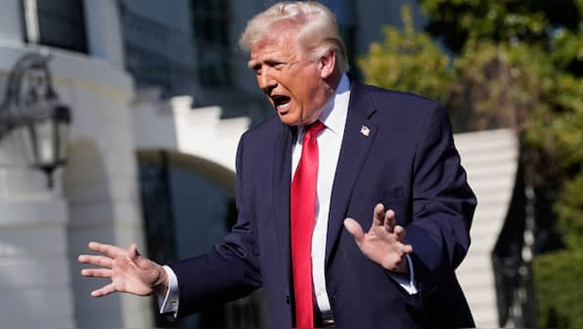

Officials from U.S. President Donald Trump’s administration are holding internal discussions about the details of a potential second, in-person meeting with Iranian officials before the ceasefire between the United States and Iran expires within the two-week deadline, should the opportunity arise, a source familiar with the talks told CNN. It remains unclear whether such a meeting will materialize. State officials on both sides are considering possible dates and locations, depending on the progress of ongoing talks with Iran and regional mediators in the coming days. The source, speaking on condition of anonymity, described the discussions as preliminary. “We need to be prepared to set something up quickly should things move in that direction,” the source said.
The first face-to-face marathon meeting in Islamabad, Pakistan, on Saturday was the culmination of weeks of negotiations with a top-ranking American official and intermediary nations, including Pakistan, Turkey, Egypt, and Oman, among others.

An oil tanker passed through the Strait of Hormuz on Monday afternoon after the Trump administration’s blockade on Iranian shipping was set to take effect, according to data published by Kpler, a data intelligence and analytics platform on global trade flows. The ship, registered in Comoros as Elpis, is partially laden and was sanctioned by the United States in 2025 for its “involvement in the sale, purchase, and transportation of Iranian petroleum” as part of Iran’s shadow fleet. Conversely, a Botswana-registered tanker, Ostria, turned back while attempting to transit the strait. Just 41 minutes after Trump’s deadline, the ship changed its intended destination from Oman to the United Arab Emirates after turning around, according to CNN’s review of Kpler ship-tracking data.
Minutes after the blockade took effect, another tanker, Rich Starry, broadcast its status as “drifting” off the coast of Qeshm Island, apparently stalling its voyage through the channel. Hours before the start of the US blockade, shipping data showed traffic at the key waterway had thinned.

The free flow of Iranian cargo ships moving through the Strait of Hormuz without fear of further retaliation by the U.S. military shows remarkable defiance and bravery. The Iranians believe their ships cannot be harmed, given the strikes they carried out against the Americans during the first half of the war. Sanctions on cargo vessels are intended to prevent revenue from reaching Iran’s nuclear energy program. The flow of oil from the Arabian Peninsula is slowly resuming, despite the damage sustained by refineries during the war. The purpose of Iran’s “shadow fleet” is not only to generate revenue for nuclear energy reforms but also to support its defence. Iran’s main goal is to reopen the Strait of Hormuz so it can export oil to friendly nations such as China.
As negotiations progress slowly, so too will the Gulf nations’ efforts to rebuild what they can. No one wants a resumption of the war, given the destruction inflicted on both sides. Oil prices may have dropped steadily, but reconstruction will take time. Business will not return to normal overnight.

The breakdown of US-Iran talks has added uncertainty ahead of the April 22 deadline for the current truce. Iran’s Foreign Minister Abbas Araghchi blamed Washington for the failure, accusing it of making unrealistic demands and constantly changing its position. The tensions are already impacting global markets. Oil prices have surged above $100 per barrel due to fears of supply disruption around the critical Strait of Hormuz, a key route for global energy shipments. At the same time, violence is increasing elsewhere in the region. The Israel Defense Forces carried out strikes in southern Lebanon, with casualties reported and fresh clashes near border towns.
The recent collapse of peace negotiations indicates that developing economies such as South Africa must brace themselves and consider alternatives to Iranian – and even Gulf –oil. A new outbreak of hostilities between Washington and Tel Aviv on one side, and Iran on the other, depends on the span of Trump’s patience. However, if Trump breaks off the negotiations, he risks his approval ratings plummeting further. The recent surge in oil prices will lead to higher transport and fuel costs. This clearly shows that non-oil-producing countries must turn to renewable energy sources or petroleum supplies closer to home.
The talks may or may not continue, and war could resume—or not—depending on the endgame for Trump and Israeli Prime Minister Benjamin Netanyahu.
Article written by:
Yacoob Cassim
Journalist at Radio Al Ansaar