
Countries don’t suddenly invite the world in unless something is pushing them.
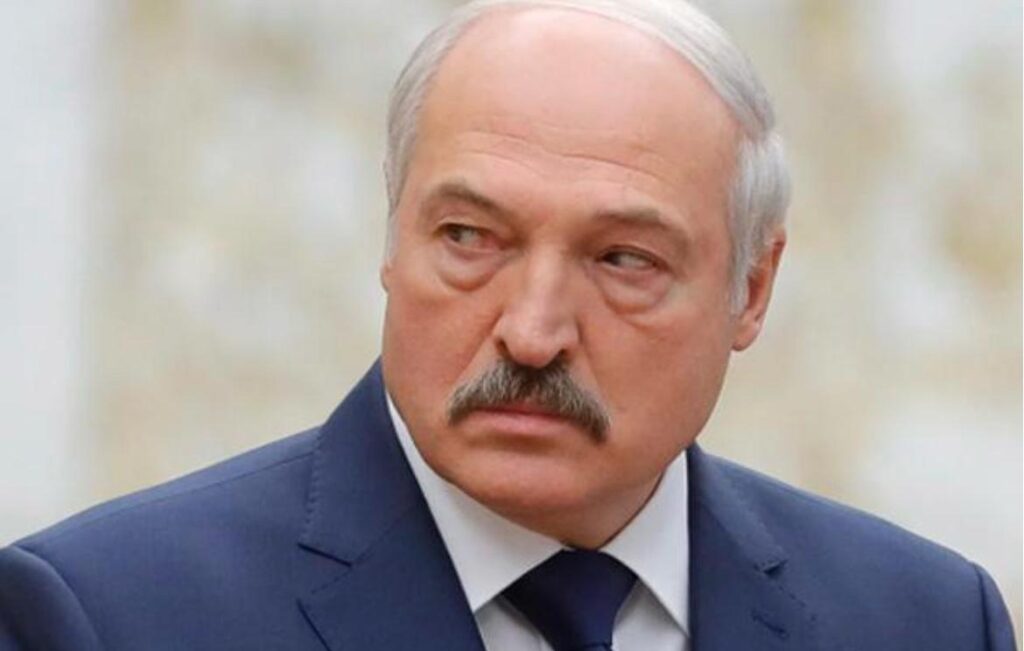
So when Alexander Lukashenko describes Belarus as a “land of opportunity,” the real question isn’t what he’s offering – it’s why now.
Because opportunity, when announced this loudly, is rarely about growth. It’s about pressure.
On paper, the message is simple. Belarus is open for business. Investment is welcome. Growth is possible. The tone is calm and confident – a country repositioning itself.
But here’s where it gets uncomfortable.
Countries don’t change their message unless the old one stops working.
And right now, the numbers don’t match the narrative.
Global indicators point to an economy under pressure. Growth is limited. Trade constraints remain. Dependence on a narrow set of partners has deepened.
That’s not a breakout opportunity story. It’s a system trying to hold its ground.
Now add sanctions – and the picture sharpens.
The European Union and the United States have imposed layers of restrictions targeting Belarus’s financial systems, industries, and trade channels. These measures don’t just exist on paper.
They limit access to capital.
They restrict partnerships.
They quietly raise the cost of doing business.
Sanctions don’t just punish economies. They reshape behaviour.
And when behaviour changes, messaging follows.
So when Belarus speaks the language of opportunity, it’s not happening in a vacuum. It’s happening under pressure – financial, political, and strategic.
Here’s the part most people miss:
Investment doesn’t move toward opportunity. It moves toward confidence.
And confidence doesn’t come from what a country says – it comes from what the environment allows.
That’s where the tension sits.
If Belarus succeeds in attracting investment, it could start reducing its dependence – especially on Russia – shifting the balance in the region.
If it fails, the gap between narrative and reality widens.
And that gap is where risk lives.
History makes this shift even more telling.
Belarus has never been known for being “open.” Strong state control and tightly managed systems have defined it for decades. That doesn’t change overnight – and it doesn’t change without reason.
Which raises a sharper question:
Is this an invitation… or a signal?
Because globally, this pattern is becoming familiar.
Countries under pressure don’t always collapse. They reposition. They soften their message. They start selling possibility – not because everything is working, but because something isn’t.
And if you’re sitting in South Africa reading this, don’t dismiss it as a distant story.
You’ve seen this before.
You’ve seen how narratives are shaped to attract investment. How optimism is packaged. How “open for business” doesn’t always mean what it sounds like.
That’s why this matters.
Because the most dangerous narratives aren’t the loud ones. They’re the reasonable ones.
Belarus may offer pockets of opportunity. That’s not the point.
The point is this:
When a country needs you to believe in its opportunity, you should start asking what it needs that belief for.
Because in geopolitics, opportunity is rarely advertised this deliberately unless something underneath it is under strain.
And the real risk isn’t missing the opportunity.
It’s misunderstanding why it’s being offered in the first place.
Article written by:
Hudaa Ahmed
Journalist at Radio Al Ansaar