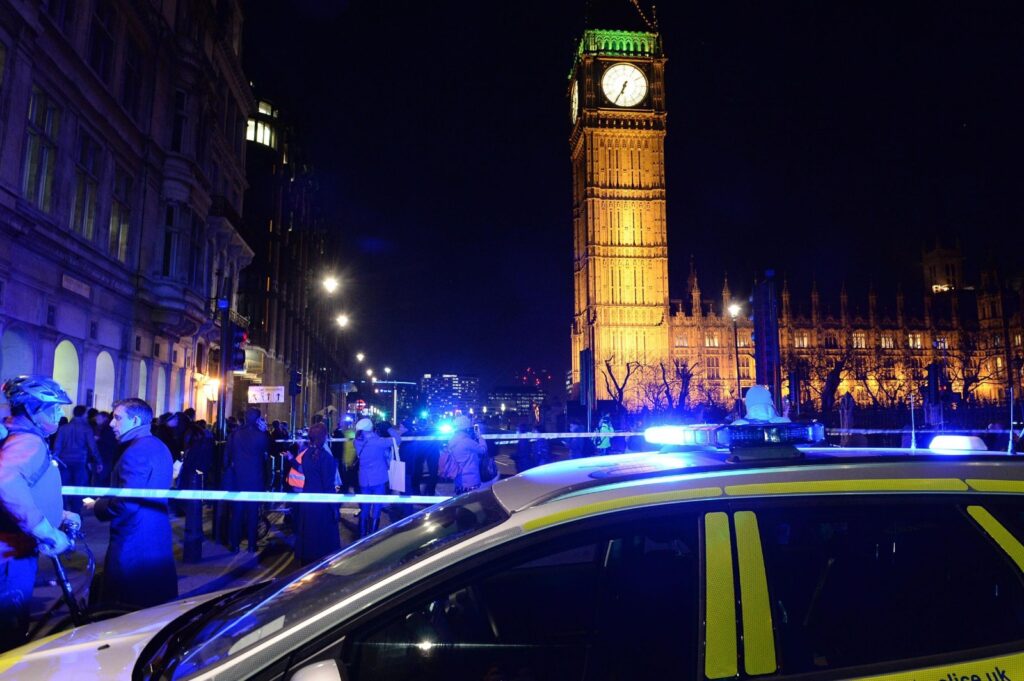

For a few hours, London looked like it had fallen.
Not in reality – but online, where perception moves faster than proof, and panic doesn’t wait for confirmation.
Scroll long enough, and the picture felt undeniable: chaos, sirens, crowds, tension. A 10-second clip of police vehicles. A shaky video of people running. Posts didn’t ask questions – they delivered verdicts.
London has fallen.
Except… it hadn’t.
Reporting from BBC News and Reuters shows a far more contained reality. There were isolated incidents – protests, visible policing, brief disruptions. But what unfolded online was something else entirely: fragments of truth stretched into a full-blown narrative.
And this is where things shift.
Because the phrase didn’t trend due to accuracy.
It trended because it felt right.
According to Full Fact, many of the most widely shared posts were misleading or false. Old footage resurfaced. Context vanished. Ordinary scenes were reframed as signs of collapse. A short clip became a symbol. A symbol became a storyline.
And the storyline became belief.
Here’s the uncomfortable part:
It didn’t need to be true. It just needed to feel true – and that’s far more powerful.
Research from First Draft News shows misinformation doesn’t spread because it is convincing. It spreads because it is emotional. Fear outruns facts. Certainty outruns nuance. And once a narrative taps into something people already suspect – instability, division, decline – it doesn’t just spread.
It accelerates.
People didn’t blindly believe the story.
They were already prepared for it.
Years of political tension, economic pressure, and growing distrust in institutions have created the perfect conditions. When uncertainty becomes normal, dramatic explanations don’t feel extreme – they feel logical. The narrative doesn’t fight for attention. It fits into place.
Now add the algorithm.
Platforms don’t just reward outrage – they depend on it. Content that provokes, alarms, or divides is pushed further, faster, wider. Not because it is accurate, but because it is engaging. Nuance struggles to survive here. Context rarely trends.
But chaos? Chaos gets amplified.
And this is where it turns on you.
You didn’t just watch the narrative spread – you helped it move.
Every click, every pause, every share feeds the system deciding what millions see next.
So while facts were still forming, the narrative had already won.
Coverage from The Guardian and Al Jazeera shows how quickly online perception can reshape real-world understanding. Repetition creates familiarity. Familiarity creates belief. And belief – even when misplaced -shapes how people interpret everything that follows.
This is how distortion becomes reality-adjacent.
And the consequences don’t stay online.
This is how trust erodes – not in one moment, but gradually, post by post.
This is how division deepens — not just in opinion, but in what people accept as fact.
This is how shared reality breaks – and once that’s gone, everything else starts to fracture.
We’ve seen this before.
From recycled war footage to misrepresented protest clips, misinformation follows a pattern. A fragment of truth is lifted, reshaped, and amplified until it no longer resembles its origin. Each cycle becomes faster. Sharper. Harder to stop.
But here’s the part that should make you pause:
If London – one of the most visible, documented cities in the world – can be made to look like it’s collapsing within hours, then the issue isn’t the city.
It’s the system.
Because the battlefield is no longer physical.
It’s informational.
And it doesn’t require weapons.
It requires attention.
Your attention.
Because in this environment, perception isn’t just influenced – it’s engineered, competed for, and quietly controlled.
So the real question isn’t: Did London fall?
It’s: Why were so many people ready to believe that it did?
London didn’t fall.
But millions watched it happen anyway.
Article written by:
Hudaa Ahmed
Journalist at Radio Al Ansaar