Iraq’s parliamentary elections took place five months ago but, the office of Prime Minister has yet to be officially filled. No party has won a majority of seats – in Iraq coalition blocs determine who the next PM will be – the largest coalition of Shi’ite parties the Reconstruction and Development Coalition is still in negotiations over who will fill which ministerial office in the cabinet.
Iraq is Shi’ite Muslim majority nation where the constitution states that the executive Prime Minister has to be a Shi’ite Arab Muslim, the President has to Sunni Kurd Muslim from the country’s northern Kurdish region and the Speaker of the existing parliamentary chamber, the Council of Representatives has to be a Sunni Arab Muslim.
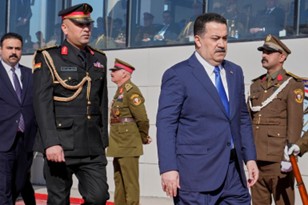
Iraq’s incumbent Prime Minister Mohammed Shia al-Sudani, whose goal is a second term in office, is facing a challenge from the Coordination Framework led by his predecessor former Prime Minister Nouri al-Maliki.
The Coordination Framework – which commands approximately 185 of 329 seats in parliament – must nominate a prime minister by April 26, as required by the Iraqi constitution, while the country faces the delicate task of balancing its ties between the US and its influential eastern neighbour, Iran. Baghdad is in a tight diplomatic spot as the US-Israel war on Iran has spilled into Iraq, with pro-Iranian armed groups having carried out attacks on US assets in solidarity with Tehran. Iran, which wields considerable influence over Iraqi politics, has also been involved in the political crisis. It has cultivated Shia parties following the removal of President Saddam Hussein in the 2003 US-led military invasion.
Ismail Qaani, the head of the Quds Force, the foreign branch of the Islamic Revolutionary Guard Corps (IRGC), visited Baghdad at the weekend, aiming to break the leadership deadlock, according to sources.
Shop at Al Ansaar
Tehran persists in wielding considerable influence in Iraq, most political factions in Baghdad give difference in their policies to the Iranians. The influence the Iranian regime has extended to beyond foreign policy; the main focus is social and economic. The direction of the IRGC and the Iranian Military behind the scenes is recurring presence. Al Maliki is a key ally of Iran and is unpopular in American diplomatic and intelligence circles. Al Maliki is the main power broker in the Coordination Framework and is looking to charter a path back to the prime minister’s office. Al-Sudani opposes Al-Maliki due to his repressive and authoritarian tendencies. Al-Sudani is the progressive force that wants to assert Iraq’s sovereignty.
Al Asnaar Shop Trading Hours
There has to be room for change in the Tigris and Euphrates valley, but with the war in neighbouring Iran threatening to spill over, Iraq must choose a new prime minister as soon as appropriately possible and build its own internal security and defences.