
The world was told it had learned from COVID-19.
So why does a quarantined cruise ship suddenly feel so familiar again?
This week, global attention turned toward the Dutch expedition cruise ship MV Hondius after seven confirmed cases of hantavirus were identified onboard, triggering emergency health monitoring and renewed anxiety around international travel, outbreak response, and public trust.
At least two people linked to the outbreak have died, while several passengers and crew members reportedly became ill during the voyage. One patient was later treated in Johannesburg after the vessel docked in Cape Town, giving the incident an unsettling South African connection that immediately drew local attention.
Seven cases should not terrify the world.
Yet somehow, they do.
Because the fear surrounding the MV Hondius is no longer only about one virus. It is about memory. About uncertainty. About how quickly modern society now associates isolated outbreaks with the possibility of global disruption.
And for many people, especially after 2020, the image of illness spreading aboard a ship no longer feels distant. It feels personal.
The MV Hondius, operated by Oceanwide Expeditions, had been travelling through remote Antarctic and sub-Antarctic regions before passengers and crew reportedly began showing symptoms associated with hantavirus. According to international health authorities, investigations are continuing into how the infections occurred and whether limited human-to-human transmission may have taken place.
That possibility is what has placed health experts on alert.
Hantavirus is typically linked to exposure to infected rodents, particularly through contact with contaminated droppings, urine, or saliva. Symptoms often begin with fever, fatigue, and muscle pain before potentially developing into severe respiratory complications.
The World Health Organisation has stressed that the overall public health risk currently remains low and that there is no evidence of widespread international transmission linked to the outbreak.
But public reaction reveals a deeper problem that governments and health agencies are still struggling to manage: trust.
During the COVID-19 pandemic, millions of people around the world watched situations escalate from “contained” to catastrophic within weeks. As a result, words like “low risk” no longer calm the public as easily as they once did.
People listen.
But they also remember.
“The risk to the general public remains low,” the WHO said in its latest briefing, while continuing to monitor the situation and support investigations into the cluster of infections. Yet for many readers following the story online, reassurance alone is no longer enough to silence anxiety.
That shift matters more than many officials realise.
Outbreaks today are no longer viewed as purely medical events. They are emotional events, political events, and psychological events all at once. The public no longer reacts only to the disease itself – people react to the possibility of instability.
And cruise ships have become powerful symbols of that fear.
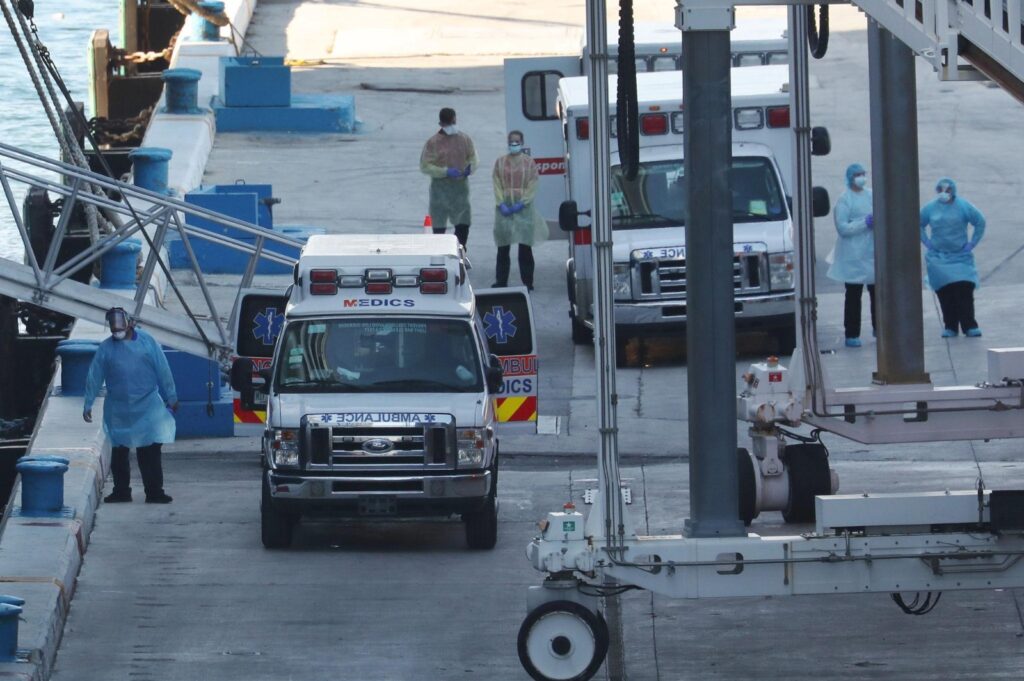
Long before investigations are completed, images of confined passengers, emergency health checks, and international monitoring immediately trigger memories of lockdowns, border closures, and a world that once felt completely unprepared.
The real fear is not seven cases.
The real fear is how quickly uncertainty can spread.
For South Africans, the incident also raises broader questions about global preparedness and regional vulnerability. One patient receiving treatment in Johannesburg was enough to make the story feel far closer to home than many international outbreaks usually do.
In an age of constant air travel and interconnected healthcare systems, outbreaks unfolding thousands of kilometres away no longer stay psychologically distant for very long.
That reality has permanently changed how people consume global news.
What makes the MV Hondius incident so compelling is not only the virus itself, but what it represents: a reminder of how fragile public confidence still is years after COVID-19 reshaped the world.
The pandemic may have officially ended.
But psychologically, the world is still recovering from it.
Experts continue to emphasise that hantavirus is very different from COVID-19 and that this outbreak does not currently indicate a larger global threat. However, the speed at which the story has captured international attention shows how deeply the collective memory of crisis still influences public perception.
And perhaps that is the real lesson emerging from this incident.
The virus itself may ultimately be contained.
But the fear of returning to chaos remains far harder to quarantine.
Article written by:
Hudaa Ahmed
Journalist at Radio Al Ansaar