Eid-Al-Adha was proclaimed a public holiday by the South African government on the 27th Wednesday 2026. In an official notice, authorities confirmed that the day will be observed nationwide, allowing Muslims across the country to commemorate the “Festival-of-Sacrifice” that will be observed nationwide allowing Muslims across South Africa to participate in the occasion with prayers, charity and family gatherings.
“It is notified for the general information of the public that, in exercise of the powers conferred by section 3 (1) of the Public Holidays Act, the Cabinet Secretary for Interior and National Administration declares that, Wednesday, the 27th May, 2026, shall be a public holiday to mark Eid-ul-Adha,” read a Gazette Notice by Interior Cabinet Secretary Kipchumba Murkomen. Eid ul-Adha, also known as the “Festival of Sacrifice,” honors the willingness of Prophet Ibrahim (AS) to sacrifice his son in obedience to God, a central story in Islamic tradition.
Shop at Al Ansaar
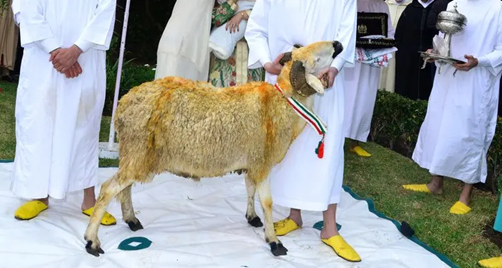
It should be noted that the Command by Allah Sub Hana Wa Ta ala to Ibrahim (AS) to sacrifice his son, Ismail was a test. Allah Ta ala had sent down a Ram in place of Ibrahim (AS)’s son with the Angel Jibril (AS) to sacrifice. Eid-Al-Adha is a time of sacrificing sheep, camels, goats or cattle, the meat of which is distributed amongst the family closest to the intended, then the extended family and then the poor. The slaughter of live stock is symbolic of sacrificing one’s own personal ego and desires. The ritual takes place on the 10th of Dhul Hijjah according to the Islamic Lunar Calendar.
Al Asnaar Shop Trading Hours
While Eid-ul-Fitr is considered one of the biggest festivals in Islam, Eid-ul-Adha holds equal religious importance and is regarded as the second most significant Islamic festival. The festival commemorates the supreme sacrifice of Prophet Ibrahim (AS) and his unwavering devotion and obedience to Allah. Muslims remember his willingness to sacrifice for the sake of faith and offer prayers in his honour. As soon as the moon of Dhul Hijjah is sighted, markets begin to witness festive activity. People start shopping for new clothes, sweets, and animals for the ritual sacrifice.
The story of Eid-Al-Adha is an important part of the Islamic faith as at its core is the sacrifice of one’s desires and ego, in favour of a more selfless and compassionate view of life. The sparing of Ismail (AS), led to him eventually reaching adulthood and assisting his father to reconstruct the Ka’ba in Mecca. At the heart of this is the Hajj, a pilgrimage all Muslims must perform at least once in their life time. At special intervals from Mecca to Madinah there are three tall pillars symbolic of the Shaiteen/Devil which Muslims must stone, as Ibrahim (AS) stoned the Saiteen/Devil.
Eid-Al-Adha and the Qurbani/sacrifice take place across the Islamic World depending on the siting of the moon.