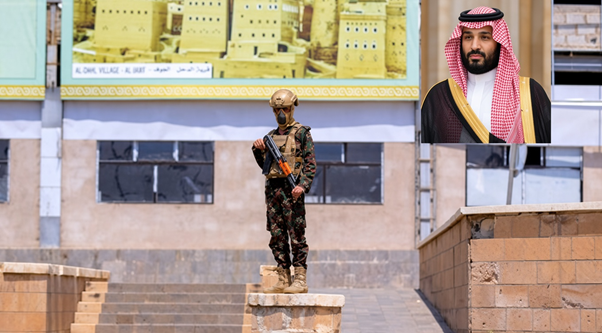

The delicate balance of power in Yemen is being tested. The Zaidi Shiite Houthi militant group which dominates the north of the country, threatens escalation. The Houthis are raising combat readiness under the slogan under “Securing the Rights by Force,” amid fears of a collapse of a truce with the south and a return to clashes. The Houthi organization is closely allied with Iran, that has recently agreed to a truce with the United States (US).

Observers believe that the latest Houthi threat cannot be separated from the recent understandings between Tehran and Washington, which have given Iran’s allies in the region a greater room of manoeuvre. The Houthi mobilization statement came after a hardline speech by Abdul Malik al-Houthi marking the Islamic New Year, in which he spoke about “restoring full sovereignty” and ending what he described as “blockade and dependency.” The group also praised what it called “Iranian victories against America and Israel,” affirming its commitment to what is known as the “unity of fronts,” in reference to the growing connection between the Houthis and the regional Iranian axis.

The Houthis are preparing to resume their plans to retake the south. Washington opposes this but Tehran has maintained its support for them. The Houthis and their leader Abdul Malik al-Houthi wants to unify Yemen in its entirety under its rule. This will not be welcomed by the country’s northern neighbour Saudi Arabia, which does not trust a Yemeni state under the Houthis’ rule. The Houthis are seeking to be a counterweight between its ally Tehran and Riyadh. The Houthis control the Gulf of Aden to the west. Saudi Crown Prince Muhammad bin (MBS) Salman bin Abdul Aziz Al Saud is currently frustrated given he cannot bomb the Houthis in Yemen due to it accomplishing nothing.
Yemen currently faces the risk of famine again as well as does Palestine.

The warning comes as humanitarian funding continues to decline. Support for food assistance, emergency farming programmes and nutrition responses in crisis settings dropped by an estimated 59 per cent between 2022 and 2025 – levels not seen in nearly a decade. At the same time, about 266 million people across these countries are facing severe food insecurity. “The challenge is whether we act early enough and at the necessary scale,” said (Food and Agriculture Organization) FAO Deputy Director-General Beth Bechdol. FAO noted that emergency support for agriculture remains one of the most effective ways to help families keep producing food and reduce reliance on aid.
Yemen continues to experience one of the world’s most serious hunger crises, with earlier estimates showing more than 18 million people could face severe food shortages. In Palestine, conditions in Gaza remain fragile despite some improvements after the October 2025 ceasefire. More than 1.6 million people were previously assessed as needing urgent food support.
The reason for the decline of humanitarian funding is the acceleration of conflicts like those in Yemen, Palestine and Sudan. However due to the end of war between Iran and the US with a lukewarm truce and Memorandum of Understanding (MoU), circumstances may change. At the heart of this crisis in Yemen, the Houthis and provisional government in Sana’a in the south must allow food shipments from FAO to come in. The same has to be said for who ever holds authority in Gaza. Emergency farming programmes and nutrition responses can only take place when there is peace, security and stability. The Ukraine situation is another point of concern.
How this crisis of famine in Yemen and elsewhere is resolved remains to be seen. The risk of malnourished children is ever prevalent. In Yemen’s situation, there is no telling how internal security and stability are restored. The Houthis are bent on uniting the divisive and tribalistic nation under their rule. The Houthis are opposed to the Israelis who have wreaked havoc in Gaza. But now is the time for a solution to the crisis.
Article written by:
Yacoob Cassim
Journalist at Radio Al Ansaar