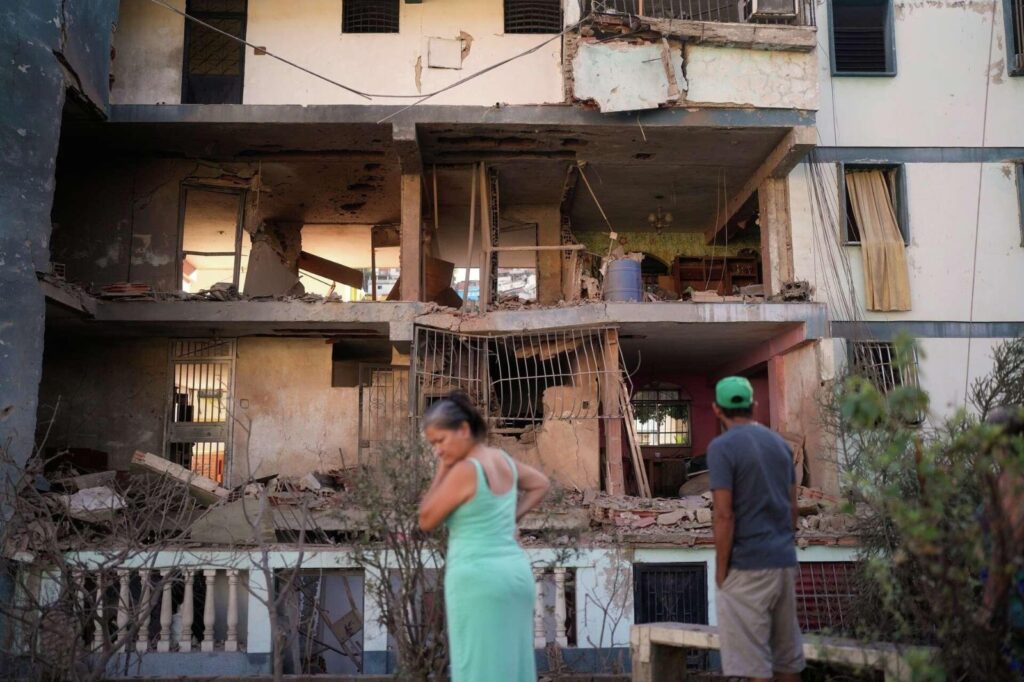

Office workers poured into the streets of Caracas. Buildings swayed. Emergency alerts sounded. Within seconds, panic spread across Venezuela as two powerful earthquakes measuring 7.2 and 7.5 struck just 39 seconds apart. Hours later, another powerful earthquake struck Japan. Northern California also experienced a significant tremor. Almost instantly, social media erupted with claims that the world was witnessing a single global seismic event.
Scientists say the internet got ahead of the evidence.
According to seismologists quoted by The Guardian, the earthquakes in Venezuela, Japan and California are not connected. Although they occurred within hours of one another, they originated along entirely different tectonic plate boundaries. Earthquakes happen every day across the globe, and while several large events occurring close together may seem alarming, experts say coincidence should never be mistaken for causation.
It is a powerful reminder of how quickly misinformation can spread when dramatic events unfold in real time.
Yet dismissing the conspiracy theories should not distract from the seriousness of what actually happened.
The most extraordinary event occurred in Venezuela.
According to WIRED, the country experienced what geologists call a seismic doublet—an exceptionally rare phenomenon in which two earthquakes of similar magnitude strike almost simultaneously. Unlike a typical mainshock followed by aftershocks, neither earthquake clearly triggered the other. Instead, both released enormous amounts of energy within seconds, making the event one of the most unusual seismic occurrences recorded in recent years and providing scientists with a rare opportunity to study how stress is released beneath the Earth’s crust.
For those on the ground, however, the science came second.
Reuters reported that the earthquakes were felt across large parts of Venezuela, including the capital, Caracas, where buildings were evacuated as frightened residents rushed into the streets. Authorities suspended operations at the José petrochemical complex while engineers inspected facilities for damage before gradually restarting operations. Emergency crews were deployed across affected areas to assess buildings, monitor aftershocks and determine the full extent of the destruction.
The immediate priority is saving lives.
The longer-term challenge is saving an economy.
Natural disasters rarely end when the shaking stops. They leave behind damaged roads, weakened bridges, disrupted electricity networks, overwhelmed hospitals and businesses forced to suspend operations. Every day that transport routes remain closed delays trade. Every damaged factory reduces production. Every disrupted supply chain affects jobs, prices and investment.
For governments, rebuilding becomes a financial balancing act. Money intended for healthcare, education, housing and economic development is redirected towards emergency relief and reconstruction. Insurance costs rise. Investor confidence weakens. Tourism often declines. In countries already facing economic hardship, a single natural disaster can erase years of development.
That reality is especially significant for Venezuela.
Already grappling with years of economic instability and ageing infrastructure, the country now faces the additional burden of repairing damage while maintaining essential public services. Even the temporary shutdown of part of its petrochemical industry highlights how quickly a geological event can become an economic one, affecting production, exports and government revenue.
Japan presents a strikingly different picture.
Despite experiencing a magnitude 6.9 earthquake, authorities reported no tsunami threat, no immediate widespread casualties and no abnormalities at nuclear facilities. That outcome reflects decades of investment in earthquake-resistant construction, rigorous building regulations and one of the world’s most sophisticated early-warning systems. The earthquake was powerful, but the country’s preparedness helped prevent it from becoming a national catastrophe.
California tells a similar story.
Living with frequent seismic activity has driven continuous investment in resilient infrastructure, emergency planning and rapid response systems. While the magnitude 5.6 earthquake was widely felt, authorities were able to assess damage quickly and limit broader disruption.
The contrast between these countries reveals an uncomfortable truth.
Earthquakes are acts of nature.
Disasters are shaped by preparation.
The events of the past 24 hours have also exposed another fault line—not beneath the Earth’s surface, but across the digital world. Within minutes, millions of people shared claims that the earthquakes were linked or signalled an unprecedented shift in the planet’s behaviour. Scientists rejected those theories almost immediately, emphasising that there is no evidence to support such conclusions.
Facts travel more slowly than fear.
As emergency workers continue assessing the damage and scientists analyse the data, one lesson has already become clear.
The real story is not that several earthquakes happened on the same day.
It is how differently nations experience the same force of nature.
Some countries absorb the shock because they invested in resilience long before disaster struck.
Others face years of rebuilding because they simply cannot.
The earthquakes lasted less than a minute.
For many communities, the economic aftershocks could last for years.
Article written by:
Hudaa Ahmed
Journalist at Radio Al Ansaar