
The next cost-of-living shock may not arrive through a government announcement, an Eskom tariff increase or another painful adjustment at the fuel pumps.
It may arrive quietly—when the bag of maize meal costs more, the tray of chicken becomes smaller and another item disappears from the family trolley.
A rapidly strengthening El Niño is raising concerns that South Africa could face a hotter and potentially drier 2026/27 summer. No drought has been declared, and a food shortage is not imminent. But if the warning develops into a poor growing season, households could eventually pay through higher prices for maize meal, chicken, eggs and meat.
For South Africans already forced to choose between groceries, electricity and transport, this is not simply a story about the weather.
It is a warning about what their money may no longer buy.
The danger is developing early
El Niño occurs when surface waters in the central and eastern Pacific Ocean become unusually warm, disrupting rainfall and temperature patterns around the world.
The World Meteorological Organization’s latest seasonal update indicates rapid development towards a strong El Niño. Its forecasting models show temperatures in a key region of the Pacific reaching approximately 2°C above normal during July to September 2026.
The WMO also forecasts a higher probability of above-normal temperatures across southern Africa.
What has alarmed agricultural experts is how early the system began developing. El Niño generally starts strengthening during July and August. This event reportedly began emerging in May, increasing the possibility that it could become particularly powerful.
If it peaks around December, its effects could continue into March or April 2027—overlapping with the most critical months for South Africa’s summer crops.
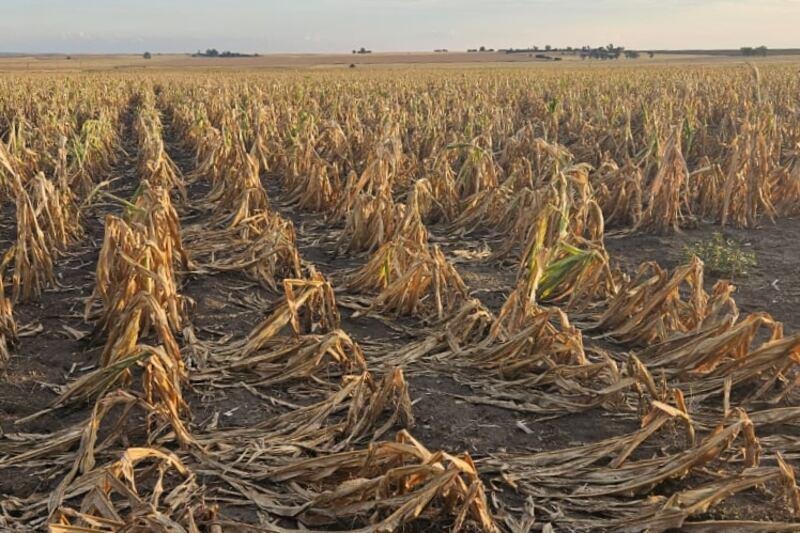
The danger is not merely that there may be less rain. Extreme heat can pull moisture from soil, crops, grazing land and water sources, making every dry day more damaging.
The road from a maize field to your dinner table
Between January and March, maize, soybeans and other summer crops need reliable rainfall. If intense heat and reduced rain arrive together, crop yields could fall, grazing conditions could deteriorate and livestock farmers could face mounting costs.
Those pressures do not remain behind a farm fence.
Maize is one of South Africa’s most important staple foods, but it is also a major ingredient in animal feed. If maize becomes scarcer and more expensive, the impact can spread beyond pap and maize meal to poultry, eggs, pork and beef.
Soybeans are also central to livestock and poultry feed. A poor soybean harvest could therefore place further pressure on some of the most affordable sources of protein in South African households.
Grain SA estimates cited by Farmer’s Weekly suggest that drought conditions comparable to those experienced in 2015/16 could reduce maize yields by between 33% and 37%. Soybean yields could fall by approximately one-third.
South Africa has seen this chain reaction before. During the 2015/16 drought, cereal inflation accelerated from 4.7% to 17.5%.
The drought happened in the fields. The punishment reached the till.
Some families have nothing left to cut
Food inflation is often discussed as a percentage. Inside a struggling household, it looks very different.
It is the parent who buys less meat so the children can still eat.
It is the pensioner choosing between medication and groceries.
It is the grant recipient calculating whether electricity can wait another day.
It is the informal food trader raising prices and risking customers—or absorbing the increase and watching an already thin income disappear.
A wealthier household may change brands or complain about the bill. A poor household removes something from the trolley entirely.
Farmworkers could also be exposed if weak harvests force producers to reduce planting, delay expansion or cut employment. A severe growing-season shock would therefore threaten not only the price of food, but the livelihoods connected to producing it.
Agricultural economist Wandile Sihlobo identifies another pressure point: approximately 90% of South Africa’s agricultural products and food are transported by road. If poor harvests collide with expensive fertiliser and fuel, households could pay for the weather several times—during production, transportation and finally at the shelf.
The country has breathing room—but not immunity
South Africa is not entering this risk period empty-handed.
Sihlobo estimates that the country’s 2025/26 summer grain and oilseed harvest will reach 21 million tonnes—3% higher than the previous year and potentially the largest on record.
Recent favourable rainfall has also improved dam levels, soil moisture and grazing conditions. These reserves could help protect crops and livestock during periods of weaker rainfall.
For now, food supplies remain ample. If El Niño does damage production, Sihlobo expects the clearest food-inflation effects to become visible during 2027. Grain prices could, however, begin rising before the end of 2026 if the threat of drought becomes clearer.
The South African Weather Service also stresses that an El Niño forecast is not automatically a rainfall forecast. Each event develops differently, and even neighbouring areas can experience sharply different rainfall.
A powerful El Niño does not guarantee disaster.
But uncertainty is not protection.
South Africa has been warned
Government now has what it so often claims was missing after disaster strikes: time.
Are farmers receiving useful warnings before planting begins? Are vulnerable water systems being monitored? Are plans being developed for weaker harvests, higher food prices and increased pressure on social assistance?
Most importantly, what will happen to households that cannot “tighten their belts” because the belt is already cutting into bone?
Preparation cannot begin after crops fail and prices rise. By then, officials would not be preventing a crisis. They would merely be holding another briefing about one.
El Niño will be measured by scientists through temperatures in the Pacific. South Africans may eventually measure it at the supermarket—one price increase, one smaller meal and one missing trolley item at a time.
Article written by:
Hudaa Ahmed
Journalist at Radio Al Ansaar