
The United States is bombing Iran again. The ceasefire is collapsing, commercial vessels are being attacked and missiles are crossing the airspace of neighbouring countries.
Yet the most consequential development may not be another explosion in the Strait of Hormuz. It may be a letter sent to Congress.
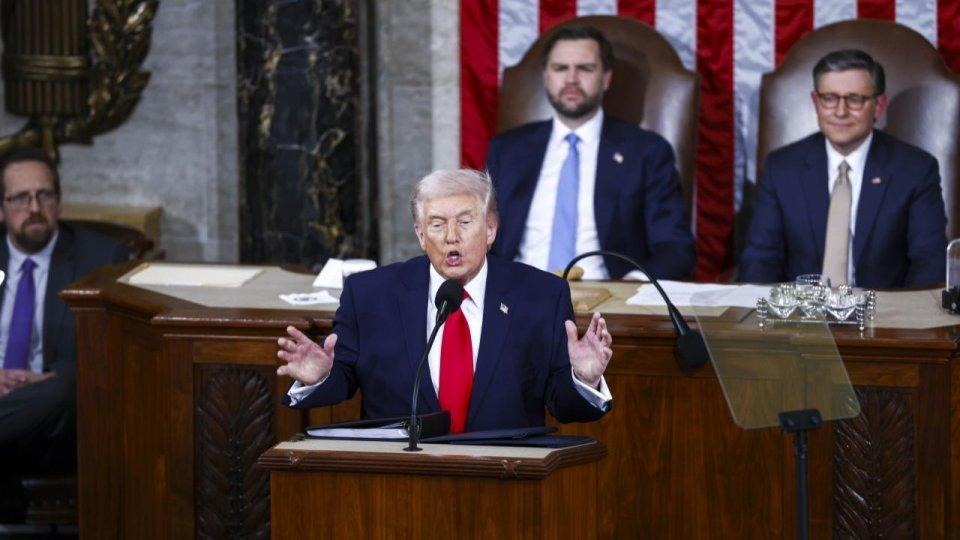
President Donald Trump has formally notified lawmakers that US military operations against Iran resumed on July 7. His administration believes this notification begins a fresh 60-day period during which American forces can continue operating without new congressional authorisation.
It sounds like a procedural detail. It could become a formula for sustaining an undeclared war.
The question is brutally simple: can a president declare one phase of fighting finished, resume attacks shortly afterwards and receive another 60 days to continue the same conflict?
In a letter dated July 10, Trump informed congressional leaders that American forces had restarted operations following attacks on commercial vessels in the Strait of Hormuz. Washington blamed Tehran and said military action was necessary to defend US interests and protect international shipping.
US Central Command said American forces struck more than 80 targets, including Iranian air-defence systems, command networks, coastal radar installations, anti-ship missile capabilities and more than 60 boats belonging to the Islamic Revolutionary Guard Corps.
Iran rejects Washington’s version of who destroyed the ceasefire.
Tehran accused the US of violating the June 17 memorandum of understanding that was intended to stop the fighting while peace negotiations continued. Iran retaliated against US-linked targets in neighbouring countries, while missile activity and interceptions were reported across Bahrain, Kuwait, Oman and Jordan.
Both governments now accuse the other of breaking the agreement that was meant to pull the region back from war.
Trump said he considered the memorandum “over”, although he left open the possibility that American negotiators could continue talking. Iran said the renewed US strikes had made key parts of the agreement ineffective and damaged the diplomatic process.
The ceasefire did not end the conflict. It interrupted it—and may have given Washington the legal argument it needed to restart the clock.
Under the US War Powers Resolution, a president must inform Congress shortly after introducing American forces into hostilities. Unless lawmakers authorise the operation, military action is generally expected to end within 60 days, followed by a limited withdrawal period.
But notification is not permission. Telling Congress that a war has begun does not mean Congress has authorised it.
The original US campaign against Iran started on February 28, placing the first 60-day deadline around May 1. The Trump administration argued that the ceasefire had terminated those hostilities and removed the need for further congressional approval—even though American forces and military assets remained positioned in the region.
Now that large-scale attacks have resumed, Trump is treating the July 7 strikes as a separate military episode. Under that interpretation, the administration receives a new deadline and another two months to act before it must again confront demands for authorisation or withdrawal.
The war did not need to disappear. It only needed to end on paper.
Congress had already passed a largely symbolic War Powers measure directing Trump to end unauthorised US involvement in the Iran conflict. Several Republicans joined Democrats, revealing concern that extended beyond the usual party divide.
But the measure did not carry the same force as legislation signed into law. The White House rejected its significance, US forces remained deployed and Trump retained the practical power to order more strikes.
Following the collapse of the ceasefire, Democratic Senator Adam Schiff filed a new War Powers Resolution. He argues that Trump has resumed large-scale military action despite Congress previously directing him to end America’s unauthorised involvement.
The resolution again seeks to remove US forces from hostilities against Iran unless Congress expressly approves continued military operations.
The administration’s defence is that the earlier fighting ended, Iran violated the agreement and the latest strikes represent a separate response. If the previous hostilities legally ended, it argues, the new campaign should receive its own 60-day period.
Critics see a dangerous loophole: if a temporary ceasefire can stop one clock and renewed attacks can start another, the 60-day limit is no longer much of a limit.
A safeguard intended to prevent prolonged presidential warfare could instead become a repeatable cycle—declare hostilities over, keep American forces in position and restart the deadline when fighting resumes.
The confrontation is therefore larger than one president or one war. It concerns whether Congress still has meaningful control over decisions that can drag the United States—and potentially an entire region—deeper into conflict.
While Washington argues over legal clocks, the real-world clock is also ticking.
The Strait of Hormuz remains at the centre of the crisis. Iran has instructed vessels to follow what it describes as a safe route through the waterway, while the US says its military campaign is protecting international commerce.
Washington has also reimposed sanctions on Iranian oil after withdrawing a temporary waiver granted under the June agreement. Oil markets reacted quickly to the renewed fighting as concerns returned over disrupted supplies, increased shipping costs and another inflation shock.
For countries far from the battlefield, including South Africa, this is where an American constitutional dispute reaches ordinary households. Prolonged disruption around the strait can push up international oil and transport costs, with potential consequences for fuel prices and the cost of moving food and other essential goods.
But the precedent may be even more damaging than the immediate economic pressure.
If a president can declare hostilities finished without fully withdrawing American forces, resume the same conflict and claim another 60 days, the War Powers Resolution begins to resemble a renewable permit for war.
Congress may still possess the constitutional authority to approve military action. But if lawmakers are repeatedly asked to intervene only after the missiles are in the air, that authority exists mainly on paper.
The ceasefire failed to stop the war. Trump’s new letter may now test whether Congress can.
Article written by:
Hudaa Ahmed
Journalist at Radio Al Ansaar