
Mumbai based Agrochemicals corporation UPL Ltd. is set to invest R17 billion in eThekwini region and Durban Metro. The investment by the Indian company comes amid ongoing but delayed criminal charges related to a 2021 environmental disaster, raising questions and concerns about corporate influence on local justice. Of course, the incident was the result of arson committed during the riots of the covid period. This is true concerning the decision by the municipality and President Cyril Ramaphosa to welcome UPL’s investment in the construction of a biofuel refinery and processing facility in the city.

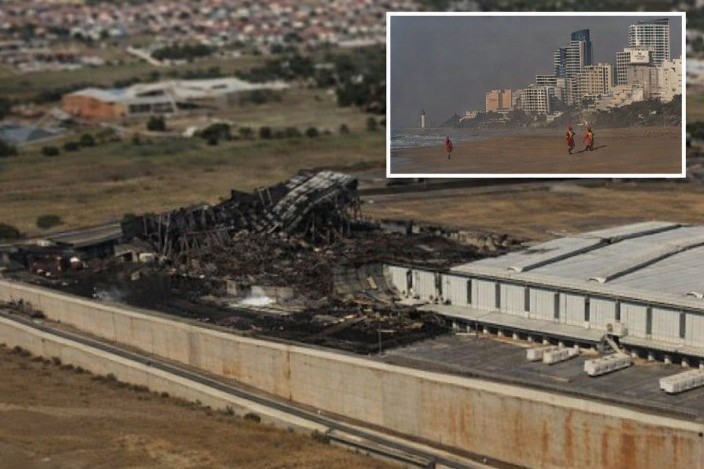
Mbhele’s mention of UPL’s green “stewardship” credentials appears to refer to the costs incurred by the company in trying to clean up the environmental mess left behind in Durban in July 2021 when arsonists torched its new chemical storage warehouse at Cornubia. The resulting inferno led to thousands of Durban residents choking on the fumes from several tonnes of farm chemicals (including several toxic pesticides), while nearly four tonnes of fish and other estuarine creatures were killed in the uMhlanga lagoon and estuary. Several northern beaches were closed for months as a precautionary measure to safeguard bathers. While UPL argued at the time that it was a victim of arson and that its “state-of-the-art” fire suppression systems were overwhelmed, it later emerged that UPL had converted a leased, general purpose warehouse to store large quantities of highly poisonous chemicals a short distance away from homes and schools in the neighbouring suburbs of Umhlanga, Prestondale and Blackburn Village.

When we speak about the powerful being transparent and being held accountable, no where is this truer than the industrial and environmental tragedy of Cornubia. The risk to the lives of Durban residents is immense. Yes, the rioters in 2021 caused significant damage to the UPL Warehouse and property, but the truth must be brought to light. If UPL had used a general-purpose warehouse leased to them, without considering the resulting issue of a disaster occurring, then they should face scrutiny and then a legal fine if possible. There has been concern and even condemnation expressed by the municipal, provincial and even national levels of government leads observers to question the priorities of the state. UPL did not take into account critical environmental concerns in setting up the storage facility for its chemicals and other equipment in Cornubia.
The rioters responsible for the arson attack should also be brought to book for their actions in causing the environmental tragedy and have no doubt already paid the price with prison. Poisons have ad already seeped into the air, water and ground. UPL and cooperating environmental groups have to filter the poisons from the ground, water, and air.
UPL CEO Jai Scheoff’s investment should be accepted but the due process of law must be respected. However, it should be welcomed that the company has carried out air and water quality surveys: In case of air, it was found that continuous monitoring and testing for pollutants during and after the fire revealed that, once the fire was extinguished harmful pollutants were substantially lower while airborne dust samples no long contain arsenic.
As regards to water ongoing testing of the estuary and marine environments show that metal levels of arsenic, manganese, copper and zinc are now at an amount below the guideline levels set for the South African coast (including estuaries). The emphasis remains on continuing to decontaminate the ware house site, the tributary, and the low wetland. This will see that further significant improvements in the estuary environment.

According to a provisional compliance report by the national Department of Forestry, Fisheries and the Environment, the company appeared to have flouted several environmental planning, health and safety regulations. According to the report, UPL did not appear to have conducted a site-specific environmental impact assessment (EIA) report or a major hazardous installation assessment, which may have led to stricter safety measures to mitigate impacts in the event of an accident or disaster.
The actions of UPL reflect the reality that would great power and management comes greater responsibility. UPL did not take serious interest in that responsibility. The provisional compliance report by the DFFE was delivered to the National Prosecuting Authority (NPA) to take legal action. The NPA have yet to take such action. It may be up to the public in eThekwini region and the local opposition (if possible) to exert pressure on the NPA and the city legal authorities to investigate. There is the possibility that the NPA is still gathering enough evidence to prosecute the agrochemicals company. The possibility is for UPL to pay a fine that could number millions. That is if prosecution authorities take action.
Article written by:
Yacoob Cassim
Journalist at Radio Al Ansaar