
The Gulf is no longer watching the war from a safe distance. It is inside it.
Missiles and drones have crossed borders, air-raid sirens have sounded over major cities, commercial vessels have come under fire and the Strait of Hormuz has once again become the centre of a dangerous struggle for control.
Iran launched the attacks in retaliation for new American strikes, and many of the reported targets were connected to the United States. But the consequences landed across countries now discovering the uncomfortable price of hosting American military power.
The escalation followed a major round of US attacks on Iran. The United States Central Command said it struck approximately 140 military targets, including missile and drone launch sites, naval assets and ammunition storage facilities.
Iranian media subsequently reported explosions around Bandar Abbas, Qeshm Island, Sirik, Jask and Khuzestan province. One Iranian army officer was reportedly killed.
Iran responded across the region.
The United Arab Emirates, Qatar, Kuwait, Bahrain and Oman reported missile or drone attacks, while Iranian missiles also fell inside Jordan.
In Qatar, three people—including a child—were injured by falling shrapnel. Bahrain activated missile alerts, while Kuwait intercepted incoming fire. Three Kuwaiti border centres and an offshore oil-drilling platform were also attacked, causing material damage and injuring one worker.
Jordan said three Iranian missiles landed within its territory without causing casualties. Iran’s Islamic Revolutionary Guard Corps claimed it had struck American military facilities in Kuwait and Jordan, as well as logistical and aircraft-refuelling facilities at Oman’s port of Duqm.
Oman summoned Iran’s ambassador and delivered a formal protest after drone attacks targeted sites in the Musandam and Al Wusta governorates.
Taken separately, these could be described as another series of military exchanges. Taken together, they expose a far more dangerous shift.
Several of the affected countries host American military bases, personnel or infrastructure. These arrangements are intended to provide protection and strategic security. Iran, however, appears to view the facilities as extensions of US power—and therefore points of retaliation.
That leaves Gulf governments trapped inside a brutal contradiction: the American presence designed to protect them may also be what places them in the firing line.
The crisis extends beyond military sites. At its centre is the Strait of Hormuz, the narrow passage connecting Gulf energy exporters to international markets.
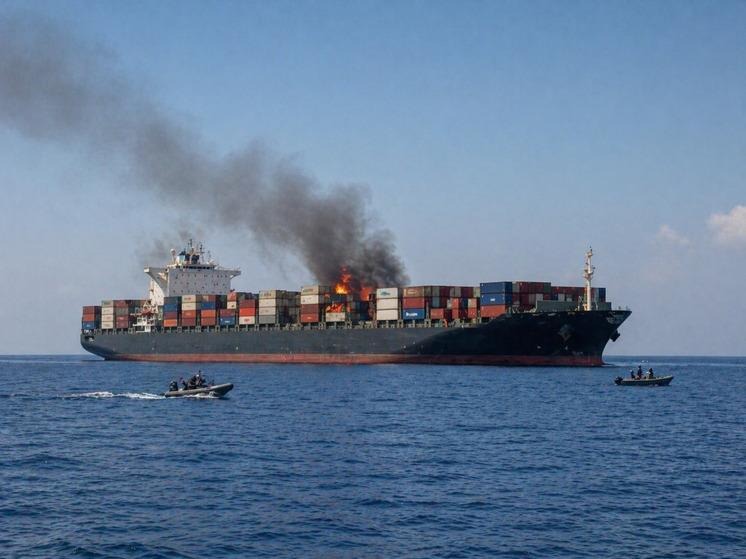
The latest confrontation intensified after Iranian forces fired on a Cyprus-flagged container ship. Iran claimed the vessel had ignored repeated instructions to use an approved shipping corridor and described the attack as warning fire.
The United States accused Tehran of attacking a commercial vessel lawfully travelling through an international waterway.
The ship was left burning, its engine room damaged and its crew forced to abandon it. One crew member was reported missing. Iranian forces later claimed to have struck a second vessel accused of violating regulations.
Iran then announced that the Strait of Hormuz would remain closed until further notice and until American intervention in the region ended.
Washington rejected Tehran’s claim to control the waterway. CENTCOM insisted that the strait remains an international passage and said American forces were prepared to protect freedom of navigation.
This is no longer merely an argument over which route a ship should take. It is a contest over who controls one of the world’s most important energy corridors—and how far each side is willing to go to prove it.
Before the war, almost one-fifth of the world’s oil reportedly passed through the strait. Previous disruption has already pushed oil and gas prices to multiyear highs and damaged the global economy.
If commercial vessels must choose between routes approved by Tehran and routes defended by Washington, every journey risks becoming a geopolitical decision. A ship’s course can now place its crew in danger, trigger military retaliation and destabilise negotiations far beyond the waterway itself.
An interim agreement between Washington and Tehran had allowed shipping through the strait to begin resuming while technical and political discussions continued. The latest attacks have pushed that fragile arrangement towards collapse.
US President Donald Trump has declared the ceasefire over, although he has left the door open to further negotiations. Iran and Oman have also indicated that discussions over navigation will continue.
But diplomacy is now taking place beneath air-raid sirens.
For Gulf governments, the choices are becoming narrower. They must preserve security relationships with Washington, manage their proximity to Tehran, protect their populations and prevent their infrastructure from becoming collateral in a conflict they did not start.
That balancing act becomes almost impossible when American bases sit on their soil and Iranian missiles fly overhead.
The latest escalation is therefore about more than one damaged vessel, one round of US strikes or one Iranian retaliation. It reveals that the boundaries surrounding this war are collapsing.
The Gulf has spent decades presenting itself as a centre of wealth, international connectivity and security. But no skyline, military partnership or diplomatic agreement can provide certainty when two rival powers are using the region to settle their confrontation.
The Gulf once believed proximity to American power was an insurance policy.
Iran is now trying to prove that it may also be a target painted on the door.
Article written by:
Hudaa Ahmed
Journalist at Radio Al Ansaar