
The Minister in the Presidency for Women, Youth and Persons with Disabilities, Sindisiwe Chikunga, urged her counterparts at a BRICS meeting, on Wednesday to place women at the centre of the trade bloc’s economic plans. Speaking at the BRICS Ministerial Meeting on Women’s Affairs, Chikunga said women should not be treated as an afterthought. “Our shared task is to ensure that women’s empowerment is not treated as a narrow social policy issue, but as a central developmental imperative,” she said in the discussion.
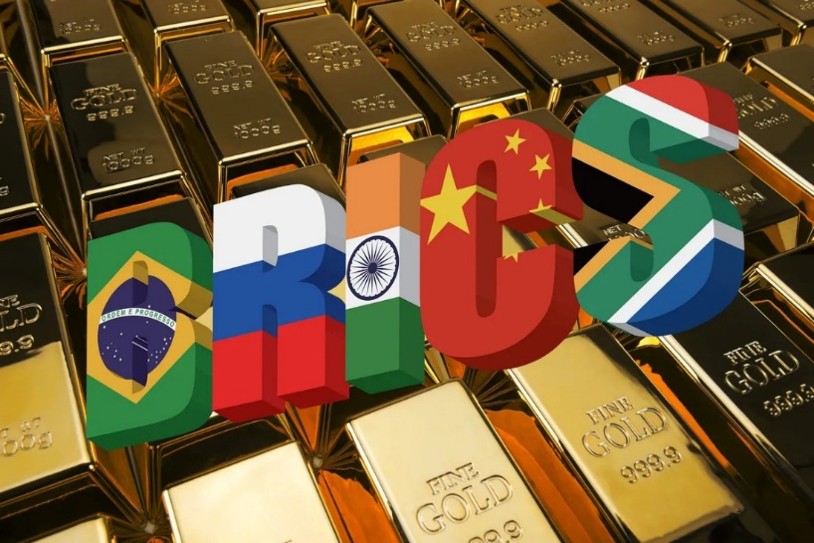
Brics as an emerging trade bloc and association of emerging economies was founded by Brazil, Russia, India and China as “BRIC” in 2009 before South Africa joined in 2010. The ranks of the organization swelled to BRICS plus when Egypt, Ethiopia, Iran, Indonesia, the United Arab Emirates etc joined. Together they shape trade, investment and jobs, across large parts of the world.

Chikunga said women in BRICS countries run small businesses, farm the land, build digital services and lead communities. But many cannot get loans, do not have access to technology, and are kept out of leadership roles. She called for closer cooperation to fix those problems. “Through the leadership of India, we believe this platform will help us advance joint initiatives on women-led development,” Chikunga said. Chikunga listed steps South Africa is taking that could be useful to BRICS partners:
- A Women’s Economic Assembly to boost women’s roles in procurement and on state boards.
- A Cooperative Banking Institution Initiative to help close a US$1.7 trillion financing gap for women entrepreneurs.
- Social grants like the Child Support Grant that support millions of women caregivers.
- A rule that aims to reserve 7% of public procurement for businesses owned by women, youth and people with disabilities.

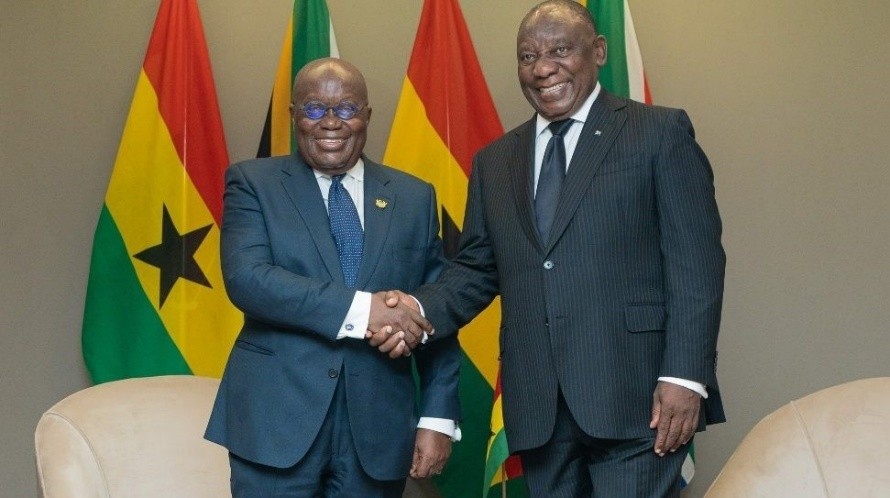
Women form the backbone of the social and economic fabric of every society. Not only are women responsible for rearing families but they manage small businesses or other such work to support their said families. However, they face limited access to resources and cannot participate in public economic forums due to cultural prejudice. South Africa is a trailblazer in ensuring women’s rights since 1994 and the dawn of democracy. President Cyril Ramaphosa and his ministers like Chikunga understand the importance of including women in business and economics:
- A public forum and advocacy body that facilitates the role of women in the decision making and executive bodies of businesses to utilise their skills and experience is a welcome step to creating a foundation for the women to build on.
- The creation of a cooperative banking institution initiative on the side of women assisting them financially in make the right business decisions.
- Money alone will not suffice without the proper training of women caregivers, given that these women are in direct contact with raising their children during their developmental years while managing a business to provide for their said families given while governments like South Africa look forward to improving trade practices.
- In absences of legal practices on the side of women or female heirs, money or business property of a late entrepreneur is auctioned or sold to the buyer who can pay the most. This would be especially true of money given to a relative of the deceased. Corruption remains an issue, that should be scrutinized by independent judicial oversight.
However endemic corruption and inequality in the work place remain harrowing issues that should be rectified, though the assistance of civil society and advocacy groups.
Meanwhile the prices of South African exports have been on the rise and the prices of imports have decreased, spurring economic growth.
South Africa’s export prices continued to rise faster than import prices in May, according to Statistics South Africa (Stats SA), extending a trend that the South African Reserve Bank recently said helped strengthen the country’s trade position in the first quarter. Stats SA’s export and import unit value indices showed export prices rose 11.8% compared with May last year and 0.5% from April. Import prices, meanwhile, fell 3.1% year-on-year and 0.5% month-on-month. In its latest Quarterly Bulletin, the Reserve Bank said higher export prices and lower import prices improved South Africa’s terms of trade during the first quarter, boosting the country’s trade surplus. The latest unit value indices suggest those favourable trade conditions continued into May.
The new trade statistics indicate South Africa has weathered a heavy storm since the escalation of oil prices, due to the war in Iran. Smart choices on the side of leadership in both business and national government have led South Africa towards this path. External factors such a decrease in oil prices and a de-escalation of conflicts such as the Iran war also have their role. Although new wars could be imminent in any part of the world and current ones such as Ukraine and Iran rage on, South Africa must utilize its economy and resources to adapt.
If the government and private sector play their cards right through cooperation, they can translate the new economic growth into jobs. Pretoria must use this opportunity to ensure small businesses, including those run by women, share in reaping the benefits of the new growth. Unemployment of 32 – 33% remains an issue, but can be overcome if the government improves education and other issues. This is a moment when the country expands its market by including its neighbours and region through the Southern African Development Community (SADC) to accelerate economic integration in trade to improve the transition from raw materials to the manufacture industry. This will make South Africa as Africa’s second largest economy a force to be reckoned with on the world stage alongside the BRICS Platform. More has to be done in regard to engaging civil society and private enterprise to improve the transition to a skills-based economy and fourth Industry Revolution technology.
South Africa must rise to its position as the gate way to Africa to improve its economy. This way it will be on an equal fitting with BRICS interests within the continent.
Article written by:
Yacoob Cassim
Journalist at Radio Al Ansaar