
South Africa and President Cyril Ramaphosa find themselves between a rock and a hard place, due to last week’s xenophobic attacks. In Abuja, Nigeria, the country’s parliament may vote to adopt a motion to resort to retaliatory diplomatic measures against South Africa if the attacks on its expatriates persist. This warning was delivered by the Nigerian Senate – upper house. The legislature ordered a fresh investigation into the violence and gave its relevant committees two legislative weeks to submit recommendations.

The upper chamber, however, rejected calls by some lawmakers to immediately sever diplomatic relations with Pretoria or confiscate the profits of South African companies operating in Nigeria to compensate victims. It insisted that any far-reaching action should await the outcome of its investigation. The Senate’s position came as diplomatic tensions widened across the continent, with Ghana postponing a planned state visit by South African President Cyril Ramaphosa following the killing of a Ghanaian citizen during the unrest. The Senate resolution followed a motion sponsored by Senator Asuquo Ekpeyong, who drew attention to a June 30, 2026 ultimatum issued to Nigerians and other African living in South Africa, describing it as a grave threat to their lives, businesses and continued stay in the country.
During the debate, lawmakers unanimously condemned the recurring attacks and urged the Federal Government to obtain firm assurances from the South African authorities on the safety of Nigerians.

Abuja has already repatriated 1,000 of its citizens who volunteered to return home. It must be made clear Pretoria is now on a negative diplomatic trajectory with the Nigerian and Ghanian governments. Both Abuja and Accra respectively, could recall their ambassadors from Pretoria as well as suspend other ties with South Africa. It will depend on how Nigeria and Ghana respond to their respective investigations. Uncertainty on diplomatic ties is not a path President Ramaphosa wants to be on. The harm the severing of any ties with Africa’s major economies will damage not only South Africa’s industry but also its international reputation. South Africa needs to maintain a robust relationship with Southern, West and other regions of Africa, so as to entrench its position as the continent’s gateway and attract investors. The Xenophobic attacks cause more harm to employment levels and business output than good.
South African trade with Nigeria stands at ZAR 738 million in exports and ZAR 1.56 billion in imports this year, and with Ghana exports are about ZAR 42.8 million in exports and ZAR 513 million ZAR in imports, also this year. A decline in trade would not be welcomed.
In Nigeria, President Bola Tinubu will expect action be taken against the perpetrators who carried out the attacks on those Nigerian expatriates who had legal documentation. The Ghanaians will be demanding the same. For now the decision to break diplomatic ties has been postponed.

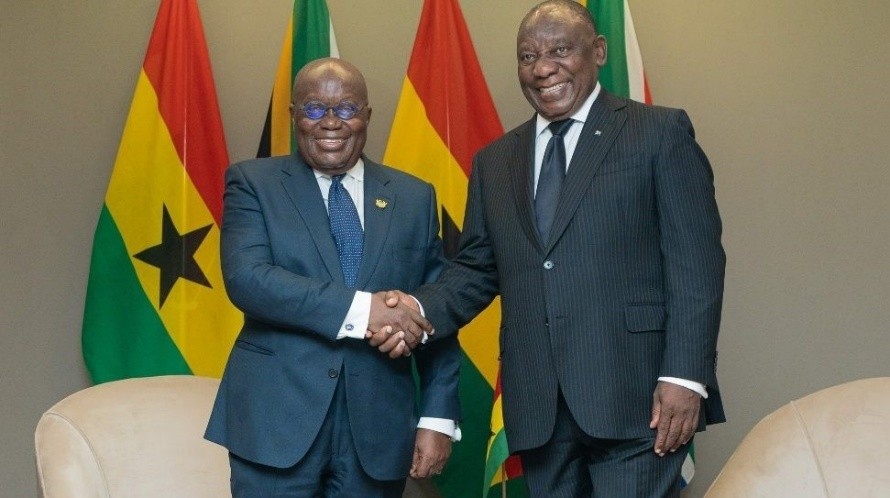
A meeting of the two leaders (President Ramaphosa and Ghanian President John Mahama) in Ghana slated for August has been postponed, Ghanaian communications minister Felix Kwakye Ofosu told radio broadcaster Joy FM, saying Accra was worried the ongoing protests would disrupt the planned agenda. In a further round of diplomatic confusion, however, the countries disputed the exact nature of the event and why it was cancelled. Accra described it Tuesday as a “state visit”. But citing an April letter from Ghana’s own high commission, Pretoria said the Ghanaians were referring to an “official visit” to co-chair a session of the binational commission on cooperation between the two nations. “We sent a diplomatic communication to the South African government that we believe it is best to defer their visit,” Kwakye Ofosu said.
“We value the relationship we have with South Africa,” he added, but said that recent violence in the country was liable to “overshadow” the meeting’s priorities.
Ghana is a key business, investment and trading partner for South Africa. The nation is widely well known in the business and investment arena for its resources of gold and other minerals. If African nations like Ghana take their business and resources to other investors, South Africa will become a less appealing market to trade. The country will have limited access to playing a key role in the continent’s acceleration of economic integration and industrialization through the Africa continental Free Trade Agreement (AfCFTA) or any part of Agenda 2063. At the heart of South Africa’s xenophobic riots are natural concerns over undocumented illegals and rising unemployment. However, the majority of foreign expatriates are being scapegoated with diplomatic consequences being imminent. Revenue in terms of investment and trade may diminish, businesses across South Africa will be not be able to export their goods to other African markets under AfCFTA.
Nigeria and Ghana also have a responsibility to improve their own economic and political institutions and tackle corruption and poverty. Pretoria should focus on supporting and encouraging small private enterprises and entrepreneurships as well as improving the institution of the South African Police Service (SAPS) to strengthen security. How the aftermath of these attacks pan out and how the country reconsiders its diplomatic options and business reality will determine its future. A reconciliation will be imminent if Ramaphosa apologizes to his Ghanian and Nigerian counter parts.
Article written by:
Yacoob Cassim
Journalist at Radio Al Ansaar