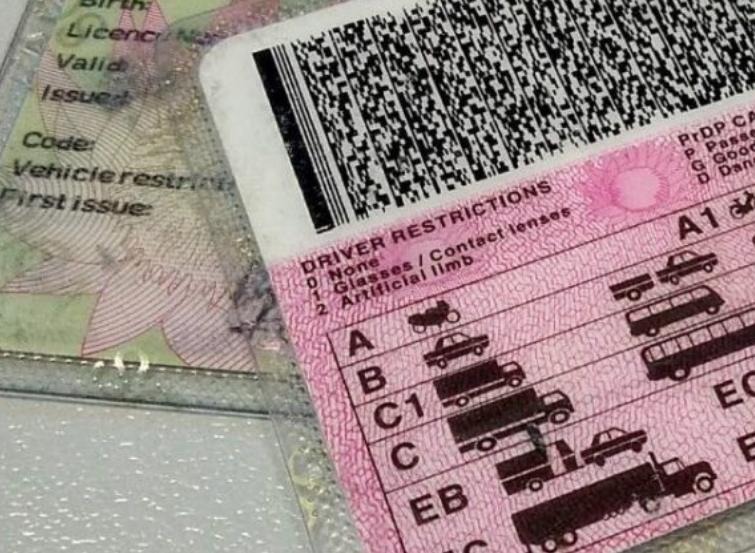

South African motorists could eventually renew their driving licence cards every eight years instead of every five—meaning fewer fees, fewer eye tests and fewer mornings sacrificed to a licensing-centre queue.
There is, however, one important catch: the eight-year period is not yet in effect.
The proposal is progressing through government’s policy-development process, but no implementation date has been announced. Until the required consultations, financial assessments and regulatory changes are completed, motorists must continue renewing their cards according to their existing expiry dates.
What is actually being proposed?
The Department of Transport is considering extending the validity of ordinary driving licence cards from five to eight years.
The Driving Licence Card Account’s 2026/27 Annual Performance Plan describes the extension as an “emerging policy directive”. The proposed change is intended to reduce the frequency of renewals, improve administrative efficiency and ease pressure on licensing services.
Transport Minister Barbara Creecy has also indicated her support for a longer validity period.
Addressing the National Council of Provinces in November 2025, Creecy said research conducted before her appointment recommended an eight-year validity period for ordinary motorists.
However, she requested that the financial consequences be assessed before a final decision is made.
That distinction is crucial. Government may support the proposal, but it has not yet become an active rule at licensing centres.
South Africans have heard this promise before
Motorists should not expect the change to happen immediately.
Regulatory reviews, consultations and assessments of the proposal’s financial and operational impact must still be completed. No confirmed starting date has been published.
This is also not the first time South Africans have been promised longer-lasting cards.
Former transport minister Fikile Mbalula announced plans to introduce eight-year validity in 2022 after research by the Road Traffic Management Corporation supported the extension. Despite the announcement, the change was never implemented.
The latest proposal carries more weight because it now appears in the Driving Licence Card Account’s current planning documents.
Even so, appearing in a government plan and appearing at a local licensing centre remain two very different stages of existence.
What motorists stand to gain
The clearest benefit would be fewer renewals.
Extending card validity from five to eight years would reduce the number of times motorists must visit testing centres, pay renewal fees, complete eye tests and wait for replacement cards.
That matters particularly to people who must take time off work, travel long distances or struggle to secure appointments.
Longer validity could also reduce pressure on a licensing system that has experienced administrative delays, production disruptions and recurring problems involving its ageing card-printing equipment.
It would not repair every weakness in the system. Licensing centres would still require reliable technology, sufficient staffing and efficient appointment processes.
However, reducing the number of renewals being processed could ease congestion at testing centres and limit the scale of future card-production backlogs.
For motorists, the proposal offers something immediately understandable: less paperwork and fewer hours watching a government queue move with the urgency of continental drift.
The financial catch
What saves motorists time could cost the licence-card system money.
The Driving Licence Card Account produces South Africa’s driving licence cards and receives revenue from card-production and issuance fees.
If cards remain valid for eight years, fewer motorists will need to renew during any given period. That means fewer card orders and potentially less revenue for the entity.
Its annual performance plan warns that the extension could have material consequences for its financial sustainability.
Revenue generated through card orders supports the entity’s operations and capital projects, including plans to acquire modern production equipment.
Government must therefore determine how the system will remain properly funded if motorists begin renewing less frequently.
That is the tension beneath the good news: drivers could save time and money, while the entity responsible for producing their cards could lose an important source of income.
Convenience has, inevitably, encountered a government calculator.
Will eight-year validity apply to every driver?
The proposal has mainly been discussed as a change for ordinary motorists.
Creecy has argued that people responsible for heavy vehicles or passenger transport—including truck, bus and taxi drivers—may need to renew more frequently because of the greater public-safety risks associated with their work.
She suggested a two-year period for these drivers. However, this was the minister’s view and has not been introduced as a national renewal requirement.
The final licence categories and validity periods will only become clear once the policy process has been completed.
There are also no new national age-based renewal cycles, compulsory medical-testing rules or automatic suspensions targeting motorists over 70. Claims circulated online suggesting otherwise have been found to be false.
Do existing cards automatically receive another three years?
No.
The proposed extension does not add three years to driving licence cards already held by motorists. The expiry date printed on an existing card remains applicable.
Government has also not confirmed whether the eight-year period would apply only to cards issued after implementation or whether transitional arrangements would be introduced.
Under the current system, motorists are advised to apply for renewal four weeks before their cards expire.
Anyone renewing after the expiry date may need to obtain a temporary driving licence at an additional cost while waiting for the replacement card.
Applicants must still undergo an eye test and have their fingerprints taken. The eye test may be completed by an optometrist beforehand, with the results submitted at the licensing centre.
The new licence card is a separate project
The proposed validity extension should not be confused with government’s long-running project to replace South Africa’s ageing driving licence card and production equipment.
One process concerns how long a card remains valid. The other concerns the card’s design, security technology and production.
The new card design received Cabinet approval in August 2022. However, the procurement process for new production equipment suffered a setback when the Gauteng North High Court ruled in January 2026 that the related tender was irregular, invalid and unlawful.
The Driving Licence Card Account has since indicated that it can refocus on acquiring replacement production equipment. It has also concluded an interim agreement with Government Printing Works to provide support if the existing card machine breaks down.
Progress on the replacement card does not automatically introduce eight-year validity. Likewise, approving a longer validity period would not mean the new card is ready.
What motorists must do now
For now, nothing changes at the licensing counter.
Motorists must check the expiry dates printed on their current cards and renew them on time. No existing card has automatically received another three years, and no official implementation date for eight-year validity has been announced.
Longer-lasting cards could eventually save South Africans repeated fees, queues and administrative frustration. First, however, the proposal must survive the journey between being discussed, being approved and actually being delivered.
Eight-year driving licences may be back on the table. Your five-year expiry date, unfortunately, never left.
Article written by:
Hudaa Ahmed
Journalist at Radio Al Ansaar