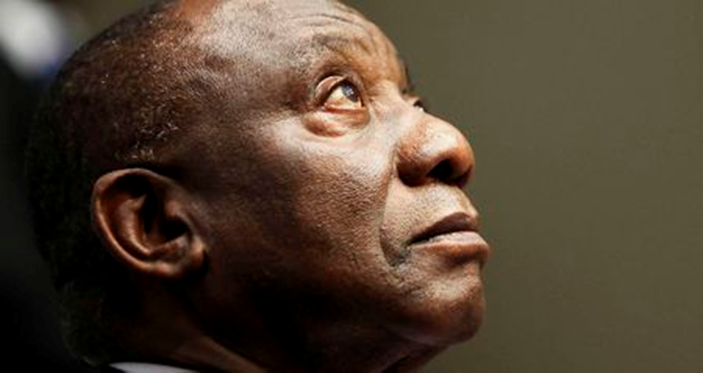

The parliamentary impeachment committee charged with determining President Cyril Ramaphosa’s political faith has been barred from making decisions since Wednesday on how it would run its proceedings as the President’s testimony emerged as a point of contestation, with political fault lines broadly between the Government of National Unity (GNU) coalition partners and the opposition.

With legal advice requested on whether President Cyril Ramaphosa could be compelled to testify, Parliament’s impeachment committee chairperson, Rise Mzansi MP Makashule Gana, asked political parties “to confer with each other” on the terms of reference to reach consensus “and submit the agreed positions” before next week’s meeting. By then, the Western Cape high court would have ruled on Ramaphosa’s interdict application for a stay in impeachment proceedings. He wants to pause the parliamentary committee until the finalisation of his bid to set aside the Section 89 report that found he had a case to answer on the forex theft from sofa cushions at his private Phala Phala game farm. The interdict judgment is expected on Friday.
Meanwhile, in Parliament, the impeachment draft terms of reference state the President may testify, and seem to leave open the door that if he were to testify, he could choose for his testimony to be delivered by a representative. As it stands now, no adverse inference could be drawn should the President decline to testify in person.

President Ramaphosa’s argument is that his position as the head of the GNU prevents himself from testifying. However, the chances of the African National Congress (ANC) protecting him from appearing before the commission are not absolute. While the MPs on the impeachment committee are in consultation with colleagues and parliamentary superiors, it will fall to the ruling of the Constitutional Court to determine if the President is to appear before the commission in parliament. However, this is unlikely given that the Constitutional Court is waiting for the Western Cape High Court to deliver its ruling. In relation to the section 89 report the president will have to testify before the High Court in the Western Cape on why he never reported the forex theft on his Phala Phala game farm or what had compelled him to keep the money that had been stolen concealed in his sofas on the farm. If he does not succeed in having the ruling set aside.
It will remain to be seen if the President will be submitted to cross examination about his business practices or whether he will face impeachment. The worst Ramaphosa could be subjected to would be a suspended prison sentence and a fine. A fine that could possibly come into millions.
ANC MP Cameron Dugmore reiterated the party’s “strong” motivation for a two-pronged approach that he argued was directly based on the May 2026 Constitutional Court judgment, which revived the impeachment proceedings. Key are the judgment’s paragraphs 136 to 141, often cited, which cover the decision of the Public Protector, joint standing committee on intelligence, SA Reserve Bank and South African Revenue Service (SARS) that Ramaphosa had not contravened laws. The ANC’s two-pronged approach effectively meant the impeachment committee would re-canvass those findings, and determinations by others such as the prosecution services that charged a Phala Phala farm worker, her brother and another person, before deciding on whether to embark on a full-scale inquiry.
The Defence of Ramaphosa by the ANC remains dubious at best. Although legal and state institutions with oversight of the country’s laws and finances respectively argue that the president is not guilty of wrongdoing, questions have to be answered. If the President did not contravene any laws, it does not explain why he saw fit to conceal millions of rands in his game reserve farm’s furniture rather than deposit it in the bank or have it placed in a safe on sight. Public Protector Nompilo Kholeka Gcaleka decision and findings not to recommend the president face wrongdoing are dubious at best. On the other hand, the Umkhonto We Sizwe (MK) and Economic Freedom Fighters (EFF) Parties are not led by respectable individuals. Ramaphosa may yet outmanoeuvre these opponents and their allies. However, the future of South Africa could be even more bleak if Ramaphosa is impeached.
Article written by:
Yacoob Cassim
Journalist at Radio Al Ansaar