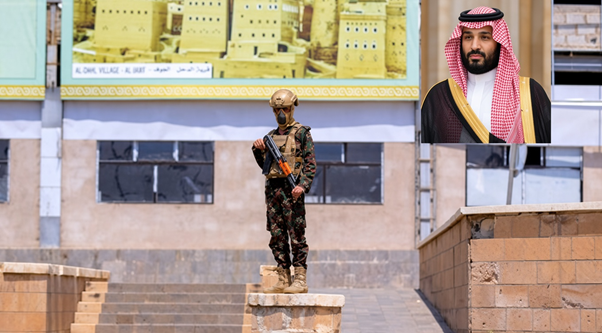
Houthis Strike Saudi Oil Refineries Amid Growing Tribal Revolt
The south-east of the Arabian Peninsula could see an all-out war. The Houthi militant group in Yemen, Yemen’s legitimate government, Saudi Arabia and a newly formed anti-Houthi tribal insurgency based in al-Jawf are all now positioned as potential combatants.
The Houthis are an armed group that controls north-west Yemen, including the capital, Sana’a. Yemen was plunged into civil war when the Houthis launched an insurgency in 2015 on behalf of former Yemeni dictator Ali Abdullah Saleh, whom the group later turned against and killed. The Houthis went on to seize control of the north of the country and the capital.
Saudi Arabia and the United Arab Emirates then intervened, leading to a protracted conflict that ended in an uncertain armistice in 2022.
Now the Houthis have resumed their insurgency against Riyadh, prompting the Kingdom to retaliate. Recent internal tensions have also spawned a counter-militia to the east of Sana’a.
A New Tribal Alliance Emerges in Al-Jawf
Hamad al-Hazmi, a tribal leader from al-Jawf province, was detained in Sana’a for 50 days following a dispute with Houthi figures. After his release in late June, he returned to his tribe in al-Jawf and spoke publicly about what he described as the injustice he suffered during his detention.
In response, thousands of tribesmen from different provinces gathered in al-Jawf this month to publicly condemn the Houthi authorities.
Fuad Mussed, a Yemeni author focusing on political and military issues in Yemen, said tribal opposition to the Houthis marks a major development in the war. “In my opinion, for the first time, the tribes are rising in this form of unity despite the fragmentation and attrition they have suffered over the past years of war,” Mussed told Al Jazeera.
The anti-Houthi tribal alliance in al-Jawf, Mussed added, could offer critical support for government military operations if fighting were to re-erupt. However, al-Jeddawy said this would depend on how broad and cohesive the tribal alliance proves to be, and whether it can coordinate effectively with government forces.
Growing Discontent With Houthi Rule
The Houthis are becoming increasingly unpopular among moderate Sunni Yemenis due to their hard-line Shi’ite style of governance. Most Yemenis, including tribes in the north-east, are united in wanting an end to the chaos gripping their country, and do not want to continue a war against the Saudi Kingdom under Crown Prince Mohammed bin Salman (MBS).
Their main goal now is the end of Houthi dominance, and a return to unity and peace. The Houthis have so far been unable to end the war with the south or provide for the needs of a starving population in place of the Yemeni state. In that conflict with the south, no clear winner has emerged.
That was until the formation of the al-Jawf alliance by tribes in the north-east, which could shift the focus of the war and break the stalemate over the Houthi blockade of the Bab el-Mandeb Strait.
A less optimistic scenario depends heavily on cooperation between the al-Jawf alliance and government forces, and on how effectively they can coordinate to oppose and defeat the Houthis. A key factor will be how much support the tribal alliance receives from ordinary Yemenis.
Renewed Attacks on Saudi Oil Infrastructure
The Houthis have already begun launching drone attacks on Saudi oil refineries.
Yahya Saree, a Houthi military spokesperson, said the group targeted an Aramco refinery in the city of Jazan with a drone. He said the attack was in response to Saudi drones breaching Yemeni airspace over the provinces of Hajjah and Saada.
Early on Sunday, the Saudi Energy Ministry reported a fire at a facility belonging to the Aramco refinery, with no casualties. The ministry said the fire was extinguished but did not describe its cause. Sunday’s attack is the latest in a series of missile and drone strikes targeting Saudi Arabia and its shipping in the Red Sea.
What’s at Stake
Attacks on Saudi oil refineries and vessels threaten the Kingdom’s economic interests. Aramco is the state-owned oil company belonging to the Saudi throne. MBS, who oversees the Kingdom’s affairs on behalf of his ailing father, King Salman bin Abdulaziz, is widely expected to order a military response. Analysts suggest Riyadh is unlikely to accept continued attacks on its refineries and tankers, and may mobilise its missile defence shield to intercept Houthi drones and resume strikes on Houthi territory.
The Houthis, who are Zaidi Shiites, are closely aligned with Iran, Riyadh’s regional rival. MBS has long hoped that the fall of the Islamic Republic in Tehran would cripple the Houthi movement in Yemen.
However, US-led air strikes on Iran have already proven disruptive, contributing to the closure of the Strait of Hormuz and escalating oil prices. How the Yemen conflict unfolds is likely to further shape global oil prices. As for the Houthis, they may find themselves increasingly resented within their own territory, with support potentially shifting toward the internationally recognised transitional Yemeni government based in Aden. The outcome, ultimately, remains for the Yemeni people to determine.