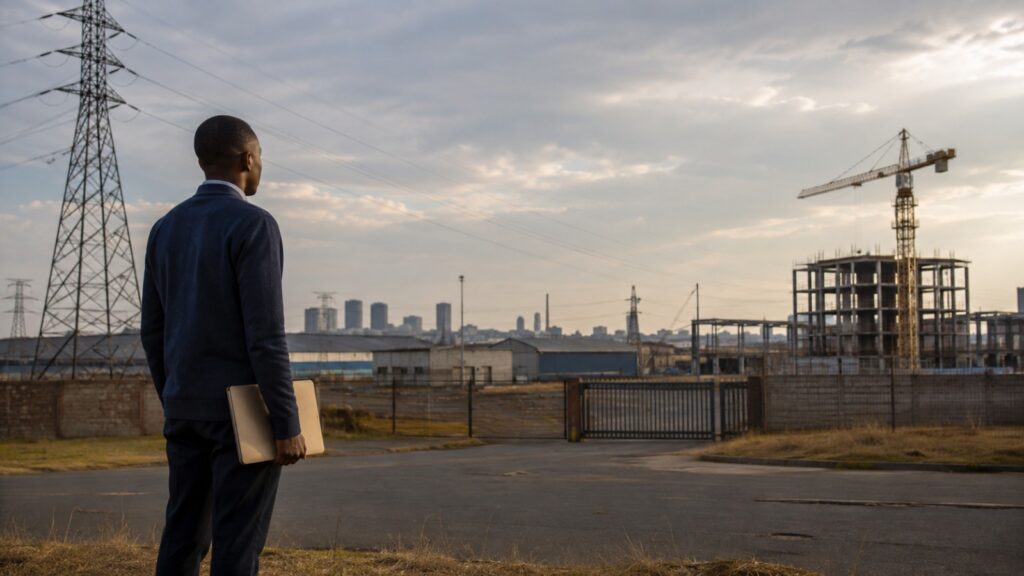
South Africa’s unemployment rate has risen to 33.6% as weaker investment, stalled economic reforms, and uncertainty over Eskom’s restructuring threaten job creation.
A reform delayed in a government office may sound distant from everyday life. But eventually, that delay becomes a factory that is never built, a small business that cannot expand, or another job application that goes unanswered.
That is the real cost of South Africa’s slow economic reforms.
The country has plans to improve electricity, railways, ports, and infrastructure. The challenge is turning those plans into results before businesses lose confidence and unemployed South Africans lose hope.
South Africa’s Unemployment Crisis Deepens
Statistics South Africa reports that the official unemployment rate increased from 32.7% to 33.6% during the second quarter of 2026.
The number of unemployed people rose by 345,000 to approximately 8.5 million, while the number of employed people declined slightly to 16.7 million.
Young people are carrying an especially heavy burden. Unemployment among South Africans aged 15 to 34 climbed to 47.4%, leaving approximately five million young people without work.
These figures represent real lives:
- Graduates sending out applications every morning
- Parents supporting adult children on already stretched salaries
- Young couples postponing marriage, homes, and families because stable work remains out of reach
South Africa needs stronger economic growth to change this. Yet PwC expects the economy to grow by only around 1.2% in 2026, far below the pace required to create enough jobs.
South Africa’s Economic Recovery Is Losing Momentum
There has been progress. The country has recorded six consecutive quarters of economic growth, with gross domestic product increasing by 0.5% during the first quarter of 2026.
However, PwC warns that the recovery remains fragile. Business confidence has declined, manufacturing indicators remain weak, and fixed investment fell during the first quarter.
Fixed investment includes money spent on factories, equipment, buildings, and infrastructure. When businesses make those commitments, new jobs and contracts usually follow. When investment falls, expansion plans stall: equipment goes unpurchased, construction doesn’t begin, and jobs that might have existed remain trapped inside spreadsheets.
Global instability, expensive fuel, and higher borrowing costs are adding pressure. But South Africa is also worsening the situation through delays within its own control.
Critical Economic Reforms Are Slipping Backwards
The Business Leadership South Africa Reform Tracker monitors 247 commitments across electricity, logistics, governance, and criminal justice.
During the second quarter, only 13 comparable reforms improved while 20 deteriorated, the first time since monitoring began that setbacks have outnumbered advances.
Electricity reform was among the weakest areas. South Africa completed only 270.8 kilometres of planned transmission infrastructure against a target of 423 kilometres.
Municipal debt owed to Eskom has also exceeded R114 billion. At the same time, approximately R2 billion in compensation reportedly remains owed to renewable energy producers instructed to reduce supply because the grid could not absorb their electricity.
There has been some progress in opening the freight rail network to private operators. However, delayed legislation and unresolved commercial issues continue to weaken reforms in transport and logistics.
Investor confidence is rarely destroyed by one dramatic event. More often, it is slowly worn down by missed deadlines, unclear decisions, and promises that remain permanently “almost complete.”
Eskom Restructuring Becomes a Major Test
The dispute over Eskom’s restructuring has become a test of whether South Africa can implement difficult reforms.
Government wants an independent transmission system operator to manage the national grid and give different electricity producers fair access. Supporters believe this could encourage competition, attract investment, and speed up the expansion of the grid.
Eskom’s board supports an independent operator but wants the transfer of transmission assets delayed until major financial risks are resolved.
The utility argues that moving the assets could affect lending agreements, create accounting complications, and weaken its finances. Municipalities already owe Eskom approximately R119 billion, while the transmission business contributes a significant portion of its earnings.
These concerns are serious. A careless restructuring could create another costly crisis for taxpayers and electricity users.
But complexity cannot become an excuse for permanent paralysis. Government, Eskom, lenders, and workers need clear deadlines for resolving the outstanding issues. Otherwise, every concern becomes another reason to wait while investors and unemployed South Africans are told to remain patient.
Why Reform Delays Matter to Ordinary South Africans
Investor confidence may sound like a boardroom problem, but its consequences eventually reach the kitchen table.
When companies stop investing, fewer businesses expand and fewer people are hired. When electricity and transport systems remain inefficient, operating costs rise and those expenses are passed on to customers. When economic growth stays weak, government collects less revenue for schools, healthcare, and municipal services.
South Africa now needs a public reform dashboard showing every major project, the responsible institution, its deadline, and its progress. When a deadline is missed, the public should be told what caused the delay, who is responsible, and when it will be resolved.
Workers, lenders, and Eskom’s financial stability must be protected. But consultation must lead to decisions, not provide cover for endless delay.
For millions of South Africans, economic reform is not political jargon. It is the chance to secure a first job, earn a stable income, and build a life without having to leave the country to find opportunity.
South Africa already knows what needs to be done. The question is how many more jobs, investments, and years it is prepared to lose before it finally does it.