
Uncertainty clouds Government of National Unity (GNU)’s future as it passes its first anniversary. Government business has possibly not appeared more cloaks and daggers until now. President Cyril Ramaphosa took his cabinet and the country’s political landscape by surprise when he unexpectedly dismissed Andrew Whitfield, a member of the Democratic Alliance (DA) from being a Deputy-Minister in the Cabinet. Ramaphosa’s surprising decision to fire Whitfield, is said to have stemmed from the seemingly mild transgression of not getting approval to travel overseas in February. However, this is believed to not be the true reason, and it caused much displeasure concerning the DA.

The GNU is a platform to do so, and for this reason its formation was cheered by the market. By including the two largest parties in parliament, the ANC and DA, the GNU is more stable than alternative coalition scenarios that can be undone by small single-seat parties – as we’ve seen at municipal level. The other benefit is that while the two largest parties disagree on much, there is an agreement on core issues such as respect for the Constitution and broadly centrist economic policies. They are natural bedfellows from an ideas point of view, but clearly not when it comes to personalities or political style.
Opinion polls suggest that it is popular among the South African public too. This means that GNU members still have a strong incentive to hold their noses and continue to work together. However, with local government elections looming, each party must also present an independent identity to current and prospective voters.

The upcoming election will serve as the test of strength for the parties in the ruling coalition. Both the ANC and the DA can pursue their separate campaigns but should be cautious about what they say as regards the other. This is more pressing for the DA. A significant issue that should have been and should be addressed by all members of the coalition is service delivery. All parties within the GNU need to bring the matter to the forefront of President Ramaphosa’s attention. But it will be the President alone on the recommendations of his cabinet who will set the policies. If he fails to follow the advice then there, could be consequences.
If he fails to implement the necessary reforms and take the necessary action, he has promised on improving infrastructure the president’s coalition partners need to make sure they know who’s to blame. That could send votes their way. State power should be decentralized and policy focused on delegation. Delegated to the provincial administrations from Pretoria.
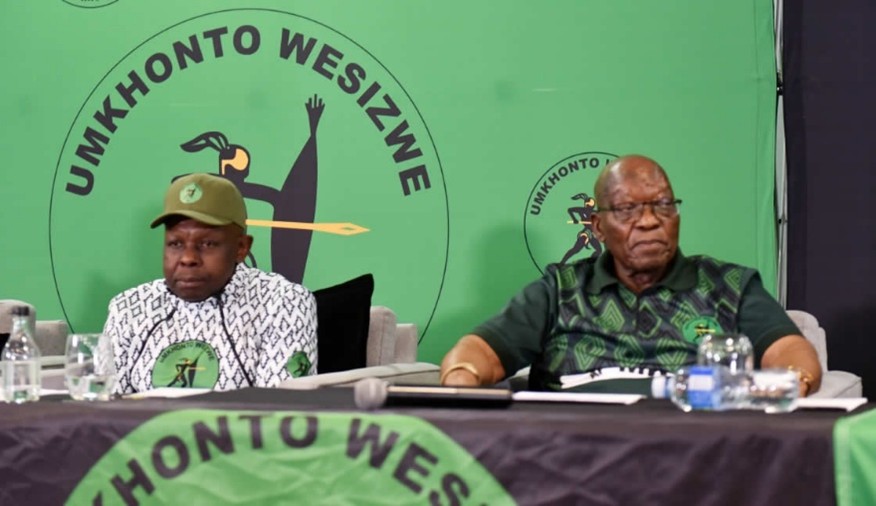
Meanwhile the MK are engaging in blame games of their own making.

The party attempted to remove Mary Phadi as a member and the Mpumalanga convener in December 2024 but never opposed her appeal. Party president Jacob Zuma has now laid the blame on his deputy, Dr (John) Hlophe, saying the former judge president of the Western Cape changed lawyers without informing him. With the party failing the first time to remove Phadi, they have since filed an urgent counter-application. The latest application, however, doesn’t allege that Phadi misused party funds like the first did. This time, the party has focused on her alleged insult of Shivambu. The matter was supposed to be heard in court in Monday, 23 June 2025, but the party experienced another legal blunder as the matter was not enrolled on either the opposed or the unopposed roll. The matter has now been postponed to 8 July 2025.
The Umkhonto We Sizwe (MK) finds itself in a complex fiasco of their own making. Former State President Jacob Zuma is supposed to be the one calling the shots at the helm of the party but Dr Hlophe is following his own agenda. The changing of lawyers by Zuma’s Deputy in the party without consulting the leader or leadership is not in the best interests of party unity. Dr Hlophe is not known for his honesty and transparency and has had a rather shady reputation. The MK party is in a state of mistrust. The allegations against Mary Phadi emerged from an ineptness to be more transparent about the party’s financial dealings. The MK are well within their rights to suspend Phadi from the party for misappropriating funds and insulting its senior members. However, as a political party the MK are now falling head over heels in keeping its members in line.
It depends on how the leadership in both the GNU and the Opposition MK will fare in the future of South African politics.
Article written by:
Yacoob Cassim
Journalist at Radio Al Ansaar