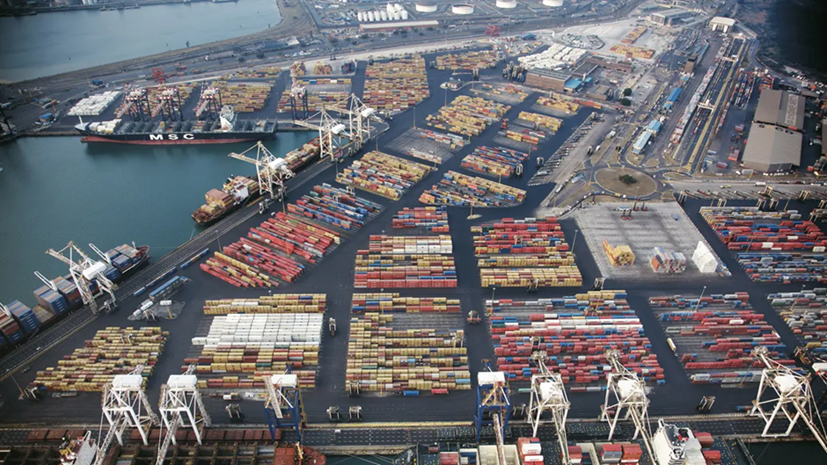

Transport Minister Barbara Creecy is facing criticism over her decision to renew 35-year terminal operator agreements with international oil companies like BP at the Durban port’s Transnet Island View Precinct (IVP). The minister is staying put to her guns. The Portfolio Committee on Trade, Industry, and Cooperation, and the Portfolio for Transport have urged Creecy’s department to ensure that transformation targets in regard to clean energy are not overshadowed by commercial profits at the Precinct. The issue that has affected South African companies according to the respective Parliamentary portfolio Committees is that Creecy took this action without putting the contracts out to tender. This was reported by MoneyWeb.
These are very important contracts as the IVP is a pinch point in the fuel supply chain, notes Warwick Lord, chairperson of the Multimodal Inland Port Association (MIPA). The Precinct stores about 70% of the country’s fuel imports – and since the Engen and Sapref refineries there shut down, SA is increasingly reliant on imports. If you have control of these tank farms and the ability to get the fuel in and out of the country, you control a very large and very strategic asset, Lord goes on. “And without the county having its own direct involvement in some shape or form, I feel that being at the total behest of the private sector comes with risks at times. I’m very much an advocate for private sector involvement but at the same time government needs to look after strategic assets, and I believe fuel and fuel shortages is definitely one of those.”
On the positive side, these long leases provide security of tenure which then allows for capital investment and operations to really kick in, Lord says.

MPs on the portfolio committees concerned that there is risk that the control of oil imports into the country could be at the risk of abuse of management and corruption. Control and management of the oil tank farms can be practically turned into a gold mine or a mint depending on how they are managed. The contracts awarded to the likes of BP and Shell should undergo close scrutiny. Most of that petrol and gasoline can easily be siphoned off for other purposes if proper oversight is not implemented, (put in place). There needs to be some stake and oversight by the public sector to ensure there is no abuse of this commodity. Private petroleum companies involved in buying up Transnet’s strategic assets such as petrol tankards need to relinquish some footing to impartial oversight. No temptation for corruption must be permitted. Privatizing transport fuel assets come would great risk.
These leases being granted to private and powerful oil companies need to be put on hold and examined by the courts and parliamentary Portfolio companies. The public sector should have a say in how the tankers should be managed.

Meanwhile eThekwini Mayor Cyril Xaba is in Hangzhou, China with a high-level delegation to confirm technology international company Alibaba’s decision to open a centre of its African operation in Durban.
“This marks a major milestone for the city’s digital and economic development strategy,” the city said in a statement on Tuesday. The city expects the move to unlock new opportunities for local entrepreneurs, SMMEs and start-ups by offering them access to international markets through Alibaba’s powerful online platforms. “In addition to trade access, the partnership will bring training, digital skills development and entrepreneurship programmes which all seek to support job creation and economic inclusion.”
Key to securing the deal was Durban’s strategic location, including one of Africa’s busiest ports, growing logistics infrastructure, and proximity to King Shaka International Airport.
Xaba said the partnership will put Durban on the global map as Africa’s smart port city, able to connect people, products and innovation to the rest of the world.
The invitation by Mayor Xaba to the Alibaba group is to encourage job creation and investment in the corporate tech sector.
The promotion of further expansion into trade in tech between Africa and the far east tech nations such as China begins with Durban. Economic inclusion is also a key factor. As a port on the Indian Ocean that has access to KwaZulu-Nata Province’s most important airport the city is strategically placed to be a major hub for business. This can only be achieved if strategic investment is focused on through accountability and transparency. Trade access, training, digital skills development and entrepreneurship creation are all well and good for expanding the city and municipality’s horizons. The path is good, strong and firm, but more needs to be done. Neglect cannot be tolerated or accepted.
The municipality has an opportunity to raise the city’s profile world wide and expand it into a hub of the tech industry. This however needs to be done so that ordinary citizen can benefit the most.
Article written by:
Yacoob Cassim
Journalist at Radio Al Ansaar