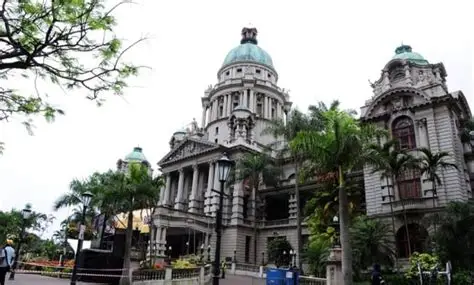

eThekwini Municipality moved to blacklist nine businesses while cracking down on fraud and corruption and has taken action in several matters in the 2024/2025 financial year. The Municipality provides statistics on the matter at the Anti-Fraud and corruption Seminar held on Thursday at the Inkosi Albert Luthuli Durban International Convention Centre.
- About 81 cases where consequence management was implemented
- The statistics further noted the prevalence of diesel theft and other resource-related crimes remain prevalent.
Mayor Cyril Xaba also highlighted the important role of Fourth Industrial Revolution creations such as Artificial Intelligence (AI), data analytics and digital monitoring tools in detecting irregularities in municipal management and business conduct early and enhancing transparency. Community engagement is also vital to educate residents about the impact of fraud. In the world of social media and AI there is no room for corrupt and fraudulent secrets.

Advocate Bulelwa Vimbani-Shuma from the National Prosecuting Authority’s Specialised Commercial Crime Unit stressed the need for robust systems to protect whistle-blowers. “Ongoing community education is crucial to create understanding of the effects of fraud and corruption, as it impedes service delivery,” she said. Jimmy Ngcobo, director of the City Integrity and Investigations Directorate, reaffirmed the City’s zero-tolerance stance. “We meet monthly to track prosecution progress. We cannot allow criminals to tarnish the image of the Municipality,” said Ngcobo.
Durban Metro can be a city of the future if the endemic weeds of fraud and corruption were cut out at the roots. Whistle-blowers who are first hand witnesses to the scourge need to move forward and bring the truth to light. They of course need legal protection from their superiors whom they expose. Ethics should trump loyalty to those whose superiors engage in illicit activities. Transparency and accountability should be the pillars on any path in public service and local political career. Perpetrators of such crime will face prosecution and jail time. They will serve as an example and warning to others. Whistle blowers should of course be placed in witness protection if they are at risk being murdered or being made to disappear.
Meanwhile the Municipality is planning to introduce restrictors to curb the amount of water for daily use.

Wentworth resident, Andre de Bruin, is concerned about the long-term repercussions of the water restrictor installation process. “The municipality is using over its normal supply and quota. Why must ratepayers pay for the municipality’s fault?” said De Bruin. In August, uMngeni-uThukela Water issued a statement advising residents about planned water curtailments that were reintroduced from September 1. Ward 68 councillor Aubrey Snyman said many residents are unhappy with the installation of water flow restrictors. “The flow restrictors are being installed across the city because for a long time uMngeni Water was supplying eThekwini Municipality with more than the contracted volumes because of the demand from residents. Subsequent to that, the national Department of Water and Sanitation issued a directive to uMngeni-uThukela Water to reduce the volume they are sourcing.
“Many residents have not been properly informed and they have concerns that the restrictors may cause damage to their high pressure geysers. If that happens who will compensate them?” According to the eThekwini Water Security Dashboard, the City has consistently used more than their licensed allocation by about 90 million litres per day (MLD), which equates to 193 MLD too much.

The actions of the municipality in limiting the amount of water residents can use, carries huge risk. It is important to save water but it is also important for the municipality to be fair to residents concerning the amount of water they can use. This extends to the amount of how much water to save if the government charged residents on the amount of water, they use every day. Where ease long term education in the use of water could help combat the amount being used. The municipality must find a way to conserve water for everyone. This is not just about saving money this is also about limiting the amount of water a person uses every day. Using rain tanks to collect rain water can go a long way to save on water for daily use. Improving on infrastructure such as reservoirs will go a long way to store excess water.
If residents are using more than their fare share of water per day, then the municipality should fine them. Residents should also be informed about what purpose the water restrictors serve or whether they can cause damage to the high-pressure geysers. If not, it should be okay. Restricting the water usage can be a way to encourage residents to save up on water, which unfortunately can become a scarce commodity. In the end the municipality of eThekwini must always be accountable to its residents for its actions.
Article written by:
Yacoob Cassim
Journalist at Radio Al Ansaar