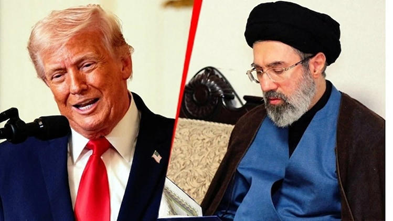

‘No negotiations held’: Iran rejects Trump’s claim of talks to end war, calls it ‘fake news’
Although United States (US) President Donald Trump claimed that “very good and productive conversations” were underway to end the war with the Islamic Republic of Iran, the Iranian regime stated otherwise. On the social media platform X, an account under the name of Iranian Parliament Speaker Mohammad Bagher Ghalibaf posted on Monday that “no negotiations have been held with the US.”

Ghalibaf dismissed reports of any engagement as misinformation, writing, “Fakenews [sic] is used to manipulate the financial and oil markets and escape the quagmire in which the US and Israel are trapped.” His remarks echoed those of Iranian Foreign Ministry spokesperson Esmaeil Baghaei, who also denied any discussions with Washington. According to comments carried by Iran’s official IRNA news agency, Baghaei said that “messages have been received from some friendly countries regarding the US’s request for negotiations to end the war”. The exchange comes as the US-Israel conflict with Iran enters its fourth week, with military action continuing on both sides.
Israel said it launched a fresh wave of strikes on Tehran on Monday, while Iran has continued missile and drone attacks across the region. The situation has also led to a near shutdown of the Strait of Hormuz, a key global energy route through which about one-fifth of the world’s oil and gas supplies pass. The disruption has pushed global energy prices higher and added to concerns over wider economic fallout.

It should be clear from the above extract that there is no ceasefire. The war continues, with Iran retaining its overall defense capacities. If Ghalibaf’s account is accurate, Trump appears desperate to save face. The American president is at a loss in this war, claiming that his administration has entered into negotiations with the Iranians when, in fact, it has not. Why is Trump doing this? Because the war has not gone as planned, and he has been cornered and exposed as a desperate man.
The war that the US and the State of Israel are waging against Iran is now in its third week. It has become protracted, with Tehran remaining defiant. The US and Israel lack the support of key allies and are finding themselves increasingly isolated.
The disruption of oil and gasoline tanker passage through the Strait of Hormuz has caused oil prices to quadruple. This will foster distrust among the populations of nations allied with the US. In the long term, Trump and his inner circle are likely to lose support from the influential Republican base and the Make America Great Again (MAGA) movement – though how long that will take remains to be seen. Iran’s current regime is likely to endure in the long run.
Meanwhile, Saudi Arabia, the United Arab Emirates (UAE), Bahrain, and other authoritarian monarchies of the Arabian Peninsula want the US to continue the war, but only to dismantle Iran’s military capabilities rather than overthrow the Islamic Republic entirely.

Before the war began, Gulf states had opposed military action, fearing escalation and doubting whether strikes would effectively curb Iran’s regional influence. Diplomacy was widely seen as the safer path. However, Iran’s retaliation, which included strikes targeting all six Gulf Cooperation Council countries, appears to have shifted that thinking. The attacks disrupted oil and gas production and impacted tourism, key pillars of Gulf economies. Rather than pushing for a ceasefire, Iran’s actions have hardened attitudes in parts of the region. “Ending the war with Iran still in possession of the tools it is currently using… would be a strategic disaster,” one official told The Times of Israel.
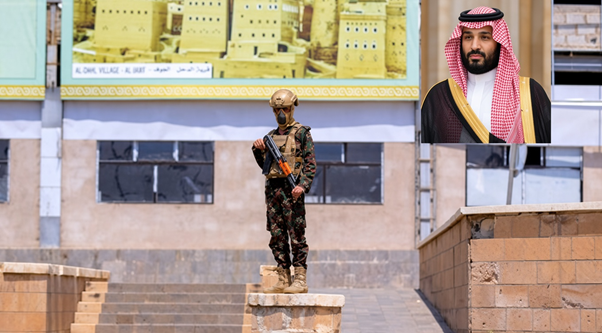
The Gulf Cooperation Council (GCC) states have suffered heavy damage to their infrastructure. Although they may want a swift end to Washington’s invasion of Iran—without occupation—they still seek to see Iran’s defences weakened. The main concern for the monarchies of the Persian Gulf is safeguarding their economic interests as well as ensuring self-preservation. The GCC regimes, including Saudi Arabia under Crown Prince Muhammad bin Salman, are working to diversify their economies away from oil and gas through various economic visions. Such progress cannot take place during a protracted war. The GCC may now have to look elsewhere for new allies more than ever before.
Should the Iranians emerge victorious from the conflict, the Saudis, Emiratis, Bahrainis, and Qataris will no longer be able to rely on Washington’s support – or even covert backing from Israel.
This is a war that will cost Trump his legacy and determine the next phase of the Middle East’s regional makeup. Everyone had best be prepared.
Article written by:
Yacoob Cassim
Journalist at Radio Al Ansaar