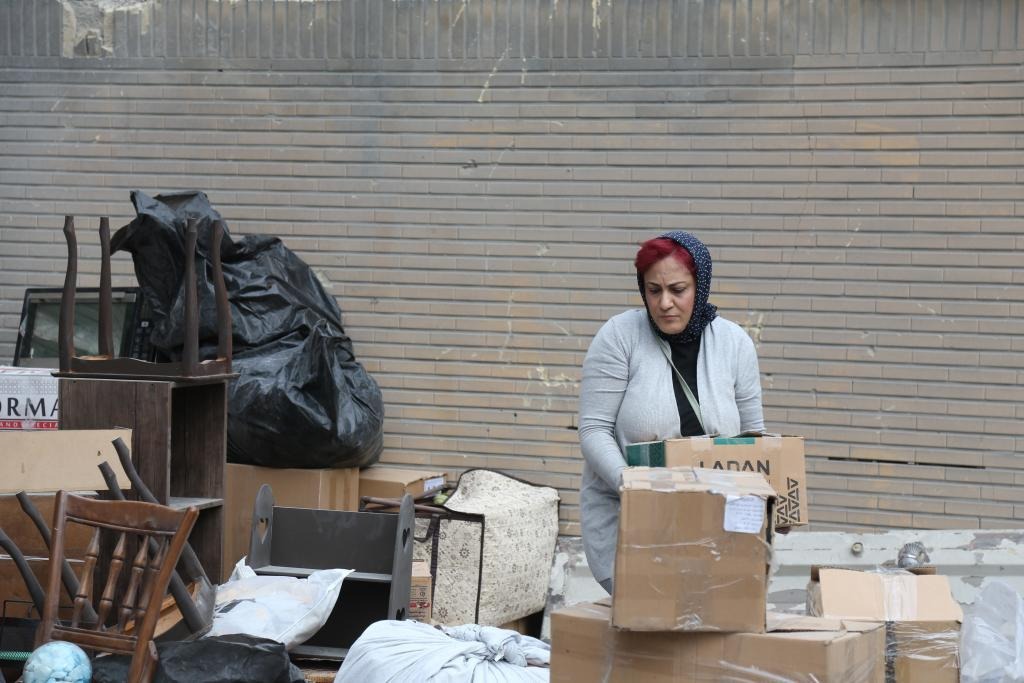

Winning a war is one thing. Winning the peace that follows is something else entirely.
History has shown that countries can survive weeks or even months of conflict, only to spend years rebuilding from it. That is the challenge now confronting Iran. While a fragile truce has silenced the missiles for now, it has not erased the damage left behind. Inflation remains high, international sanctions continue to choke economic growth, businesses are hesitant to invest and millions of ordinary Iranians are still living with the uncertainty created by the conflict.
The next battle will not be fought with missiles. It will be fought with money, confidence and time.
The recent conflict has left Iran facing one of its most difficult economic crossroads in decades. Although the ceasefire has reduced the immediate threat of further destruction, analysts warn that it remains fragile. A single escalation could undo any progress made towards recovery. Roads, factories and infrastructure can be repaired, but restoring confidence among businesses, investors and ordinary citizens is a far more difficult task.
That may prove to be Iran’s greatest obstacle.
Countries are rarely rebuilt with concrete first. They are rebuilt with confidence.
Businesses do not expand because a ceasefire has been announced. Investors do not commit billions because headlines have become quieter. They invest when they believe stability will last. At the moment, Iran cannot offer that certainty. As long as the possibility of renewed conflict hangs over the region, many companies will continue watching from the sidelines rather than risking billions of dollars on an uncertain future.
Even if the security situation improves, another major hurdle remains: sanctions.
For decades, Iran has operated under layers of international sanctions that have restricted banking, trade and foreign investment. Untangling those restrictions is far more complicated than signing a peace agreement. Financial institutions, insurers and multinational corporations remain cautious about re-entering the Iranian market, meaning economic recovery could move far slower than political leaders hope.
Iran’s proposed reconstruction fund, reportedly worth around $300 billion, reflects the enormous scale of rebuilding that lies ahead. Yet history offers a warning. Similar attempts to attract foreign investment after previous diplomatic breakthroughs produced far fewer results than expected. Investors are looking for more than ambitious reconstruction plans—they want long-term political stability, predictable policies and confidence that another conflict will not erase their investments overnight.
The consequences reach far beyond government budgets.
Behind every economic statistic is a family wondering whether food prices will rise again. It is a small business owner delaying expansion because customers have less money to spend. It is a graduate questioning whether opportunities still exist at home or whether the future lies elsewhere. Economic recovery is ultimately measured not by government announcements, but by whether ordinary people can rebuild their lives with confidence.
Nor will the impact be contained within Iran’s borders.
As one of the Middle East’s major oil producers, Iran’s stability influences global energy markets, investor confidence and regional trade. The International Monetary Fund has noted that while the global economy has shown resilience in absorbing recent geopolitical shocks, countries at the centre of conflict face a much longer and more difficult road to recovery. A stronger Iran could help stabilise parts of the region. A weaker one risks prolonging uncertainty far beyond its own borders.
History delivers the same lesson time and again: ending a war is easier than recovering from one.
Rebuilding cities can take years. Rebuilding an economy can take decades. Rebuilding trust often takes even longer.
That is why Iran’s greatest challenge is no longer military—it is psychological. The country must convince businesses to invest, entrepreneurs to expand, skilled workers to stay and ordinary citizens to believe that tomorrow will be more stable than today.
The fragile truce has created an opportunity. It has not guaranteed a recovery.
The world often assumes wars end when the shooting stops. In reality, they end when people feel safe enough to build businesses, buy homes, create jobs and plan for the future again.
For Iran, that day may still be a long way off.
Article written by:
Hudaa Ahmed
Journalist at Radio Al Ansaar