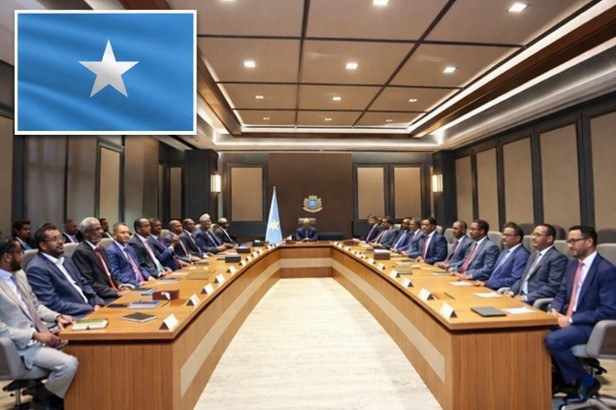

Somalia’s incumbent administration of President Hassan Sheikh Muhammad and representatives of the opposition met in Mogadishu to end a dispute concerning the tabling of electoral and constitutional reforms. The meeting took place this week Monday 20th, July. Both sides had spent recent hours meeting independently with the political constituents they represent in an effort to refine their negotiating positions ahead of what is widely viewed as a pivotal round of talks.
Insiders say the consultations focused on the most contentious issues still dividing the two sides, including unresolved constitutional disputes, electoral arrangements, and broader questions surrounding Somalia’s political transition. Monday’s meeting is expected to pick up where previous discussions stalled, with negotiators attempting to revive dialogue that has struggled to produce meaningful breakthroughs despite weeks of mediation by international partners. Several members of the opposition’s negotiating team who had recently traveled abroad have now returned to Mogadishu and are expected to participate in the session, signaling the importance both sides attach to the upcoming discussions. Yet beneath the renewed diplomatic activity lies growing uncertainty.
Sources close to the negotiations caution that Monday’s meeting could face significant political obstacles, with fundamental differences between the Federal Government and the opposition remaining largely unresolved. Despite continued mediation efforts, there is little indication that either side has substantially softened its position on the core issues at the heart of the dispute.

Uncertainty in the Somali political landscape is not an element that bodes well. The situation can erupt into violence at any given moment depending on how the country’s opposition and leadership respond to the dilemma facing them. Somalia has already seen the destruction civil war can wrought over the slightest crisis. The key concern is introduced constitutional amendments that give the Somali electorate a direct vote in elections in regard to their MPs. The current system allows only the chieftains of each clan to select the MP for the district or state where they are resident. The collective of the Somali parliament then elects the president and selects the prime minister.
Somalia is divided into seven states, 18 administrative regions and 72 districts.
Former Somali President Muhammad Abdullahi Farmaajo who leads the Nabad Iyo Nolol party and former Prime Minister Omar Abdirashid who leads the Somali Unity Council had taken up arms against the Sheikh Muhammad Administration over the disagreement concerning the amendments. Both Farmaajo and Abdirashid have returned to the negotiating table. However, their meeting with President Sheikh Muhammad and his cabinet have yet to bare any tangible results.

The International partners’ attempt to facilitate dialogue didn’t succeed in reconciling the opposition namely Future Council and FGS. Subsequently, the international partners proposed Türkiye as the closest ally of Somalia to take the lead in mediating the opposition groups and the FGS. A Turkish delegation arrived from Ankara to mediate the parties, by holding talks with both the opposition and government during the first week of June 2026, the opposition’s failure to agree on the establishment of technical committees representative of different opposition groups have stalled the mediation process.
The above extract explains that a consensus has not been reached on what direction Somalia should take on the constitutional amendments, especially electoral reforms. The disagreement stems from whether MPs should be elected directly, based on how many votes a candidate can win or proportional representation where the number of MPs are allocated a proportion of seats in each chamber according to the number of votes their party has won. A solution to this situation would be for the country to adopt a hybrid system based on having a certain number of their representatives elected directly and a certain number chosen by proportional representation. In addition, tribal and clan leaders would eventually be granted their own representation within the parliamentary system, possibly through appointment or communal consensus.
A major disagreement stems from the centralization of power in the national government in Mogadishu while the federal states want to retain their autonomy through decentralization. The opposition supports this.
Somalia being situated in the horn of Africa has a coast that faces the Red Sea. Piracy and the hijack of ships has long been an issue, due to the country’s political instability. Türkiye and other relevant nations that are party to Somalia’s negotiations do not want to see harm come to their own cargo and passenger vessels including ships as this would harm their commercial interests.
Somalia has long known hardship and destruction, all those who wish to see a stable and secure state in the Horn of Africa, from the country’s political class to its neighbours such as Ethiopia, to other interested partners such as South Africa, Djibouti and Saudi Arabia.
How Somalia undergoes its political transition will depend on the intuition of the country’s political class.
Article written by:
Yacoob Cassim
Journalist at Radio Al Ansaar