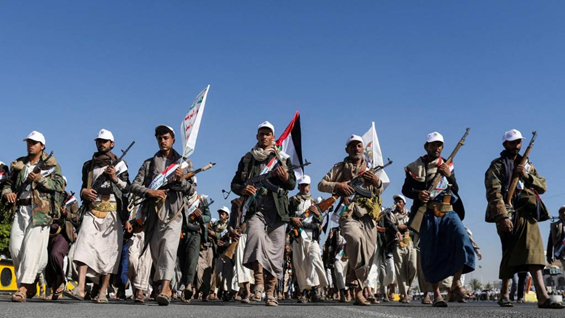

The Yemeni Houthis have not resumed hostilities on behalf of their patrons in Iran against the Israelis. Although the Houthi militant organization forms part of Tehran’s “Axis of Resistance” alongside Hezbollah, they follow the Zaidi branch of Shi’ite Islam rather than the Twelver tradition observed by Iran’s religious scholars. The Houthis are a largely autonomous group operating from northern Yemen. Their relative restraint is being interpreted by some as an indication that the Iranian regime may intend to use them as a strategic reserve, to be deployed if the three-week war continues to intensify. Others, however, see it as a sign that Iran’s command-and-control system over its proxy groups is breaking down.

Observers say the imminent passage of a US aircraft carrier battle group through the narrow Bab el-Mandeb strait at the eastern end of the Red Sea would be a key moment that would test the powerfully armed movement’s intentions. “That is going to be a really important test … The Houthis have mines, drones, artillery, a whole range of missiles. The axis of resistance will never get a better chance to set a US aircraft carrier on fire,” said Michael Knights, a regional expert at Horizon Engage, a strategic advisory – based in New York. The Houthis have received extensive financial, military and other support from Tehran over decades, and described the appointment on Monday of Mojtaba Khamenei as supreme leader of Iran as “a new victory for the Islamic Revolution”.
However, experts say the Houthis, though they still possess an arsenal of powerful long-range missiles, may decide against active involvement in the current conflict and would not simply follow orders from Tehran. “It is difficult to predict, but I don’t think they will strike shipping in the Red Sea purely based on solidarity with Iran … They are weighing domestic considerations,” said Allison Minor, of the Atlantic Council, a thinktank based in Washington DC.

The Houthis are a pragmatic and cautious group. They may receive funding, weapons, ammunition, and other equipment from Tehran, but their leadership acts largely independently, issuing directives in accordance with what they believe to be right. The Houthis may also believe that the Iranian regime can withstand the American and Israeli onslaught without their help. For now, the group is well equipped to defend itself should it face attack from external forces—whether American, Israeli, or, closer to home, the Saudi Kingdom.
The Houthi leadership under Abdul Malik al-Houthi has adopted a wait‑and‑see approach to the war. The patience displayed by the group suggests that they may be preparing for a possible escalation. The Houthis are watching carefully, aware that they are being watched in turn. This is a tightrope on which they cannot afford to make a false move.
The Houthis’ main goal is to secure their hold over Yemen in its entirety. Whether this priority is feasible remains to be seen. Their legitimacy within the country depends on the support of the Yemeni people. They will not risk causing further mayhem and destruction when Yemen has already endured more than its share since the Arab Spring in 2011 and the Saudi air strikes that followed.

Fourth, the Houthis are probably fearful of pressure from the Gulf states and their designs on Yemen. Saudi Arabia, which has maintained a truce with the Houthis since 2022, stands to gain the most if the Houthi movement is weakened. The Saudis sponsor armed Yemeni factions that are waiting in the wings to dislodge the Houthis from power in northern Yemen, and a false move by the Houthis could provide them the opening they need. The Saudis and other Gulf Cooperation Council (GCC) states are probably leaning on the Houthis not to intervene in the war, confident that the Yemeni group will emerge weakened regardless of whether or not they join the fight.
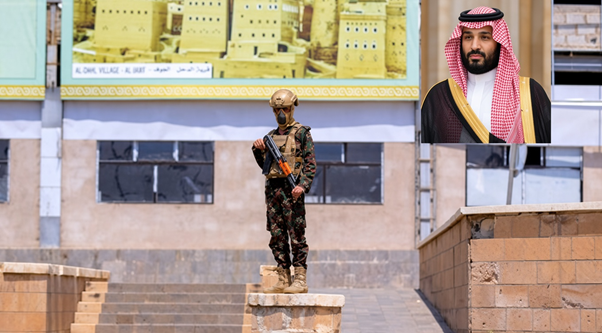
It should be clear from the above extract that the Houthis are stuck between a rock and a hard place, even if they remain neutral. Their greatest enemy is not the Israelis but Saudi Crown Prince Muhammad bin Salman bin Abdul Aziz Al Saud, who would welcome the group making a suicidal move by entering the war alongside the Islamic Republic. Muhammad bin Salman—popularly known as MBS—would then dissolve the ceasefire agreement with the organization and support their rivals against them. For the Houthis, their best hope of survival is to wait out the war in case the incumbent Iranian regime endures—as is likely to be the case.
The map of the entire Middle East is once again being redrawn in terms of politics, culture, and regional alliances, who will emerge victorious remains to be seen. The Yemeni people, for their part, have already endured enough suffering and exploitation as pawns in these struggles.
Article written by:
Yacoob Cassim
Journalist at Radio Al Ansaar