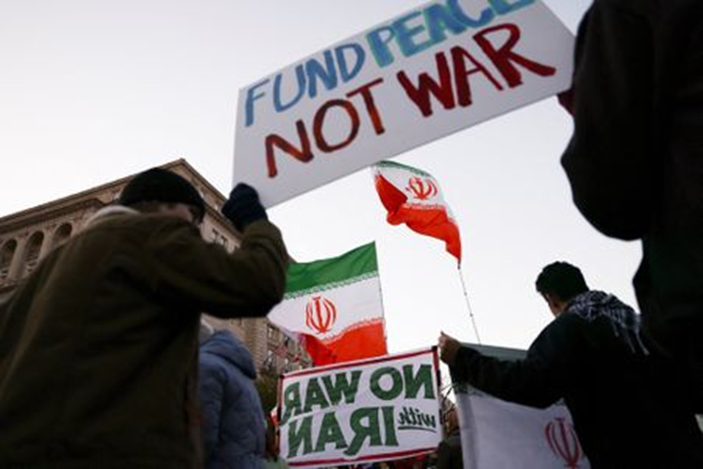

After nearly four weeks of carnage and air strikes, the United States and Iran agreed to a two‑week ceasefire. This comes as a relief not only for South Africa, but also for the rest of the developing world. Escalating oil and commodity prices have long been a major concern for these countries. The Strait of Hormuz has remained open (albeit briefly) to allow the passage of precious cargo. Brent crude oil fell by as much as 16%, while European natural gas futures dropped by up to 20%. In response, company stock values rose. However, it may take more than a brief two‑week reprieve to set all things back on track.

SA was granted passage through the Strait of Hormuz before the ceasefire. How was this negotiated and how important is it?
Minister of Mineral and Petroleum Resources Gwede Mantashe told Parliament in March that “the Strait of Hormuz allows cargo that goes to South Africa without interruption”. Analysts were sceptical, wondering how Iran would possibly identify cargo destined for South Africa. We asked Chrispin Phiri, spokesperson for the Department of International Relations and Cooperation, whether anything had been negotiated with Iran. He forwarded a post on X from the Iranian Foreign Minister Seyed Abbas Araghchi in which he said: – Strait of Hormuz is not closed. Ships hesitate because insurers fear the war of choice you initiated – not Iran – No insurer – and no Iranian – will be swayed by more threats. Try respect-
Freedom of Navigation cannot exist without Freedom of Trade. Respect both – or expect neither – Seyed Abbas Araghchi (@araghchi) March 22, 2026 Phiri said, “As I understand it, this is the official position of the Iranian government.”

South Africa has long maintained a close relationship with Iran, as both are members of the BRICS Plus trade bloc (Brazil, Russia, India, China, South Africa, and others). Pretoria may or may not have an arrangement with Tehran concerning the safe passage of South African ships through the Strait of Hormuz. The air strikes carried out by the United States and Israel targeted Iranian installations of interest, while the Iranian military and the Islamic Revolutionary Guard Corps (IRGC) focused on U.S. bases, structures, and institutions in the Persian Gulf suspected of hosting American military interests. President Cyril Ramaphosa and his advisors are walking a very delicate path, depending on which partners they choose to promote trade with. Ramaphosa, an experienced businessman, is skilled at striking bargains with allies and arguably has more experience in that field than U.S. President Donald Trump.
When Iranian Foreign Minister Araghchi referred to “Freedom of Trade,” he meant the right to trade. This right, consistent with the principle of freedom of navigation, was recognized by Tehran as belonging to countries openly allied with them – those considered friendly. In contrast, nations that participated in the strikes – the United States and Israel – as well as those suspected of offering behind‑the‑scenes support, such as Britain and other Western countries, found themselves cut off.
Meanwhile, it will take time before airlines can safely resume flights through Middle Eastern airspace. The price of fuel remains a pressing concern.
Iran’s closure of the Strait of Hormuz choked global fuel supplies, forcing airlines to hike fares, cut flights, add refuelling stops and carry extra fuel. Some carriers have cancelled services to and from the Gulf – a key aviation hub linking Europe and Asia – citing safety concerns. Oil fell below $100 per barrel after Trump said he had agreed to the two-week ceasefire with Iran, subject to the strait’s immediate and safe reopening. But comments from executives and experts across the industry highlight deepening pain for airlines facing a doubling of jet fuel prices and worries about constrained supplies.
European airlines are working with suppliers and airports to assess jet fuel stocks, lobbying group Airlines for Europe – whose members include Ryanair (RYA.I), opens new tab, Lufthansa and British Airways-owner IAG – said, adding that it was “too early to tell” how quickly supply could recover. An EU coordination group on oil said after meeting on Wednesday that it saw no immediate risk to oil supply in April.
South Africa must brace itself for restrictions on which airspaces will be available to its airlines. A two‑week ceasefire will not be enough for markets to return to normal. In these desperate times, as talks between Tehran and Washington begin, we can only hope for an extension. Airline companies in South Africa must remain wary of potential fuel shortages in the future. Once again, alternatives will have to be considered. Even though oil prices have dropped, the risk of reversal remains ever‑present, as negotiations between the Americans and Iranians could break down at any time.
A two‑week reprieve will never be sufficient. South Africa must adapt to evolving circumstances by securing both better sources and new forms of energy. Reliance on fossil fuels must change. For South African airlines, (such as South African Airways etc) the focus should be on gaining access to alternative forms of renewable energy. One possibility for aircraft is hydrogen power. Although there may be no immediate risk to global oil supplies, an abrupt disruption could occur at any time.
How South Africa adapts to shifts in global economics will determine its position in the future.
Article written by:
Yacoob Cassim
Journalist at Radio Al Ansaar