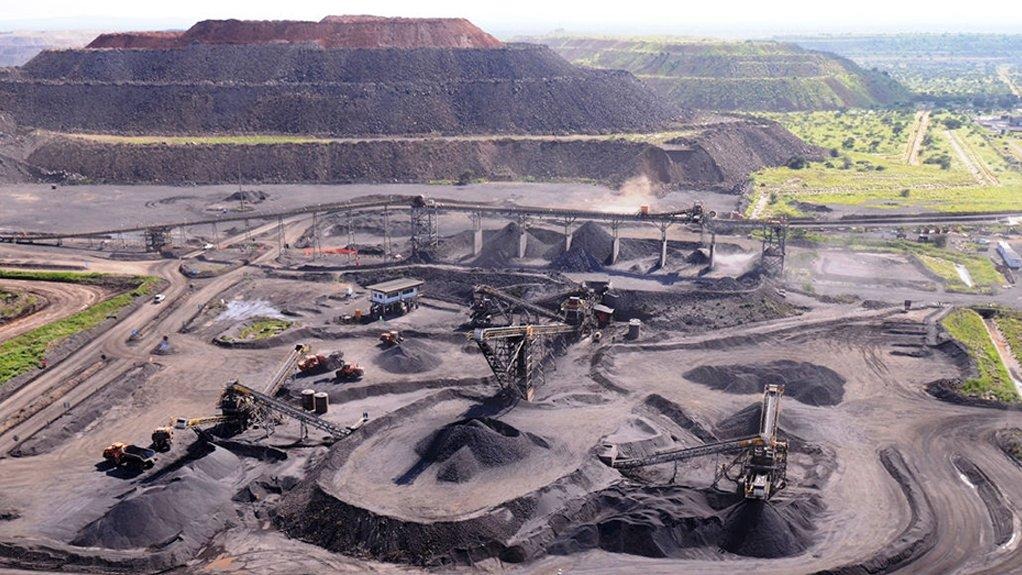

In a remote corner of the Northern Cape sits Hotazel, a town of roughly 4,000 people that most South Africans will never visit—and many have probably never heard of.
Yet beneath the dry Kalahari landscape lies a mineral resource connected to one of the world’s most valuable companies.
Hotazel is situated within the Kalahari Manganese Field, recognised by the International Union of Geological Sciences as the world’s largest land-based manganese resource. Ore extracted from the region enters international supply chains supporting steel production, vehicle manufacturing and electric-vehicle batteries.
That connects this tiny South African town to Tesla, Elon Musk’s electric-vehicle giant valued at approximately R25 trillion.
Tesla does not own the mines around Hotazel or necessarily purchase manganese directly from them. Its connection runs through international processors, suppliers and battery manufacturers.
But the broader reality is difficult to ignore: the transition to electric vehicles needs manganese, and South Africa possesses more of it than almost anywhere else.
The uncomfortable question is whether South Africans will share meaningfully in that value—or simply watch the raw material leave the country.
Why the world needs what South Africa has
Manganese has traditionally been associated with steel, which still accounts for most global demand. It strengthens steel while helping manufacturers keep it relatively light—an important advantage in vehicles, where weight can affect efficiency.
The mineral is also used in certain lithium-ion batteries, where it can improve stability, durability and energy density while reducing reliance on more expensive materials such as nickel and cobalt.
Research presented by the University of Cape Town identifies manganese as a critical mineral for electric vehicles, energy storage, high-strength steel and renewable-energy infrastructure.
South Africa therefore holds more than another mining commodity. It possesses one of the building blocks of a lower-carbon global economy.
UCT estimates that the country produces approximately 30% of the world’s manganese and holds about 40% of global reserves. Reuters has cited industry estimates placing South Africa’s share of reserves even higher.
On paper, this should provide extraordinary industrial leverage.
In practice, much of that leverage is being exported.
Why this matters beyond Hotazel
It would be easy for someone in Pietermaritzburg, Johannesburg or Cape Town to dismiss this as a distant Northern Cape mining story.
It is not.
This is about whether South Africa will participate in the industries of the future—or continue supplying other countries with the resources they need to build them.
UCT’s research found that approximately 93% of South Africa’s manganese ore was being exported. Much of the refining, chemical processing and advanced manufacturing then happens elsewhere.
South Africa often sells the mineral near the beginning of the value chain, while other economies transform it into specialised compounds, battery materials, high-value steel and finished products.
Those later stages require factories, engineers, technicians, researchers and specialised businesses. They develop skills and industrial capabilities that can attract further investment.
When the processing happens elsewhere, many of those opportunities go with it.
That affects the person searching for work, the graduate wondering whether specialised skills offer a future at home and the small business that could have supplied a growing manufacturing industry.
The ore may leave from the Northern Cape, but the lost opportunity does not remain there.
The old mining model in a green disguise
For generations, South Africa has extracted valuable resources and exported them for others to process.
The electric-vehicle revolution threatens to repeat that model—only now it arrives wrapped in the language of innovation, clean energy and technological progress.
We provide the manganese. Other countries refine it, manufacture battery materials and produce the finished technologies. South Africa carries the pressures of extraction and transportation, while much of the industrial value is created beyond its borders.
That is not full participation in the green economy. It is supplying the green economy.
Unless the country moves further along the manganese value chain, entire foreign manufacturing sectors will continue benefiting from what lies beneath Hotazel while South Africa celebrates export volumes.
A possible turning point
There are signs of progress.
In June, Manganese Metal Company began commissioning South Africa’s first high-purity, battery-grade manganese sulphate facility at its Mbombela refinery. The project will use manganese feedstock connected to South Africa’s domestic mineral supply.
This matters because battery-grade manganese sulphate sits further along the value chain than unprocessed ore. Producing it locally represents a move towards the specialised materials required by battery manufacturers.
It could help South Africa build technical capabilities, support manufacturing and retain more value before its manganese is exported.
But one facility does not amount to an industrial revolution.
UCT identifies limited processing capacity, expensive electricity, high input costs, global competition and logistics constraints as barriers to expanding local beneficiation.
South Africa has the mineral. Whether it can create the industrial environment needed to unlock its value is another matter.
Rich underground, restricted above it
The weakness of South Africa’s transport system is already eating into its advantage.
Reuters reported that logistics account for approximately 43% of the free-on-board price of manganese, while transporting the mineral by road is about 37% more expensive than moving it by rail.
At Exxaro’s Tshipi Borwa mine, which exports approximately 3.5 million tonnes annually, 46% of its manganese is transported by road. The company wants to move the entire volume onto rail as Transnet introduces greater private participation in its network.
The contradiction is almost obscene: South Africa sits on a mineral resource the world increasingly needs, but struggles to move it efficiently—and processes too little before it leaves.
Hotazel may be far from most South Africans, but the choice represented by the town reaches across the country.
This is about jobs that could be created, skills that could be developed, industries that could be built and economic value that could remain at home.
The world already knows what South Africa’s manganese is worth.
The question is whether South Africa will use it to build its own place in the electric future—or remain the hole in the ground from which somebody else’s future is extracted.
Article written by:
Hudaa Ahmed
Journalist at Radio Al Ansaar