
The facilitation of market access for high valuable perishables, is made possible with efficient sea and air freight operations. The faster growers and freight forwarders can move products from their farms to markets, the high their derived value will be, owing to shelf life’s extension, reduce waste and, ultimately, lower costs for retailers and consumers. This was according to special economic zone (SEZ) Dube Trade Port, Durban.
The SEZ is preparing to launch the second phase of its Dube AgriZone an eighteen ha, fully serviced, agriculture-focused development aimed at unlocking opportunities for “agri-entrepreneurs”, smaller growers, emerging farmers and horticulturists.

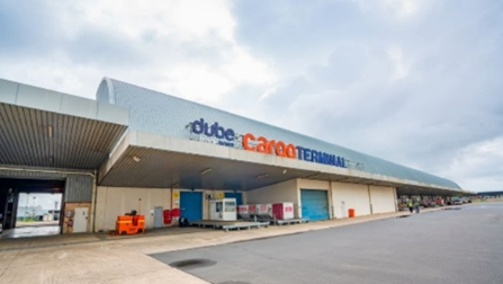
Dube TradePort is, therefore, actively helping to address the barriers that limit small-scale farmers’ growth potential by providing integrated infrastructure and support services that enable access to high-value markets. Strategically located in the King Shaka International Airport precinct, Dube AgriZone 2 offers access to modern road networks, warehousing and logistics support, packhouses and cold storage facilities, reliable water and electricity supply, established distribution channels to major national retailers and direct access to export markets through the Dube Cargo Terminal. “For investors, Dube AgriZone 2 presents a compelling value proposition combining fully serviced land, advanced agricultural infrastructure and seamless market connectivity,” Isaac states.

Dube TradePort and Dube AgriZone2 are centres of economic livelihoods that generate employment. They facilitate free trade. Dube AgriZone2 is a storage facility for agricultural goods being exported out of the country by Dube TradePort. King Shaka International Airport Precinct offers the main transport service to AgriZone2 by air. The agrarian goods are transported to other parts of the southern African region and beyond. This generates income for the participating farms and transportation services. Dube Trade Port has made Durban Metro and eThekwini region into a major hub for exporting agrarian commodities. The above facilitation of Dube TradePort shows that eThekwini region can become a major centre of international commerce due to the role of the private sector alongside cooperation with the state.
One of the core strengths of the Dube TradePort is its ability to facilitate efficient trade flows by connecting businesses to domestic, regional and global markets, Isaac explains. In the 2024/25 financial year, tenants generated exports worth R2.5-billion, reaching the Southern African Development Community region as well as international markets such as Austria, the UK and China, by way of Hong Kong. “This performance was underpinned by critical logistics infrastructure, including the N2 and N3 corridors, the Durban Container Terminal and expanding rail capacity. These systems enable the seamless movement of goods, while a multimodal transport network ensures flexibility in meeting varying cost, speed and cargo requirements,” Isaac points out. As a result, businesses are better positioned to deliver products competitively and respond to evolving market opportunities.
The South African state (Department of Trade and Industry) through the KwaZulu-Natal provincial government and eThekwini Municipality have a responsibility to support the model being developed by Dube TradePort. The country must place the importance of economic prosperity on improving the trade network across international relations; be they in Africa, Asia, Europe or the Americas. Durban Metro is a major port on the Indian Ocean and connects with the East African coast as well as south east Asia. The city can be a key engine in the vehicle of the South African economy. By extension Durban is also a key destination in the SADC region. The rise in exports worth R2.5-billion, can mean that this income could go to improving both the lives of those who earned it, as well the livelihood.
How the potential of Dube Trade Port is utilized depends on how the municipality and the provincial government as well the local public sector support it.
Article written by:
Yacoob Cassim
Journalist at Radio Al Ansaar