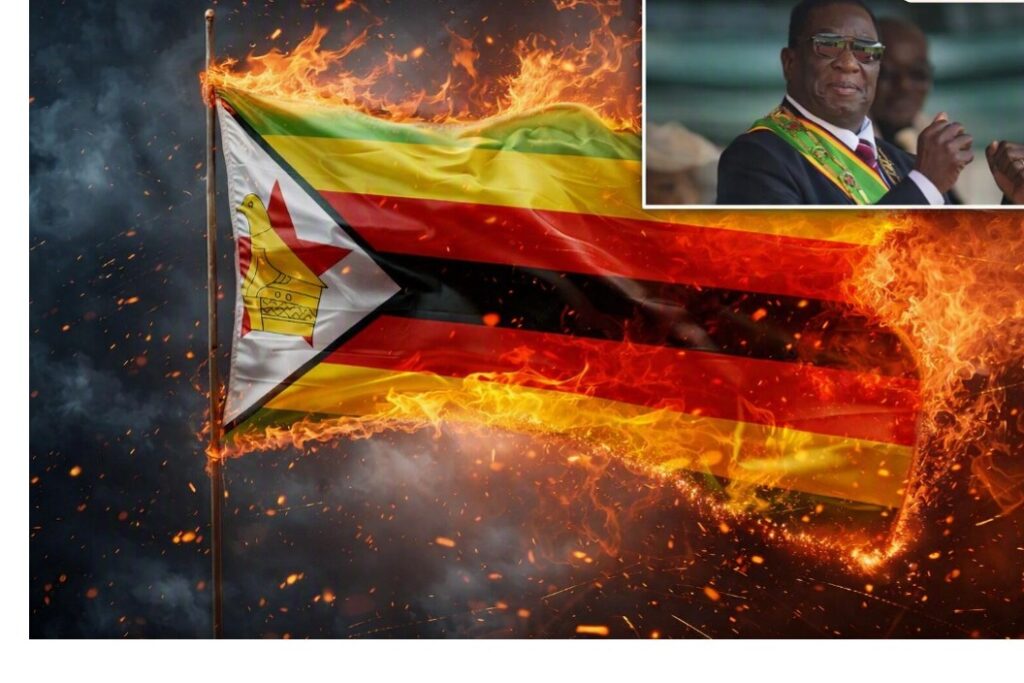

In the Zimbabwean capital, Harare, repression reigns without end. A new political party, the Guardians of Zimbabwe (GoZ) created and led by former members of the nation’s security forces has faced scrutiny and repression by the regime of President Emmerson Mnangagwa, popularly known as “the Crocodile”. The swift and intense scrutiny carried out by state authorities, particularly the Zimbabwe Republic Police’s (ZRP) Criminal Investigation Department (CID) Law and Order in Buluwayo, raises questions about the state of democratic freedoms in South Africa’s northern most neighbour.

The formation of GoZ earlier this month by retired soldiers and security personnel is widely perceived as a direct response to deepening political tensions and a controversial push to extend presidential tenure. The party’s leadership asserts their movement is born out of an unwavering oath of service to the nation, a commitment they believe has been betrayed by current governance. This stance has placed them squarely in the crosshairs of a state apparatus often accused of stifling dissent.
The ZRP’s CID Law and Order Section in Bulawayo wasted no time in tracking down GoZ leaders following the party’s launch. According to the party, police officers first visited the residence of GoZ leader Moses Kumbweya on 9 July, while he was away. They left a message, which was soon followed by a telephone call. The very next day, officers returned, subjecting Kumbweya to approximately one and a half hours of questioning. The interrogation delved into the formation of the party, his personal background, and even his family affairs.

Mnangagwa is initially moving to suppress any dissenters – in particular amongst the opposition – from stirring up unrest ahead of passing the amendments concerning the extension of current presidential and parliamentary term limits. GoZ leadership which spoke out against Mnangagwa’s agenda, put themselves on his radar. Despite their noble intentions to steer their country on a better path, a man with a nickname like the crocodile does not yield to dissent. Mnangagwa’s actions like those of his predecessor the now late Robert Mugabe expose him to be a dictator.
A dictatorship that centralizes power and relies on repression is prone to potential instability. This does not bode well for its neighbours – in this case South Africa, Botswana, Zambia and Mozambique. A president who abuses his security apparatus to subjugate his political opponents through interrogation and blackmail, while undermining transparency and accountability could gradually provoke a civil conflict. This is not hysteria, as restriction of human rights and civil liberties encourages frustration and dissent to build up amongst the population. Mnangagwa is particularly harsh as well as brutal in his security policy.
The question remains since Mnangagwa’s seizure of power in 2017 from Mugabe via the military: What should be the stance that Pretoria should take now?
The SADC’s governments, with South Africa being the most powerful of them, have been watching this happen in plain sight. This silence comes with consequences, not just for the country whose democracy is being killed, but for its neighbours as well. South Africa’s leaders need not be reminded of the consequences of our acquiescing to Zanu-PF’s savage suffocation of the Zimbabwean democracy. If they do need a reminder then they need to look up the name “Jacinta” on their phones. There are consequences for regional stability, for the SADC economy and balanced socioeconomic development in our neighbourhood.
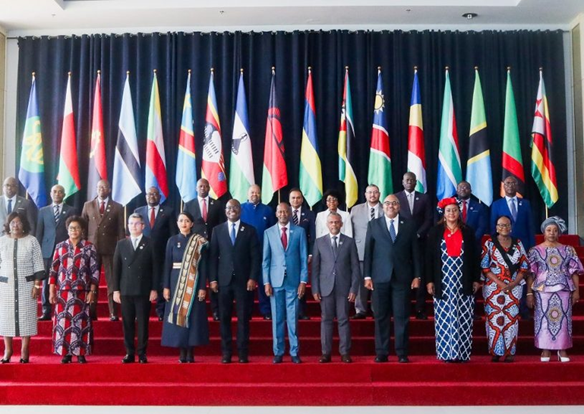
The Southern African Development Community (SADC) leadership, including South African President Cyril Ramaphosa have to take a sterner stance on Harare. This is to prevent the further erosion of Zimbabwe’s state institutions. However, this will largely depend on whether Ramaphosa and his SADC counterparts actually care about attempting a concrete solution to the crisis. The imposition of sanctions on Mnangagwa’s regime would be a start. As well as suspending Zimbabwe from participation in SADC and African Union (AU) policies and decisions. If the Zimbabwean president has his way, he will remove the term limits altogether, creating a state that relies on repression and fear to maintain legitimacy.
The path to bloodshed and conflict in Zimbabwe will come ever closer to South Africa and the southern African region’s detriment.
Article written by:
Yacoob Cassim
Journalist at Radio Al Ansaar