Al-Sharaa on Israel and the Golan Heights
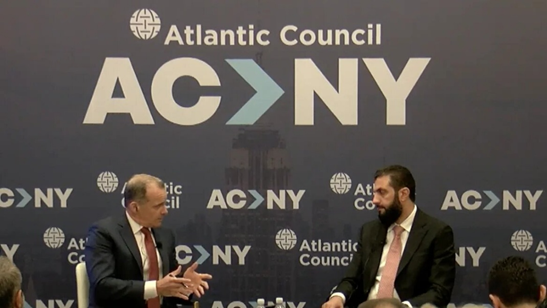
Syrian President Ahmed al-Sharaa is in New York, the United States (US), for the annual United Nations General Assembly summit. At a press interview and meeting with former American diplomat Brett McGurk on the sidelines of the gathering, he addressed the likelihood of diplomatic relations with Israel and the Israeli occupation of the Golan Heights and other Syrian territory since 2024. Al-Sharaa said neither he nor anyone in his interim government could entertain the notion of diplomatic relations with Israel while Tel Aviv carries out air strikes on Syria and occupies his birthplace, the Golan Heights. Israel has occupied the Golan Heights since the 1967 Six-Day War.
“Since the fall of the former regime, Israel is repeating its attacks and aggressions against Syria,” Sharaa said at an event hosted by the Atlantic Council on the sidelines of the United Nations General Assembly in New York City.
“It [Israel] is occupying new territories. There are territories that have been occupied after the 8th of December 2024,” he said, speaking through a translator and referring to the day he led Syrian rebel factions into the capital, and former president Bashar al-Assad fled to Russia.
“Until today, it is doing incursions, arrests inside Syria, and bombing different locations in Syria. Syria still chose to go through diplomacy and to solve that problem through talk and negotiations, as well as seeking the help of countries that are friendly to Israel, including the United States,” he added.
Syria’s Push for Diplomacy Over Confrontation
Syria and Israel have not reached a diplomatic agreement on the return of territory under Israeli occupation. Israel has exploited weaknesses in Syria’s defences following the removal of long-time leader Assad. Damascus argues that Israel is occupying its land, including the Golan Heights, illegally. Israeli Prime Minister Benjamin Netanyahu could counter that his government is occupying those territories for its own defence. However, Damascus and many across Syria will not accept the loss of their territory without a fight. The new transitional Syrian government under Al-Sharaa is rebuilding its military and defences while combating remnants of the Islamic State of Iraq and Syria (ISIS) and the former Ba’ath regime. Restoring law and order out of a chaotic state will not be a simple task, and Al-Sharaa is already looking to new allies, most notably Baghdad, Iraq.
A New Chapter: Syria and Iraq Reset Relations in New York
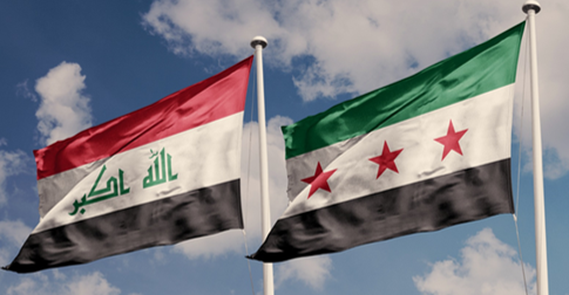
Al-Sharaa has already held his first high-level meeting with Iraqi Prime Minister Ali al-Zaidi in New York at the UN. The meeting marked a reset of ties between Damascus and Baghdad.
The relationship between Syria and Iraq has shifted, particularly in recent months, from deep mistrust to pragmatic co-operation since Assad was ousted from Damascus in 2024. The start of the Iran war in February 2026, rising regional tension, and American pressure have pushed the two governments toward strengthening ties.
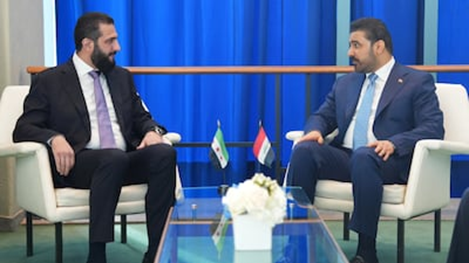
“The meeting addressed Syrian-Iraqi relations, explored ways to enhance political and security co-ordination between the two countries, and expanded economic and trade co-operation,” state-run Syrian news agency Sana said about the meeting.
“The meeting witnessed a review of the general situation regionally and internationally, discussions on bilateral relations and ways to develop them in accordance with the requirements of mutual interests across various levels and fields,” the Iraqi Prime Minister’s office said in a similar statement.
What’s Driving the Syria-Iraq Rapprochement
Al-Sharaa is hoping to turn the page on a new chapter of Syrian-Iraqi relations to strengthen Syria’s internal security as well as its outward defence. Baghdad was more or less aligned with the Assad regime in Syria, but that changed after al-Zaidi took office following a majority win in the Iraqi parliament this year. Both al-Zaidi and Al-Sharaa came to power under different circumstances to challenge their respective status quos: for Al-Sharaa, it was to end a repressive dictatorship under Assad; for al-Zaidi, it was to oppose the iron grip of former Iraqi prime minister Nouri al-Maliki.
Syria is now Iraq’s lifeline for oil exports, since the closure of the Strait of Hormuz during the US-led war against Iran. Iraq and Syria could now have better relations than at any point since before the 2011 Arab Spring uprisings or the 2003 US-led invasion of Iraq.
The new defence agreements between Damascus and Baghdad stem from securing their shared border against remnants of ISIS and drug-smuggling gangs.
Implications for the Golan Heights and Regional Alliances
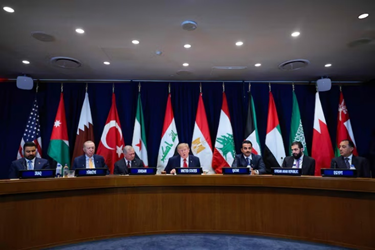
On the Golan Heights, Syria may renew its pressure on Washington to withdraw formal recognition of Israel’s occupation and annexation of Syrian territory. Although US President Donald Trump was the powerbroker who brought Al-Sharaa and al-Zaidi together, both leaders may eventually make common cause against Israeli expansionism and US support for it.