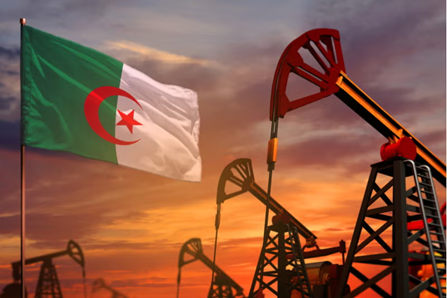

European nations such as Italy, France, and Spain are turning to Algeria for oil and gas exports due to the United States–Israeli-led war against Iran, which has disrupted global gas markets. As a result, European economies are focused on diversifying their energy supplies, according to the Syrian Arab News Agency. Euronews reported that supply chain disruptions linked to the war – including damage to Qatar’s Ras Laffan facility, the world’s largest liquefied natural gas (LNG) hub – have driven energy prices higher and heightened fears of prolonged shortages. European gas prices have surged by roughly 35 percent in recent days, while restricted tanker traffic through the Strait of Hormuz has added further uncertainty. Consequently, Europe is seeking energy sources closer to home.

European countries that depend heavily on Gulf gas are reassessing their energy portfolios, with Algeria gaining attention due to its proximity, production capacity and direct pipeline links to the continent. Algeria has long supplied Europe with gas, a role that expanded after the 2022 Russia-Ukraine war. Recent figures show Algerian pipeline exports to the European Union (EU) rose 22 per cent in January compared with December, reflecting Europe’s growing reliance on North African energy. Spain has been a key beneficiary, with Algerian gas accounting for over 29 per cent of its imports in the first two months of 2026, according to Enagás. Spanish Foreign Minister José Manuel Albares has discussed increasing supplies with his Algerian counterpart, with potential growth estimated at 10 per cent. Italy, which already depends on Algeria for about 30 per cent of its gas, is also seeking to expand cooperation.
(Italian) Prime Minister Giorgia Meloni said bilateral coordination is at “unprecedented levels,” with plans to raise imports to offset regional disruptions.

Algeria has been presented with a unique opportunity by the brutal and pointless war being fought in the Persian Gulf. The country’s oil sales to neighbouring Western nations across the Mediterranean are increasing, due not only to Algeria’s close proximity but also to its current stability. Algeria possesses significant oil reserves as well as trade links and connections to other oil-rich African nations such as Nigeria. Europe, for its part, must keep this alternative energy market open to sustain the integration of the European Union (EU), of which Italy, Spain, and France are members. The EU remains on a long and gradual path toward developing environmentally sustainable energy. Algiers, meanwhile, must grow its economy to improve job opportunities at home in the tumultuous region of North Africa. The Algerian people themselves want a greater say in their government and an end to the military oligarchy’s monopoly on power.
The European centres of power – Madrid, Paris, and Rome – must ensure a steady supply of fossil fuel energy to their economies so that their populations do not face widespread unemployment. This is why Italian Prime Minister Meloni is in Algiers.
Italian Prime Minister Giorgia Meloni will travel to Algeria this week as Rome looks to secure alternative gas supplies amid prolonged disruptions in deliveries from Qatar. The prime minister’s office said Meloni will be in Algiers on Wednesday, without giving a detailed schedule for the official trip. Algeria is one of the countries Italy is in talks with to secure gas supplies after Iranian strikes on Qatar appeared to have halted its exports for an extended period, Energy Minister Gilberto Pichetto Fratin said on Friday. The minister said Italian state-controlled energy companies were talking to suppliers from Algeria, the United States and Azerbaijan to receive more gas, and the government was trying to assist them.
Algeria has become one of Italy’s top gas suppliers after Rome moved to replace Russian gas following Moscow’s invasion of Ukraine in 2022, and now covers around 30% of the country’s annual gas consumption. Qatar used to cover around 10% of Italy’s consumption, but after Iranian attacks it told Italian customer Edison it would not be able to fulfil its contractual obligations for April.
It should be noted that Rome is seeking multiple partners to supply its energy markets, and other European countries will no doubt follow suit. Italy, however, has long been positioned at the heart of the Mediterranean world and can establish contact anywhere in the region by sea, rail, road, or air. Bilateral ties are not merely about maintaining friendships – they are about survival. The Italian peninsula could become a decisive factor in determining where oil is directed. The Persian Gulf emirate of Qatar is caught in the crossfire of the very war it had hoped to prevent. Flames are literally consuming its borders and coastal waters. The Arab monarchy had hoped its neutrality would shield it from Iranian attacks, but now its oil refineries have been heavily damaged.
Algeria is currently Africa’s largest nation – state since South Sudan seceded from Sudan in the north. The North African nation hopes to expand its diplomatic and economic influence across surrounding regions. Algeria remains relatively stable, especially compared to the political uncertainty and fragmented order in its eastern neighbour, Libya. Its north-western neighbour, Morocco, has long had a complex relationship with Algiers over the status of Western Sahara.
The Algerians may not wish to start a war in their own region – they have had enough experience with conflict – but the regime must adopt a more transparent and accountable system to better serve its people.
Article written by:
Yacoob Cassim
Journalist at Radio Al Ansaar