Syria Women University Restrictions Spark Heavy Criticism
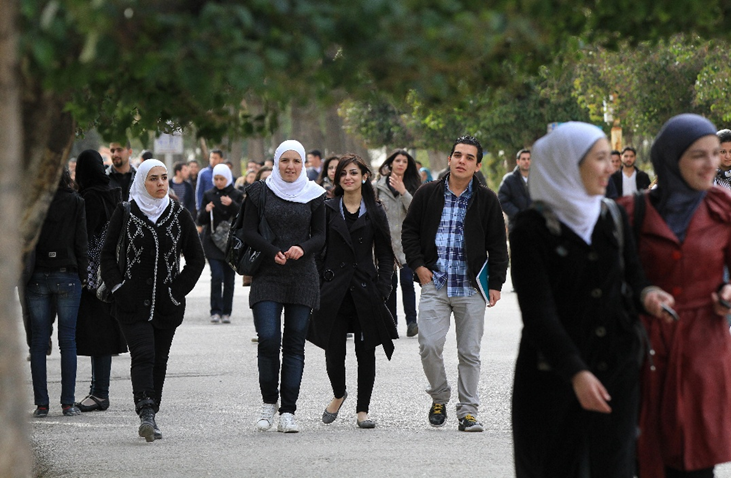
New Syria women university restrictions prevent female students from enrolling in specific degree programs.
These recent admission rules block women from studying law, management, security, and technical courses. Consequently, the decision has sparked major concerns over equal access to higher education, according to reporting by AFP.
Syria’s Ministry of Higher Education announced the policy on September 30 as applications opened for the 2026–2027 academic year. The decision has drawn sharp criticism from teachers, students, and human rights advocates across the region.
Which Syria Women University Restrictions Are Now in Place?
The new policy affects several key institutions across the country, including two universities established by Syrian authorities in July:
- National University of Defence Sciences: Programs in legal and social sciences, management, and economics now admit male students only.
- University of Security Sciences: Female applicants may only enroll in the Faculty of Cybersecurity.
- Media Studies in Idlib: Female students cannot enroll in television and radio production courses.
- Technical Institute of Oil and Gas: Located in Rumeilan, northeastern Syria, this institute no longer accepts women.
However, these rules do not apply nationwide. Damascus University, the country’s largest institution, still keeps all courses open to female applicants.
Syrian Women and Educators Speak Out
The decision has triggered strong reactions from female students and educators who demand equal choice in higher education.
Syrian teacher Ahlam Othman described the rules as another barrier facing women. Speaking to journalists, Othman criticized the decision as an unfair form of gender discrimination that society must challenge.
Similarly, university applicant Israa Salloum questioned the policy. She emphasized that no authority should dictate what women can or cannot study.
Has the Government Explained the Restrictions?
These measures arrive as Syria’s new leadership, headed by President Ahmed al-Sharaa, introduces widespread reforms following political shifts tracked by bodies like the United Nations.
So far, Syria’s Ministry of Higher Education has not issued an official response to requests for comment.
These admission rules follow several recent gender-segregation measures across the country. In September, a prominent Damascus school separated male and female students at the secondary level. Additionally, civil society organizations have raised concerns over growing restrictions on women’s personal freedoms.
Impact on Women’s Career Opportunities
These admission barriers directly limit women’s access to key professional sectors. By excluding female students from energy, law, security, and broadcasting degrees, authorities restrict their career growth and economic independence.
As universities continue processing applications for the 2026–2027 academic year, citizens wait to see if authorities will revise the admission policy.