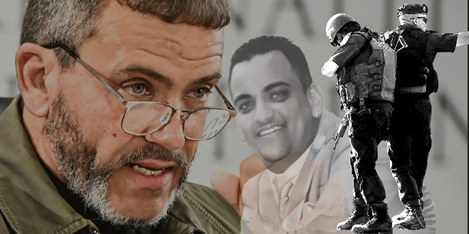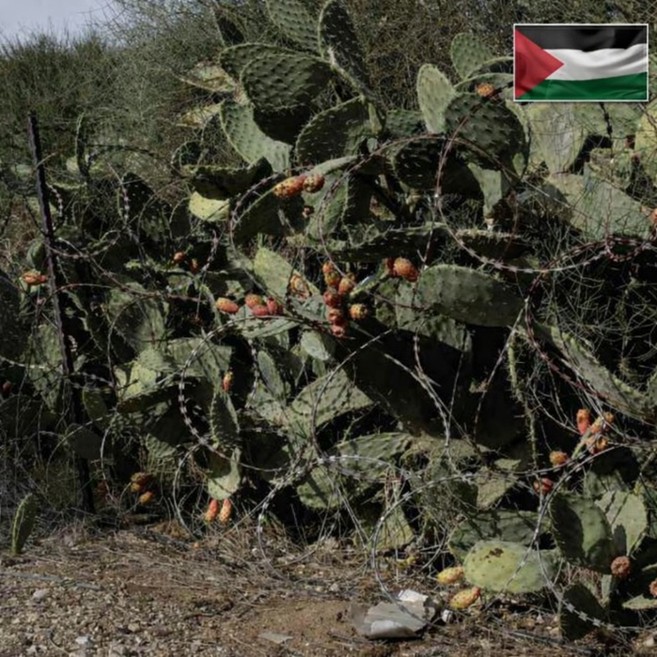

Israel’s Parliament, the Knesset, has passed a law allowing the hanging of Palestinians convicted of killings during militant attacks. The law uses language that effectively exempts Jewish perpetrators of nationalist violence. The legislation, drafted by the ruling coalition of Israeli Prime Minister Benjamin Netanyahu, has been described as discriminatory and unconstitutional (although the State of Israel does not have a codified constitution). This law is part of a broader, accelerating effort to eliminate the possibility of a Palestinian state in any form. That effort includes the uncontrolled surge of violence by settlers against Palestinians in the West Bank, as well as a strategic restructuring of the West Bank’s administration, designed to make it easier for Israeli settlers and the state to seize Palestinian-owned land.

Last month, a CNN crew arrived in the village of Tayasir in the northern Jordan Valley to report on an attack by settlers and the establishment of an illegal outpost. While documenting the scene, the journalists were assaulted and detained by Israeli soldiers for two hours at gunpoint. During the detention, soldiers were captured on camera echoing settler ideology, defending the outposts and speaking of acting out of revenge. The military labeled the matter a “grave ethical incident” and took the highly unusual step of suspending the operations of the entire battalion, mainly composed of former members of the ultra-Orthodox Netzah Yehuda unit. The battalion’s commanders were reprimanded, and one soldier was ejected from the military.

The right-wing Israeli establishment and settlers, it must be clear, do not care about transparency—let alone the freedoms and rights of Palestinians. South Africa should persist in its case of genocide against Israel for its war in Gaza at the International Court of Justice (ICJ), and possibly extend it to include the discriminatory practices in the West Bank. The attack on CNN journalists in the village of Tayasir demonstrates that Israel is tightening the noose around freedom of expression across the social spectrum of the occupied Palestinian territories. Discrimination against Palestinians has become deeply rooted in the actions of Israelis, particularly right-wing settlers. The actions of the Israeli Defence Force (IDF) remain central to this pattern of discrimination.

Such isolated disciplinary measures fail to address a systemic, untreated malaise within the military’s ranks and the systemic discrimination against Palestinians that is embedded in law enforcement. The Israel Police rarely conducts thorough investigations into settler violence, and such cases almost never result in indictments. While the Shin Bet, the domestic security service, can issue administrative restraining orders against extremists and carry out administrative detentions of them, Defense Minister Israel Katz has moved to stop the use of such measures against Jewish settlers, although the vast majority of detainees were Palestinian. This policy only serves to embolden Jewish extremist activity in the territories.
While building a governing coalition, Mr. Netanyahu and Finance Minister Bezalel Smotrich agreed that Mr. Smotrich would take an additional role, within the Defense Ministry, to effectively administer the West Bank. Mr. Smotrich has called for one state under Israeli control from the Jordan River to the Mediterranean Sea.
It should be made clear that the right-wing government of Netanyahu and his inner circle openly endorse Jewish extremist activity. The only solution to blunt the fangs of the Israeli serpent is for the international community, through the United Nations (UN), to impose sanctions on the Israeli regime. This was the solution that proved instrumental in crippling apartheid South Africa. However, for the plight of the Palestinians, it remains easier said than done. The United States and its allies in Europe continue to act as custodians of Israeli “sovereignty and security” on the UN Security Council, and will veto any resolution to impose sanctions – whether economic or political.
Netanyahu is free, at least for now, to leave no stone unturned in annexing what remains of Palestinian land. Yet, as the serpent tightens its grip, neighbouring Arab nations—Egypt, Syria, Jordan, and Lebanon – are watching developments in the occupied territories with weary eyes. The question will always remain: where will the Palestinian population go if the Israelis are allowed to have their way from the Mediterranean Sea to the Jordan River?
Population displacement is imminent. As a result, public opinion in the Arab world is increasingly hostile toward both Israel and the United States.
Trump, of course, did help put an end to the war in Gaza by negotiating the October cease-fire. But his administration is less liked than that of his predecessor, Joe Biden. Today, under Trump’s leadership, most of the Middle East is under attack. It is not surprising, then, that 66 percent of respondents in Egypt, 59 percent in Jordan, 53 percent in the Palestinian territories, 51 percent in Iraq and Tunisia, and 47 percent in Lebanon think that Trump’s foreign policies toward the Arab region are worse than Biden’s – and his administration polled poorly. Only, again, in Morocco (27 percent) and Syria (seven percent) is this not the plurality view.
The United States, under the administration of President Donald Trump, has begun a downward spiral since launching its latest war against Iran. Across the diverse populations of the Arab world, there is genuine distrust and apathy toward Washington’s policies. Although most governments in the Arab world are authoritarian—whether dictatorships such as Egypt or monarchies such as Jordan—these regimes must still take into account the sentiments of their populations. Their goal is to avoid a second wave of mass uprisings, similar to the “Arab Spring” that began in 2011. Both Washington and Tel Aviv risk isolating Arab nations through their current attitudes.
Israel, with its new death penalty law, and the United States, with its protracted war in Iran, are deepening this isolation. Even Morocco and Syria may show initial favour toward Washington for now, though this is likely to change. Where Israel is concerned, much will depend on how the state continues its policies of discrimination and annexation. Ultimately, everything – even power over territory and military strength – has its limits.
Article written by:
Yacoob Cassim
Journalist at Radio Al Ansaar