
While South Africans debate who is taking opportunities away from them, a far bigger question may be emerging: is the country failing to take advantage of the rest of Africa?
As unemployment rises and economic pressure deepens, conversations around foreigners, jobs and economic survival have become increasingly emotional. Yet economists and business leaders argue that the future of the economy may depend less on competition — and more on collaboration across the continent.
For years, many South Africans have looked toward Europe, the United States and Asia when speaking about growth, investment and opportunity. But the global economic landscape is shifting rapidly. Africa is no longer being viewed merely as a continent of struggle and instability. Increasingly, it is being recognised as one of the world’s next major economic frontiers.
According to the United Nations Conference on Trade and Development, Africa represents a potential $3.4 trillion market driven by urbanisation, digital expansion, rising consumer demand and one of the world’s youngest populations. By 2050, the continent’s population is expected to approach 2.5 billion people, creating enormous long-term demand for goods, services, technology and infrastructure.
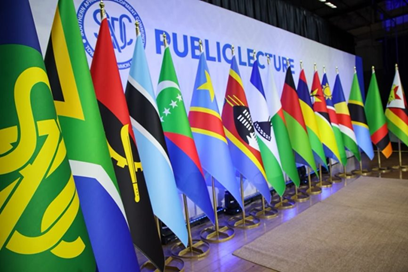
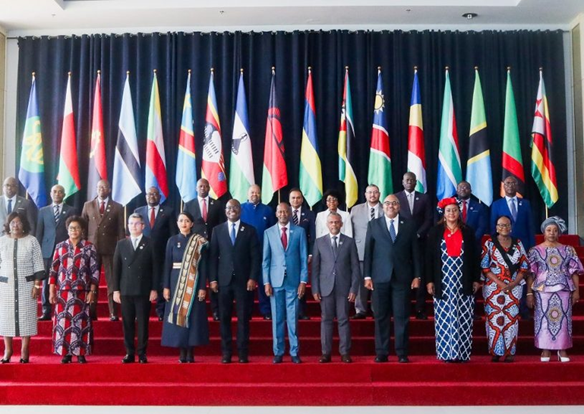
At the centre of this transformation is the African Continental Free Trade Area (AfCFTA), an agreement designed to connect African economies into one of the largest free trade zones in the world.
For South Africa, the opportunity is enormous.
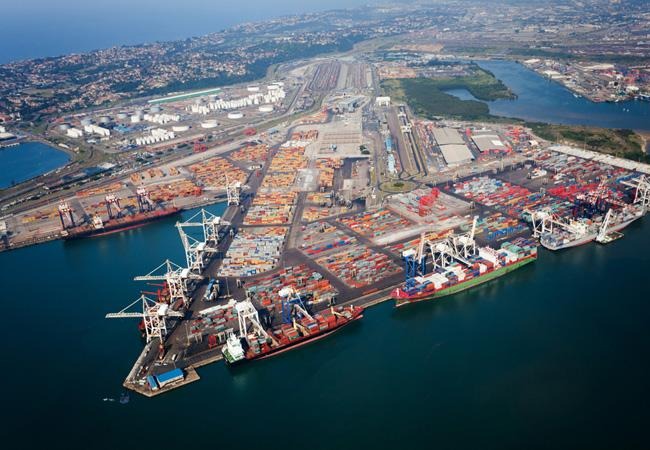
The country already possesses some of the continent’s strongest banking systems, logistics infrastructure, manufacturing capacity and transport networks. From Durban’s ports to Johannesburg’s financial sector, South Africa remains strategically positioned to become a gateway into African trade.
Yet many experts believe the nation may still be thinking too small.
A culture has developed where many young people are taught to wait for employment rather than create markets of their own. Degrees are pursued with the hope of securing jobs, while entrepreneurship and regional trade are often treated as secondary ambitions instead of economic necessities.
At the same time, many immigrant-owned businesses operating locally have adapted to survive in highly competitive environments. Rather than thinking only within city or provincial borders, many operate through broader trade networks stretching across countries and communities. They identify supply gaps, move products across regions and build relationships beyond a single local market.
This does not mean foreign entrepreneurs are “taking over” the economy, as political rhetoric often suggests. Analysts argue that many are simply responding faster to an economic environment that increasingly rewards adaptability, networking and cross-border thinking.
And that environment is changing quickly.
AfCFTA aims to reduce trade barriers across Africa, making it easier for businesses to move goods and services throughout the continent. Economists believe the agreement could significantly increase intra-African trade while opening entirely new opportunities for entrepreneurs, manufacturers and digital businesses.
For young South Africans, this could become a turning point.
A small clothing supplier in Pietermaritzburg could sell products into Botswana or Zambia through social media and e-commerce platforms. A local graphic designer could provide digital services to businesses in Kenya or Ghana without ever leaving home. Agricultural producers could access growing food markets across neighbouring countries where demand continues to rise.
The barriers that once limited African trade are slowly beginning to weaken.
And the rest of the world has noticed.
Earlier this year, South Africa strengthened trade partnerships with China, while ongoing discussions around the African Growth and Opportunity Act highlighted how global powers continue competing for influence across African markets. Major economies increasingly see Africa not as a future opportunity — but as a present one.
The question is whether South Africans see it too.
Speaking in Johannesburg earlier this year, Afreximbank President George Elombi warned that African countries could no longer afford to depend entirely on outside powers for economic security and growth.
“The fate of our economies and the destiny of African people can no longer be tied to the benevolence of others,” Elombi said, as calls continue to grow for stronger intra-African trade and regional economic cooperation.
His remarks reflect a growing belief among economists and policymakers that Africa’s long-term future may depend not only on foreign investment, but on how effectively African economies trade, innovate and build with one another.
This does not erase the very real frustrations many citizens face. The country continues battling severe unemployment, inequality and rising living costs. In many communities, economic anxiety is no longer theoretical – it is deeply personal.
But economists warn that isolation, fear and hostility alone are unlikely to create sustainable growth.
South Africa has spent years arguing over scarcity while Africa quietly became a marketplace.
That may be the country’s biggest danger.
While local debates remain focused on internal tension, other African economies are rapidly positioning themselves for regional growth, digital trade and continental partnerships. The risk is not simply unemployment – but being left behind in a changing African economy because adaptation came too slowly.
For decades, apartheid isolated South Africa politically and economically from much of the continent. Today, however, Africa is becoming more connected than ever through trade corridors, digital payment systems, transport infrastructure and online commerce.
A new African economy is already taking shape.
Trade routes are expanding. Markets are connecting. Digital economies are growing. New business networks are forming across the continent every day.
The real danger for South Africa may not be global competition.
It may be standing still while the rest of Africa moves forward.
Article written by:
Hudaa Ahmed
Journalist at Radio Al Ansaar