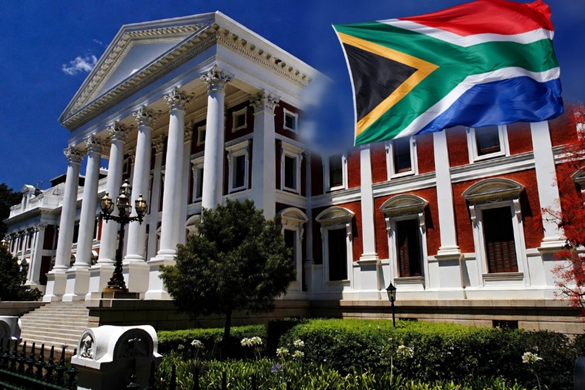

The 2026 Fiscal Framework and Revenue Proposals were tabled before both houses of Parliament in Cape Town, with the full approval of the Government of National Unity (GNU). However, the fiscal legislation, which faced debate in the National Assembly and the National Council of Provinces (NCOP) on Tuesday, was met with critical evaluation. The framework, drafted by the government under President Cyril Ramaphosa as part of the 2026 Budget, passed without the significant opposition that had characterized previous debates, signalling a shift in legislative dynamics. Political parties in the GNU—such as the ANC, DA, IFP, and several others—lined up to endorse the proposals, marking a contrast with last year, when the DA’s opposition led to legal action against the proposed VAT increases.

“The question is accordingly agreed to,” announced National Assembly Speaker Thoko Didiza, confirming that a total of 227 MPs voted in favour of the fiscal framework, while 71 voted against it. However, not all parties were on board. The MK Party, the EFF, and the United African Transformation expressed dissent during the session. Des van Rooyen from the MK Party articulated concerns that the Finance and Appropriation Standing Committees had failed to amend the fiscal framework despite substantial feedback from a variety of stakeholders. He cautioned that the National Treasury is contributing to a spiralling debt, projecting R12 trillion by 2026, funded by loans that could lead future generations into a quagmire of fiscal regret. “What is concerning is that instead of growing the economy and creating jobs, borrowed money is mainly used for consumption, creating a mountain of loans.”

It should be noted that the role of Parliament is to act as the representative body of the South African people who elected its members. The purpose of the oversight committees is not to serve as a rubber stamp for the executive branch and the presidency. If the drafted legislation was flawed and could have been improved, then this was the route the Finance and Appropriations Standing Committee should have taken. Not everyone was pleased with the way the bill was drafted, and why the feedback given to the Standing Committee was not adhered to remains unclear. It is noteworthy that the most unsavoury opposition parties in Parliament—the MK, EFF, and UAT—were the ones most opposed to the budget legislation, citing the flaws present in it.
The bill should have been sent back to the Department of the Treasury with the proposed amendments. If the bill is perceived as consequential to the economy, then it will be ordinary South African households that pay the price. With Human Rights Month coming to an end, the issues of inclusivity and combating racism and gender-based violence remain a priority.
“Measured against that, we’ve made significant progress. Compared to 1994, many more children are going to school. Many people now have houses, and there has been provision of water and electricity,” South African Human Rights (SAHRC) Commissioner, Professor Tshepo Madlingozi, told SAnews.gov.za. He also pointed to the 29 May 2024 National and Provincial Elections as evidence that the right to vote is guaranteed. “Of course, we had the 2024 general elections and those went very well. It shows that there is a guarantee of the right to vote, which is a positive,” he said. However, while good strides have been made, the Commission’s State of Human Rights Annual Report 2024/25 highlights issues that still need addressing.
“I can give you one concrete example: Section 27 of the Bill of Rights guarantees the right to water, electricity, shelter and food. We receive many complaints in this category. A lot of people are still deprived of clean, accessible water, and many communities still rely on the bucket system for sanitation,” he said. Gender-based violence, which has become entrenched, as well as crime, are among the other pressing concerns.
The issue of violence against women remains deeply contentious. Women have often been physically weaker and, as a result, preyed upon by abusive male spouses and others. Gender-based violence (GBV) continues to be a pressing concern and must be combated through the education of younger generations. This education should emphasize responsibilities toward human rights, an area that has long been neglected. Although the state has, to some extent, fulfilled its responsibilities toward its citizens, individual responsibilities remain overlooked. The right to vote is widely exercised, but making it compulsory would likely prove impractical in the long term. Ultimately, it is up to the electorate to determine its future, while political leadership has the responsibility to advocate for it.
The foundation of a solid, functioning democracy rests on the actions of its citizenry. The electorate cannot allow one dominant party to remain permanently entrenched. GBV, crime, and poverty are issues that demand urgent attention. Transparency and accountability must be enshrined not only in theory and in the constitution but also in practice. Service delivery, particularly access to water, must remain a priority in the provinces. Meanwhile, fiscal legislation may need to be repealed in Parliament under pressure to change the country’s trajectory.
Flaws can be corrected when necessary—it depends on whether the people are willing to focus.
Article written by:
Yacoob Cassim
Journalist at Radio Al Ansaar