
As war continues in oil-rich regions of the world, including Russia and the Middle East, South Africans are bracing for a sharp spike in fuel costs that began on Wednesday. Petrol and oil prices are set to soar, placing even greater strain on already stretched household budgets. Addressing delegates at the ANC Limpopo’s 11th provincial conference on Sunday, President Cyril Ramaphosa said the impending increases – expected to be among the highest on record – are largely driven by global instability beyond the country’s control. “The world economy is shifting beneath us,” the President noted, pointing to rising geopolitical tensions, slower global growth, and increasing economic nationalism as key forces reshaping the international landscape.

South Africa is facing a significant fuel price surge, with petrol expected to rise by between R5.31 and R5.82 per litre, while diesel could jump by more than R10. Combined with recent fuel tax adjustments of 21 cents per litre, prices are projected to climb to around R25.50 for 95 Unleaded at the coast and R26.33 inland, with diesel reaching as high as R29.08 in Gauteng. Ramaphosa linked the increases directly to international conflicts, particularly in the Middle East and Eastern Europe, which have disrupted global oil supply and driven up prices. “By 1 April, we’re going to see prices of petrol and diesel going up, driven largely by the conflict that is going on,” he said.
The president acknowledged that the ripple effects would be felt across the economy, from transport costs to food prices, further squeezing consumers and limiting government’s ability to fund key programmes. He also warned that inflationary pressures would intensify, compounding the cost-of-living crisis faced by many South Africans. In response, Ramaphosa said he has instructed key ministers to urgently intervene and develop measures to cushion the blow. Finance Minister Enoch Godongwana, he noted, is already grappling with the implications.

It would appear that South Africa is paying the price for the wars waged by Russian President Vladimir Putin in Ukraine and United States President Donald Trump in Iran. At first glance, this may seem to be the case. However, it can also be argued that South Africa, under President Ramaphosa, was acutely aware that the United States and Israel were capable of attacking Iran at any time. The writing had been on the wall in large letters for almost 20 years, with analysts warning of the repercussions since the era of former U.S. President George W. Bush. Pretoria should have broadened its petroleum supply options by turning to oil-rich countries within Africa.
Potential markets such as Nigeria, Gabon, Algeria, and Equatorial Guinea could have –0 and still can – offer alternative sources. While some of these nations face human rights challenges, Pretoria could leverage its influence to encourage reforms and the dismantling of authoritarian laws. That said, it must be acknowledged that South Africa has had over two decades to seek and develop alternative energy sources. Now, it is low- and middle-income South African families who will bear the brunt, forced to limit their spending as fuel costs rise.
Beyond the immediate crisis, the president stressed the need for long-term solutions, including strengthening energy security, boosting local industry and improving infrastructure in sectors such as logistics, water and transport. He emphasised that South Africa must build economic resilience in the face of global shocks, while continuing to pursue growth, job creation and reduced living costs. “This moment requires that we build domestic industrial strength… and improve our energy security,” he said.
Ramaphosa and his Government of National Unity (GNU) must devise a plan to implement their economic proposals. To strengthen energy security in the short term, Pretoria should prioritize importing oil and petroleum products from countries closer at hand. Liquefying coal—a resource South Africa has in abundance—could serve as an alternative source of oil. In the long term, investment in the development of solar and wind power, which the country also possesses in abundance, should be brought to the fore.
The President has also set a target of mobilizing R2 trillion in private-sector investment by 2028, following successful drives initiated in 2018.
“Over 300 projects were initiated, and to date, 161 of these have been finalised or are under construction,” the president said. “The pledges have not been merely vague commitments and promises, but have materialised as tangible, brick-and-mortar projects that are creating jobs for our people.” He noted key investment projects that have materialised in the country, including:
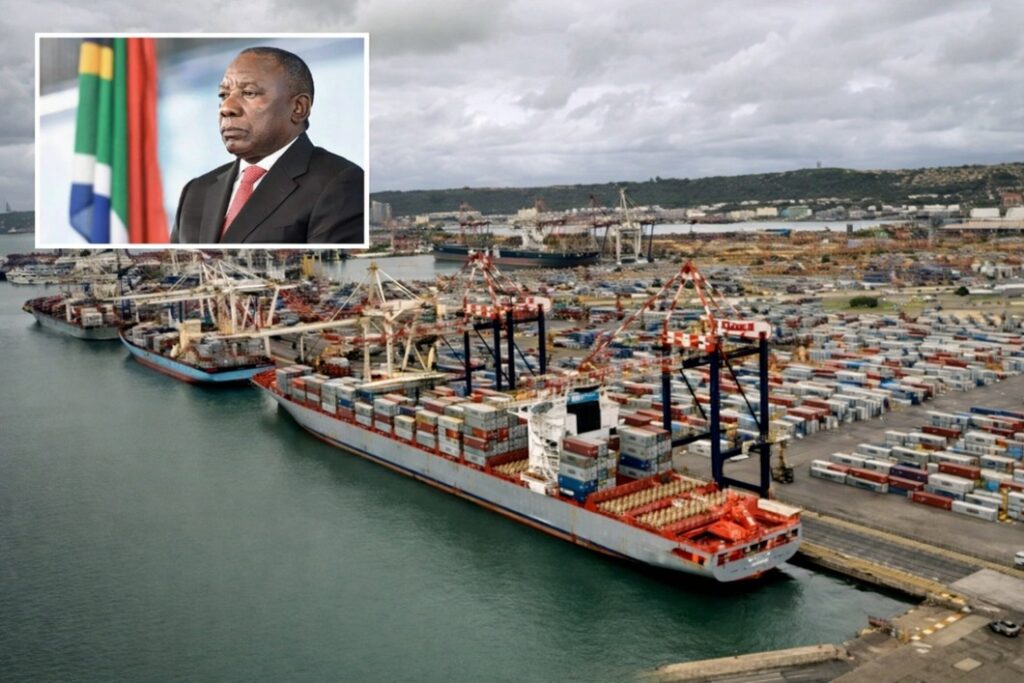
- The signing of a 25 – year concession for the Durban Container Terminal Pier 2 in 2025, representing R11 billion in private investment.
- The opening of the Platreef Mine in Mokopane in Limpopo, emanating from a R2.8 billion investment pledge by Ivanhoe Mines.
- The development of the BMW plant in Rosslyn, Tshwane, where the automotive giant has invested R4.2 billion in electrification to produce the BMW X3 Plug-in Hybrid electric vehicle.
Ramaphosa said that the country is now prepared to showcase its renewed and more favourable position as an investment destination by extending the goal even further. “We have set ourselves the goal of mobilising R2 trillion in new investments by 2028,” he said.
The President is right to be proud of the new enterprises being developed. These projects –particularly the concession for the Durban Container Terminal Pier 2 and the construction of the BMW plant manufacturing the BMW X3 Plug-in Hybrid electric vehicles – will go a long way toward creating jobs for educated workers and improving respect for environmental standards.
- If the 25-year concession for the Durban Container Terminal Pier 2 is to succeed, it must be placed under impartial supervision involving the eThekwini Municipality, the KwaZulu-Natal provincial government, and the private company invested in the concession.
- The Platreef Mine in Mokopane, Limpopo Province, contains rich deposits of precious metals such as nickel, copper, and gold. The extraction of some of these metals could be vital for building renewable and sustainable energy infrastructure.
- The BMW plant for electric vehicles could become a major success, boosting employment levels and driving wealth regeneration for decades to come.
The focus now must be on South Africa utilizing its infrastructure and facilities to improve employment levels and generate revenue. The country should connect with buyers in Europe and Asia to establish stronger economic ties. There is no certainty about when the major war in Iran will end. The only certainty is that the global economic landscape will change – and South Africa must adapt to survive those changes.
Article written by:
Yacoob Cassim
Journalist at Radio Al Ansaar